China’s discrete device industry is set to play a crucial role by 2025, with its semiconductor market projected to reach $259.35 billion. This represents an impressive annual growth rate of approximately 9.32%, solidifying its position as a global leader. Chinese discrete device chips, Diode, and MOSFET suppliers are driving this advancement, particularly through innovations in silicon carbide MOSFETs and SiC power devices. In 2024, the Asia Pacific region, spearheaded by China, accounted for 33.7% of the SiC MOSFET market, generating $0.8 billion in revenue. China’s robust manufacturing capabilities and cutting-edge energy-saving technologies for electric vehicles and clean energy further highlight its remarkable progress.
Key Takeaways
-
China’s device industry is growing fast and may reach $259.35 billion by 2025, becoming a world leader.
-
MOSFETs and IGBTs are important for electric cars and green energy. They save power and work more efficiently.
-
Silicon carbide (SiC) devices are changing power electronics. They cut energy waste and work well in tough conditions.
-
Protection devices keep electronics safe. They stop damage and ensure steady power in many uses.
-
Research and development are important for new ideas. This helps China stay strong in the chip market.
Key Discrete Device Types and Their Uses
MOSFET: Flexible and Efficient
MOSFETs (Metal-Oxide-Semiconductor Field-Effect Transistors) are important in power electronics. They are great for fast switching, making them useful in gadgets, cars, and green energy. These devices work with many voltages and currents, fitting different power needs.
MOSFETs are known for saving energy and staying cool. Their resistance is very low, from 10 mΩ to under 1 mΩ, which cuts power loss and heat. They also work well in tough conditions, from -55°C to +150°C.
Electric cars have increased the need for MOSFETs. In 2023, 1.4 million new electric cars were registered, a 40% jump from 2022. This shows how MOSFETs help make transportation greener.
IGBT: Power for Big Jobs
IGBTs (Insulated Gate Bipolar Transistors) are key for handling high power. They mix the speed of MOSFETs with the strength of bipolar transistors. This makes them perfect for factories and electric cars.
In China, IGBT demand is growing fast because of electric cars and green energy. Companies like CRRC and MACMIC make advanced IGBTs, like the M5i650V and 1200V Fast Series. These are used in electric car inverters, solar inverters, and motor drives.
The IGBT market is expanding as people want energy-saving solutions. More green energy and electric cars show how IGBTs help the world become more sustainable.
SiC Power Devices: Better Energy Use
SiC power devices are a big step forward in technology. Made from silicon carbide, they save up to 50% more energy than older devices. This makes them great for power electronics.
SiC devices are used in electric car chargers, green energy systems, and factory machines. They handle high voltages and heat, working well in tough places. For example, high-voltage SiC MOSFETs perform well even in extreme conditions.
China’s chip industry uses SiC devices to meet the need for energy-saving tech. These devices are changing solar inverters and electric cars, boosting innovation and sustainability.
The global market for power semiconductors, including SiC devices, is growing fast. By 2030, it could reach USD 2.49 billion, growing at 8.3% yearly. This shows how SiC devices are shaping the future of power electronics.
Rectifier Devices: Turning AC into DC Power
Rectifier devices change alternating current (AC) into direct current (DC). This process is needed to power many electronic devices. Rectifiers give steady and efficient power, making them very useful. They are used in things like dimmers, machines, and electronics. For example, TVs, radios, and computers need rectifiers for smooth DC power.
The rise of green energy and electric cars has increased the need for rectifiers. Solar inverters use rectifiers to turn solar energy into electricity. Electric car chargers also depend on rectifiers for reliable power. New technology has made rectifiers more efficient and long-lasting. This helps them meet the growing energy needs of today.
Rectifiers are also important in telecom and medical systems. They keep power steady for critical equipment to work properly. For instance, telecom tools and medical machines need exact power conversion. This shows how rectifiers are useful in many fields, like healthcare and communication.
Protection Devices: Keeping Circuits Safe
Protection devices keep electrical circuits safe and prevent damage. They stop fires by cutting power before it gets too high. These devices also guard electronics from voltage spikes that can harm them. For example, phones and laptops use protection devices to last longer.
These devices also make things safer for people. GFCIs, for example, stop shocks in wet places like bathrooms. By lowering risks, protection devices make homes and workplaces safer. They also prevent power failures, keeping factories and businesses running smoothly.
China has improved its protection devices to make them better and stronger. These new devices meet the safety needs of cars, green energy, and gadgets. With advanced features, protection devices now work better and last longer, helping modern technology grow.
Leading Players in China’s Discrete Device Industry
Domestic Manufacturers and Their Innovations
China’s local companies are important in the discrete device market. Businesses like Yangjie Technology create new solutions for many uses. For example, Yangjie makes reliable products for machines like inverters and welders. They also provide power device services for car electronics. These include uses in EV chargers, battery systems, and smart dashboards.
In green energy, Chinese companies make advanced IGBT and SiC devices for solar inverters. This meets the growing need for renewable energy tools. They also design small, efficient rectifiers and MOSFETs for power supplies. These are used in phone chargers and server systems. These ideas show how skilled and flexible China’s manufacturers are.
China’s Role in the Global Market
China is a leader in the world’s discrete device market. By 2024, it will make up over 36% of this market, the biggest share globally. This success comes from strong production in cars and electronics. Over 3.22 million 5G base stations have also increased the need for semiconductors.
China is improving in AI chip design and holds 16% of the global fabless chip market. The robotics industry, earning over 170 billion yuan, also helps grow the discrete device market. These achievements show China’s key role in the global semiconductor world.
Collaboration with International Companies
China works with global companies to improve its semiconductor skills. These partnerships focus on sharing technology, joint projects, and supply chain links. This helps Chinese companies get advanced tech and gives global firms access to China’s big market. For example, they team up to make better IGBT and SiC devices for EVs and green energy.
These partnerships boost innovation and make China stronger in the discrete device field. By mixing local knowledge with global resources, China keeps leading in semiconductor progress.
Applications Driving Demand for Discrete Devices
Automotive: Electric Vehicles and Charging Infrastructure
The car industry needs more discrete devices. Electric cars (EVs) and smart driving systems (ADAS) use these parts. They help manage power and keep systems running smoothly.
-
China’s car market is growing with government support.
-
EV production stayed strong even during tough economic times.
-
In 2020, China spent $1.4 billion on charging stations to help EVs.
|
Key Findings |
Description |
|---|---|
|
Charging Stations Matter |
Building chargers helps the EV market grow. |
|
Better Technology |
New power tools make EVs work better. |
|
Economic Support |
Subsidies help build EV infrastructure faster. |
SiC power devices are now key for EVs. They are efficient and reliable. These parts improve chargers and inverters, making EVs better and greener.
Renewable Energy: Solar and Wind Power Systems
Solar and wind energy need discrete devices to work well. These devices help change and manage power for the grid. They make renewable energy steady and useful.
-
Power electronics are growing due to electric cars and new gadgets.
-
Companies want greener solutions, so they need better power tools.
-
Smart grids create new chances for using renewable energy.
SiC power devices are changing solar and wind energy systems. They make solar inverters and wind turbines more efficient. This helps the world move toward cleaner energy.
Industrial Control: Robotics and Automation
Robots and automation need discrete devices to work right. These parts manage power for accurate and reliable machines.
-
The automation market may grow from $45 billion in 2023 to $95 billion by 2032.
-
Robots and AI tools are boosting demand for these devices.
-
Industries like cars and planes use automation to improve quality.
Discrete devices, like inverters, power robots and machines. They save energy, work well, and make factories more efficient.
Consumer Electronics: Managing Power and Making Devices Smaller
Consumer electronics are changing to use power better and get smaller. These changes are important for today’s gadgets, which need to save energy and fit into compact designs. Discrete devices, like MOSFETs, help make this possible.
MOSFETs control how electricity flows and keep devices working well. They are very useful in the growing Internet of Things (IoT) market. IoT gadgets need power-saving transistors to stay connected. As more IoT devices are made, the need for these parts grows, showing their value in electronics.
The market for power-saving tools in electronics is growing fast. Numbers show it went from $26.86 billion in 2023 to $28.82 billion in 2024. This is a yearly growth rate of 7.3%. Smaller gadgets and better energy use are driving this growth. Using green energy and new power tech also adds to this trend.
Note: Smaller and smarter gadgets are changing the electronics world. These devices need new ways to save power and work better.
Power transistors, like MOSFETs, are expected to lead the market. They are fast, efficient, and affordable, making them great for many uses. The need for small, strong power tools keeps growing as devices improve.
China is a big player in this market. It uses its factories to make advanced discrete devices. As electronics keep improving, saving power and making devices smaller will stay important for new ideas and growth.
Technological Advancements in Discrete Devices
Silicon Carbide MOSFETs and SiC Innovations
Silicon carbide (SiC) MOSFETs are a big step forward in power tech. They save more energy and work better than older silicon parts. SiC MOSFETs cut power loss by 5-20%, making them great for high-efficiency uses. New .XT tech lowers heat resistance by 12%, helping them stay cool and last longer.
Modern SiC MOSFETs have very low resistance at 650 V and 1200 V. This means they waste less energy when working. They can handle voltage changes from -10 V to +25 V, making them strong in tough conditions. These devices also last at least 2 µs under short circuits, ensuring safety and reliability.
|
Improvement Type |
Percentage/Value |
|---|---|
|
Power loss reduction |
5-20% under normal use |
|
Heat resistance improvement |
12% with .XT technology |
|
Low resistance availability |
Single-digit at 650 V and 1200 V |
|
Voltage range |
-10 V to +25 V |
|
Short circuit withstand time |
At least 2 µs for 1200 V devices |
|
High-temperature operation |
Up to 200 °C |
|
Reliability rates |
Very low failure rates |
China’s chip industry uses SiC tech to meet energy-saving needs. These advancements are helping electric cars, green energy, and factory machines improve.
Miniaturization and Integration Trends
Making devices smaller and combining parts has changed how they are built. Today’s devices are lighter, thinner, and easier to carry. By putting many parts on one chip (SoC), gadgets take up less space.
-
Smaller Size: Devices are now compact and easy to fit into systems.
-
Better Energy Use: SoCs use less power, helping batteries last longer.
-
Lower Costs: Combining parts on one chip makes production cheaper.
Smaller devices are perfect for IoT gadgets, which need to save space and energy. This helps industries like smart homes and electronics grow. Making devices smaller and more efficient also supports global goals for greener tech.
Advances in Manufacturing Processes
New ways of making devices have made them better and cheaper. Faster production and better quality are now possible. For example, cloud automation has improved production by 47%.
|
Metric |
Value |
|---|---|
|
Market Growth Rate |
19.8% yearly growth from 2023 to 2030 |
|
Cloud Use |
67% of companies use cloud tech |
|
Cost Savings |
31.5% lower operational costs |
|
Faster Product Development |
39% shorter time to create new products |
|
Production Efficiency |
47% better equipment performance |
|
Automation Use |
58% of processes automated |
|
Downtime Reduction |
53% less unplanned downtime |
|
Energy Savings |
34% less energy used |
|
Supply Chain Visibility |
72% better tracking of resources |
|
ROI Timeline |
Payback time now averages 1.7 years |
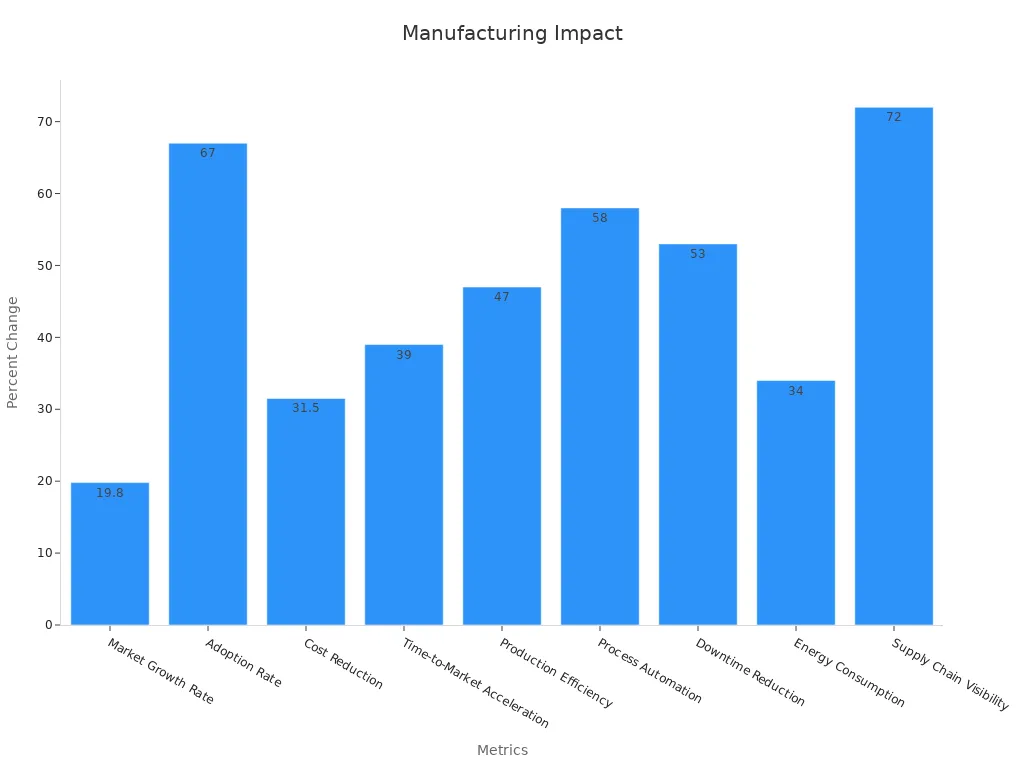
These changes also cut energy use by 34%, helping the environment. Better tracking of resources, with a 72% improvement, makes operations smoother. As factories improve, they will shape the future of discrete devices.
Focus on Sustainability and Energy Efficiency
Saving energy and protecting the planet are now top goals. As the world uses more energy, companies are making devices that work better and harm the environment less. This change is important for cars, green energy, and electronics.
Energy-Saving Technologies in Discrete Devices
New discrete devices are made to use less energy. For example, SiC power devices save up to 50% more energy than older silicon parts. These devices are used in electric cars, solar systems, and factory machines. By wasting less power, SiC devices help save energy and cut costs.
Sustainability in Manufacturing Processes
Factories are using greener ways to make products. Automation and cloud tools have improved energy use by 34%. These methods also cut waste and use materials wisely. Factories now track resources better, lowering their impact on nature.
China’s Role in Promoting Sustainability
China is helping lead the way in green technology. The country invests a lot in clean energy and electric car systems. Chinese companies, like Yangjie Technology, make energy-saving tools for solar panels and EV chargers. These ideas help fight climate change and support a greener future.
Tip: Using energy-saving devices helps the planet and saves money over time.
The Future of Energy Efficiency
The need for energy-saving devices will keep growing. Companies will use better tools that save energy and work well. This will lead to new ideas and greener solutions in many industries.
Challenges and Opportunities in the Industry
Supply Chain and Material Constraints
The discrete device industry faces big supply chain problems. U.S. export rules have slowed semiconductor production in China. These rules block access to key tools and materials, delaying progress. Car parts take longer to get, making the supply chain worse.
U.S. export rules are hurting China’s discrete device industry. Limits on shipping graphics chips and AI tools stop growth for Chinese and global factories. Delays in equipment orders and pressure to use Taiwanese factories add to the problem. Car parts are hit hardest, with long wait times for key components.
A global mismatch between supply and demand makes things harder. Natural disasters and COVID-19 have caused a chip shortage. The complex global supply chain, involving many countries, adds delays.
|
Statistic |
Description |
|---|---|
|
40% of CEOs |
Changed supply chains due to global tensions. |
|
32% of CEOs |
Plan to make supply chains stronger soon. |
|
Supply-Demand Gap |
Chip demand is higher than supply due to crises. |
Regulatory and Environmental Factors
Rules and environmental issues affect the discrete device market. Higher raw material costs make production more expensive. Global crises disrupt supply chains, slowing chip availability. Concerns about waste and energy use lead to stricter rules.
-
Rising material costs hurt profits in the discrete device market.
-
Global crises like COVID-19 disrupt chip supply and market growth.
-
Stricter rules on waste and energy use push for greener practices.
Price changes in materials like silicon and gallium arsenide make production harder. New environmental rules require companies to invest in eco-friendly methods. This adds costs but helps reduce harm to the planet.
Emerging Markets and Growth Potential
New markets offer big chances for the discrete device industry. By 2024, China will hold 36% of the global discrete semiconductor market. Its market is expected to grow nearly 8% yearly until 2029. Robotics and automation, earning over 170 billion yuan, drive demand for these chips.
-
China has built 3.22 million 5G base stations, 28.1% of all stations.
-
Electric car production is booming, with 589,000 made in August 2023.
-
New SiC and GaN tech improve electric car performance in high-power uses.
Combining transistors and power MOSFETs makes car systems work better. These improvements meet the rising need for power chips in electric cars and green energy systems.
Investment in R&D and Talent Development
Investing in research and development (R&D) is very important. It helps improve power devices like MOSFETs, IGBTs, and SiC parts. These better devices meet the need for energy-saving tools in electric cars, green energy, and factories.
China’s government helps by giving money and rewards to tech companies. This support helps create new ideas and keeps China strong in the global market. Local companies use R&D to make better power devices. These devices waste less energy and work more reliably. Such progress helps more people use green energy and eco-friendly methods.
Training skilled workers is also very important for growth. Companies work with schools to teach students about power electronics. This ensures there are enough experts to solve tough problems. By training people, China stays ahead in making new technology.
Schools and companies also team up to share knowledge. They work together to create better materials and ways to build devices. This teamwork leads to big improvements, like smaller devices and better heat control.
Focusing on R&D and training helps technology grow and boosts the economy. By doing this, China leads in the power device market and supports a greener future.
Future Outlook for China’s Discrete Device Industry
Growth Projections for 2025 and Beyond
China’s discrete device industry is set to grow quickly after 2025. The use of Industrial Internet of Things (IIoT) is changing how factories work. IIoT helps machines talk to each other, making work faster and smoother. This change will likely increase profits in the coming years.
The global market for small signal discrete devices is expected to grow. It may rise from $7,570 million in 2023 to $12,390 million by 2030, with a yearly growth rate of 7.4%. China’s role in this growth is important. Its advanced factories and new ideas make it a leader. More industries, like cars, green energy, and automation, need energy-saving tools, which supports this growth.
China’s Role in Global Semiconductor Supply Chains
China is becoming a major part of the world’s semiconductor supply chain. By 2025, it could make 40% of all new semiconductor factories. This would mean a 40% boost in making semiconductors, helped by huge government funding worth billions of dollars.
China is spending money to depend less on other countries for semiconductors. Its strong factories and skilled workers help meet the world’s need for discrete devices like IGBT and SiC. These efforts make China a key place for making and improving semiconductors.
|
Metric |
Value |
|---|---|
|
Growth in semiconductor production |
40% increase |
|
Share of new semiconductor fabs by 2025 |
40% of the world’s total fabs |
|
Government funding for semiconductors |
Hundreds of billions |
Potential for Technological Leadership in SiC Devices
China could lead the world in SiC devices. These devices save energy and work well, making them great for electric cars, green energy, and factory machines. The IIoT market, which may reach $806 billion by 2032, will also push the use of SiC.
Chinese companies are spending a lot on research to improve SiC devices. New ideas in SiC MOSFETs and IGBT make them stronger and more efficient. With advanced technology and big factories, China is ready to lead in SiC device innovation.
Note: Using SiC devices in key industries shows how they help save energy and protect the planet.
China’s discrete device industry is key to tech growth in 2025. It improves power electronics for cars, green energy, and gadgets. By saving energy and being eco-friendly, it helps the planet. Silicon carbide MOSFETs and SiC devices work better and save more power. These tools can change how power systems work. As it grows, the industry will lead in global tech and support a greener world.
What are discrete devices, and why are they important?
Discrete devices are single electronic parts like MOSFETs, IGBTs, and rectifiers. They help control power, manage circuits, and keep electronics safe. These devices are important because they save energy and make systems more reliable. Industries like cars, green energy, and gadgets use them a lot.
How does silicon carbide (SiC) improve power devices?
Silicon carbide makes power devices better by cutting energy waste and handling heat well. SiC parts, like MOSFETs, work great with high voltages and temperatures. This makes them perfect for electric cars, solar systems, and factory machines.
Why is China a leader in the discrete device industry?
China leads because it has strong factories, government help, and new ideas. It makes top-quality parts like SiC MOSFETs and IGBTs. These parts meet the world’s need for energy-saving tools in cars and green energy.
What industries benefit most from discrete devices?
Industries like cars, green energy, robots, and electronics gain the most. Discrete devices save energy, lower costs, and improve how things work. They are used in electric cars, solar panels, smart homes, and robots.
What trends are shaping the future of discrete devices?
Trends like smaller size, better efficiency, and greener tech are key. Devices are shrinking and using less energy. New SiC tech and better ways to make them are driving these changes.
See Also
Understanding The IRF820 MOSFET For Power Management Applications
Three Key Features Of SPC5605BMLL6 And SPC5607BMLL6 ECUs
Three Innovative Approaches Of ATIC83E2 In Automation
Maintaining Excellence In Electronics Through Advancing Technologies
Three Major Transformations By XCF01SVOG20C In Automation