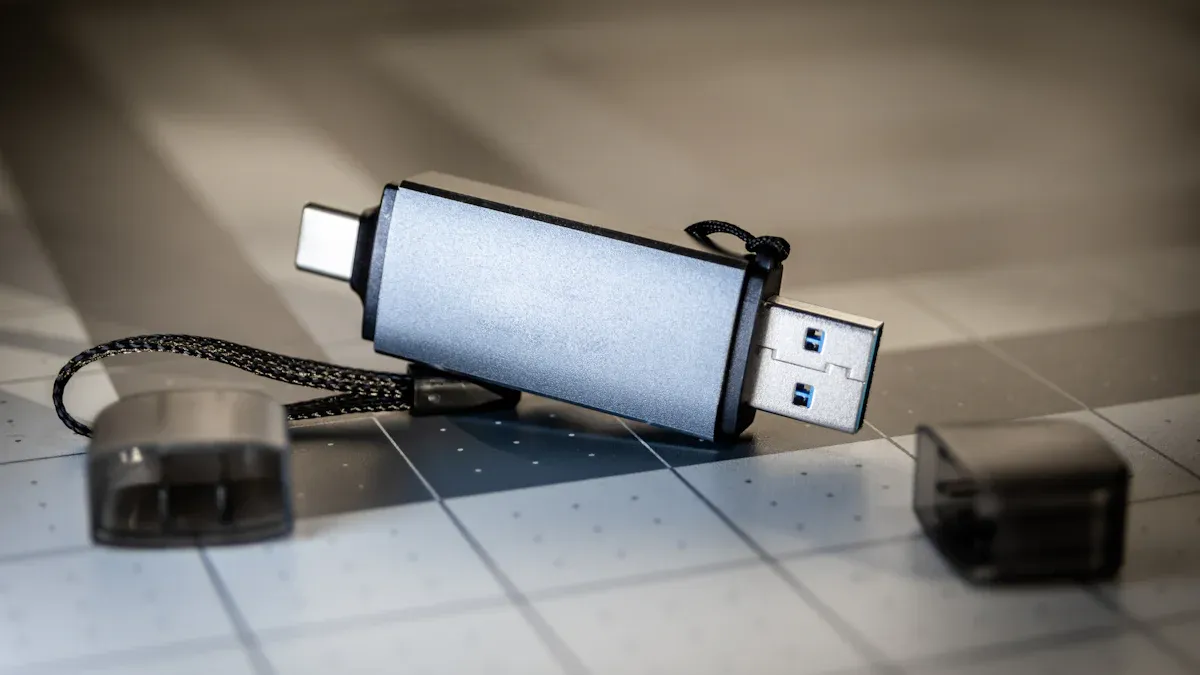
The MemoryS 2025 summit highlighted significant Storage Industry Innovations that are reshaping the landscape of data management. These innovations are driven by the rapid expansion of AI tasks. By 2025, global data is projected to exceed 181ZB, leading businesses to require 36% more storage each year. AI tools are revolutionizing storage solutions; for instance, leading smartphones equipped with LPDDR5X memory will be capable of holding 50-100% more data. Additionally, AI computers are expected to demand 80% more memory than current models. These developments underscore the critical role of storage in meeting the future demands of AI tasks and business requirements.
Key Takeaways
-
AI is causing a big rise in storage needs. Global data may go over 181ZB by 2025.
-
Picking the right storage means knowing speed, size, and dependability. This helps handle AI’s growing needs.
-
New tech like QLC SSDs and 3D NAND makes storage cheaper and better for AI use.
-
Tech companies working together is key to improving AI storage and solving problems.
-
Learning about new storage tech helps businesses grow and keep up with AI changes.
Key Insights from MemoryS 2025
AI-Driven Storage Demand
Growth in AI PC and smartphone memory demand
AI is making memory needs grow fast for devices. PCs and smartphones with LPDDR5X memory, like Samsung’s K3LK7K70BM-AGCP, can now hold 50-100% more data. Micron’s LPDDR6-9600 memory, made with a 12nm process, boosts speed and works great for AI tasks. These changes show how much memory is needed for AI apps and tools.
AI-specific SSDs and their role in AI workloads
AI-focused SSDs are changing how data is stored and used. Samsung’s UFS 4.1 (KLUFG8RHDB-B0E1) reaches speeds of 4300MB/s, making AI tasks smoother. Solidigm’s UFS 4.0 SSDs, with 176-layer 3D NAND, add more space and reliability. These upgrades help big companies handle AI tasks better.
Automotive storage evolution for AI-driven smart cockpits
Cars now use AI for smart systems and self-driving features. High-storage tools like Winbond’s W25Q256JVFIQ and GigaDevice’s GD25LX512ME manage the huge data from AI in cars. These tools process data fast, improving safety and user experience.
Market Trends and Projections
2024 storage market value and segment growth
The MemoryS 2025 event showed strong storage market growth. Memory chip sales may grow 18-22% in 2024 due to AI and tech needs. DRAM demand could rise 18-22%, and NAND flash memory might grow 25-30%. This shows how important advanced storage is becoming.
Server DRAM and NAND capacity growth
AI tasks need more DRAM than ever, with demand up 50% yearly. Generative AI creates more data, needing bigger server DRAM and NAND storage. Companies need scalable solutions to meet these growing needs.
AIOS and edge AI storage innovations
AIOS and edge AI storage are improving data centers and cloud use. These tools process data faster and cut delays, helping AI systems work better. UFS 4.1 and other new tech let businesses handle modern AI needs.
Collaboration and Ecosystem Development
Partnerships driving innovation in AI storage
Big companies are teaming up to improve AI storage. Toshiba and PROMISE Technology work together to store data for CERN’s Large Hadron Collider, managing over one exabyte. These partnerships show teamwork is key for AI progress.
Ecosystem advancements for AI applications
New systems make AI easier to use in many areas. NetApp’s AFF A-Series storage doubles performance and detects ransomware in real time. These tools help businesses use AI better and solve unique challenges.
Advancements in Storage Technologies

Breakthroughs in NAND and DRAM
Xtacking® 4.0 for faster speeds and more storage
Xtacking® 4.0 is a big step in NAND tech. It splits the NAND array and circuits into layers. This design makes data move faster and stores more. It’s perfect for AI tasks needing quick data handling.
DDR5 improvements and HBM benefits
DDR5 memory is making AI systems work better. Chips like Micron’s LPDDR6-9600 are faster and save energy. High Bandwidth Memory (HBM) helps AI by quickly accessing big data. It reduces delays and boosts system speed.
BiCS10 and advanced 3D NAND
Toshiba’s BiCS10 improves storage size and efficiency. It uses 3D NAND with over 200 layers. This tech fits more data in smaller spaces. It meets the need for compact, high-speed AI storage.
Innovations in SSDs
QLC SSDs for AI tasks
Quad-Level Cell (QLC) SSDs are changing AI data handling. They store more data for less cost. With read speeds of 14GB/s and write speeds of 10GB/s, they process AI data faster than older drives.
122TB SSDs and their uses
122TB SSDs are a huge leap in storage. They help industries like AI research and cloud computing. These drives store large data reliably and efficiently.
PCIe Gen5 and Gen6 improvements
PCIe Gen5 and Gen6 make SSDs faster and better. They reach up to 3.3 million IOPS for random reads. These upgrades save energy and speed up AI tasks.
Mobile and Edge AI Storage
UFS4.1 for mobile AI
UFS4.1 storage, like Samsung’s KLUFG8RHDB-B0E1, is for smartphones. It reaches speeds of 4300MB/s, making phones faster. It supports AI features like live translation and augmented reality.
Big SSDs for edge AI
Edge AI uses large SSDs to process data nearby. This reduces delays and helps real-time decisions. It’s great for self-driving cars and factory automation.
AI storage for robots and cars
AI storage is improving robots and cars. Chips like Winbond’s W25Q256JVFIQ are fast and reliable. They power smart cockpits and self-driving features, making them safer and better to use.
The Future of the Storage Industry
AI Changing How Storage Works
AI moving storage from cloud to edge
AI is changing where data is stored. Instead of using big cloud systems, data is now stored closer to where it’s used, called the edge. This makes data processing faster and decisions quicker. For example, Qualcomm bought Edge Impulse to focus on edge AI systems. These systems work well for factories and business networks by reducing delays and improving speed.
AI storage helping many industries
AI is improving storage for different industries. AIOps, which means AI in IT operations, helps manage storage better and saves money. Industries like cars, healthcare, and banking use AI storage for big data and machine learning. This makes their systems smarter and more efficient.
Privacy, cost, and ease in AI storage
AI storage focuses on keeping data private, saving money, and being easy to use. Fast data transfer and real-time analysis make everything run smoothly. For example, Samsung’s LPDDR5X memory and Micron’s LPDDR6-9600 chips help AI work better while using less energy. These tools meet the need for safe and simple storage.
New Storage Technologies and Trends
High-capacity and low-cost storage
The storage industry is working on making storage bigger and cheaper. QLC SSDs and 3D NAND are examples of this. Toshiba’s BiCS10 uses over 200 layers of 3D NAND to store more data in less space. These technologies are great for AI systems that need lots of storage.
Better designs for AI storage
New designs like file, object, and block storage are changing how storage works. These systems use AI to make storage more efficient. Businesses need these high-performance tools to handle big data. The data center market is expected to grow to $421.4 billion by 2030, showing how important this is.
Special NAND storage for AI
NAND storage is being improved for AI tasks. Xtacking® 4.0 makes storage faster and better for AI. These changes make NAND storage work well with different AI systems, from phones to big data centers.
Cars and Smart Devices
Central storage for AI cars
AI cars need central storage to process data quickly. High-capacity tools like Samsung’s UFS 4.1 and Solidigm’s UFS 4.0 SSDs help with advanced driving systems and entertainment features. These tools make AI work smoothly in cars.
Storage for smart car systems
Storage is important for smart car systems like ADAS and cockpits. Bosch’s platform combines driving help and entertainment in one system. Tools like Winbond’s W25Q256JVFIQ and GigaDevice’s GD25LX512ME make data processing fast and reliable.
AIOS changing car storage
AIOS, or Automotive Intelligent Operating Systems, is making car storage better. Systems like Xiaopeng Tianji’s AIOS cockpit need big, fast storage for real-time tasks. New DRAM and SSD technologies support these needs, helping cars become smarter and safer.
How to Choose the Right Storage Solutions
Understanding Your Needs
Knowing what AI storage needs
AI tasks need storage that handles big, fast data. Machine learning and deep learning need quick and smooth data processing. Tools like Samsung’s LPDDR5X-8533 memory and Micron’s LPDDR6-9600 chips are made for this. They are fast and reliable for AI work.
Checking performance, size, and dependability
Look at three things when picking storage: speed, size, and dependability. Fast storage, like Solidigm’s UFS 4.0 SSDs with 176-layer 3D NAND, makes data work smoothly. Big storage, like Samsung’s UFS 4.1 with 1TB, is great for growing AI needs. Reliable tools, like Winbond’s W25Q256JVFIQ chips, keep data safe even in tough situations.
Planning for future growth and tech changes
Storage should grow with your needs. Scalable tools, like GigaDevice’s GD25LX512ME with Xccela protocol, help handle more data later. Make sure your storage works with new tech to avoid frequent upgrades.
Comparing Storage Types
How NAND, DRAM, and SSDs are different
NAND, DRAM, and SSDs do different jobs. NAND, like Toshiba’s BiCS10, is good for big, cheap storage. DRAM, like Samsung’s LPDDR5X, is fast for real-time tasks. SSDs, like Solidigm’s UFS 4.0, mix speed and dependability, perfect for AI.
Why QLC SSDs and DDR5 are helpful
QLC SSDs are cheap and hold lots of data, great for AI. DDR5, like Micron’s LPDDR6-9600, is faster and saves energy, helping AI run better.
Picking between PCIe Gen5 and Gen6
PCIe Gen5 and Gen6 are both fast. Gen6 is quicker and better for advanced AI. Gen5 costs less and works for simpler tasks.
Tips for Choosing Storage
Balancing price and performance
Think about cost and speed when choosing storage. SSDs like Samsung’s UFS 4.1 cost more upfront but save money over time. Big SSDs are worth it for AI tasks needing high performance.
Using partnerships for better storage
Working with storage and AI companies can help. These partnerships make sure storage fits your needs and works well.
Keeping up with new storage tech
Learn about new storage tools often. Innovations like Xtacking® 4.0 and BiCS10 make storage faster and bigger. Staying updated helps businesses stay ahead in AI.
The MemoryS 2025 summit showed how AI is changing storage. By 2025, global data will reach 181ZB. Businesses will need 36% more storage every year. This growth means new ideas are needed for AI storage.
AI is improving industries like healthcare, cars, and factories. Big SSDs, like 128TB ones, are now very important.
Trends include making storage bigger, cheaper, and easier to expand. Tools like Samsung’s LPDDR5X chip and Micron’s LPDDR6 memory show this progress. Learning about these changes helps businesses use AI better and get ready for what’s next.
Why is Samsung’s LPDDR5X memory good for AI tasks?
Samsung’s LPDDR5X-8533 memory is fast and uses less power. It helps AI tools work quicker, like machine learning programs. With 16Gb capacity, it runs smoothly on phones and computers. This makes it a dependable choice for AI jobs.
How does Micron’s LPDDR6 make phones better?
Micron’s LPDDR6-9600 memory is faster and saves energy. It improves AI features like live translation and augmented reality. Its design helps phones multitask easily and last longer on battery.
Why is UFS 4.1 storage useful for smartphones?
Samsung’s UFS 4.1 gives 1TB storage and speeds of 4300MB/s. It loads apps quickly and handles AI tasks well. It supports features like high-quality video recording and smart AI apps.
What does Solidigm’s UFS 4.0 do for AI storage?
Solidigm’s UFS 4.0 uses advanced 3D NAND for big and reliable storage. It speeds up data access, making it great for AI tasks. Its strong design works well for business and edge AI systems.
How do Winbond and GigaDevice chips help AI in cars?
Winbond and GigaDevice chips store data fast and reliably for cars. They manage large amounts of data from smart systems and driving aids. Their speed and strength make cars safer and easier to use.
See Also
Ensuring Quality Through Advancements in Electronic Technology
Unveiling Essential Specifications of MC9S12XEQ512CAL Microcontroller
Key Automotive Features of FREESCALE MCF5251CVM140 Explored
In-Depth Look at MC9S12DJ256MFUE Automotive Specifications
Comparing STM32F401VCT6 and STR750FV2T6 in Medical Devices