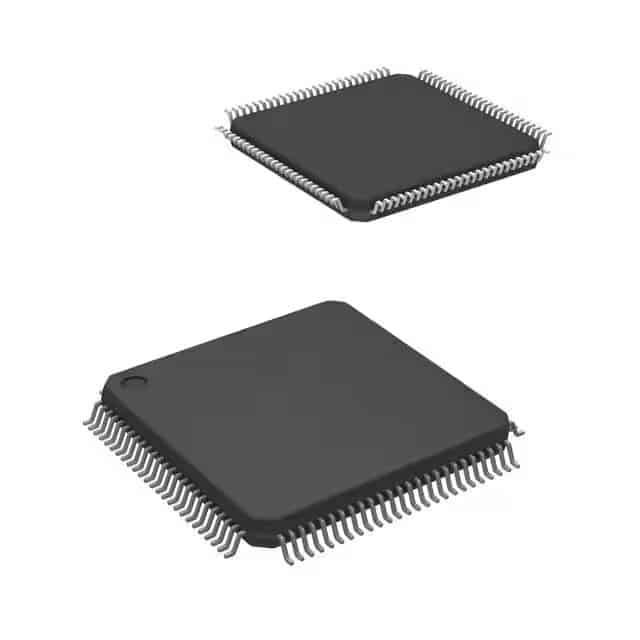
The STM32F745VGT6 microcontroller offers exceptional performance and versatility, making it a top choice for drones and robots. Its ARM Cortex-M7 core, running at up to 216 MHz, ensures high-speed processing. The wide operating voltage range (1.7V to 3.6V) and extensive peripherals enable seamless integration with sensors, actuators, and communication modules. Key features include:
-
512 KB Flash memory and 384 KB SRAM for efficient storage and execution.
-
USB OTG FS/HS and SD/MMC interfaces for high-speed connectivity and storage expansion.
-
Advanced security features like hardware cryptographic acceleration.
|
Feature |
STM32F745VGT6 Advantages |
|---|---|
|
Core |
ARM Cortex-M7 running at up to 216 MHz |
|
Memory |
512 KB Flash and 384 KB SRAM |
|
Peripherals |
Wide range including UART, SPI, I2C, USB, etc. |
|
Connectivity |
Supports Ethernet, USB, and CAN |
|
Graphics Capabilities |
Includes graphics accelerator and LCD controller |
These capabilities allow developers to create efficient, real-time control systems for complex applications.
Key Takeaways
-
The STM32F745VGT6 microcontroller has a strong ARM Cortex-M7 core.
-
It runs up to 216 MHz, making it great for fast tasks in drones and robots.
-
With 512 KB Flash memory and 384 KB SRAM, it handles big programs easily.
-
Developers can store lots of code and resources without problems.
-
It has many built-in tools like USB, Ethernet, and communication systems.
-
These tools help it connect smoothly with sensors and moving parts.
-
Its design saves energy, giving real-time control with little delay.
-
This is important for tasks like steering and keeping balance.
-
Developers can use low-power modes and smart coding to save energy.
-
This helps drones and robots work longer without needing a recharge.
Features of STM32F745VGT6
ARM Cortex-M7 Core and Processing Power
The STM32F745VGT6 features the ARM Cortex-M7 core, which delivers exceptional processing power. As the highest-performance member of the Cortex-M family, it is designed to handle demanding applications. The core operates at up to 216 MHz, enabling fast and efficient execution of complex tasks.
Key highlights of the Cortex-M7 core include:
-
High-performance floating-point processing, offering up to 10x acceleration for single-precision operations.
-
Digital Signal Processing (DSP) capabilities, which combine control and signal processing in a single platform.
-
Energy-efficient design, making it suitable for power-sensitive applications like drones and robots.
These features make the STM32F745VGT6 an excellent choice for real-time control systems requiring both speed and precision.
Memory and Storage Capabilities
The STM32F745VGT6 provides ample memory and storage to support complex applications. Its memory architecture ensures efficient storage and execution of code and data.
|
Memory Type |
Size |
|---|---|
|
Flash Memory |
512 KB |
|
SRAM |
384 KB |
This large memory capacity allows developers to store extensive codebases and resources. Additionally, the microcontroller supports real-time operating systems (RTOS), enabling multitasking and efficient operation in real-time environments. These capabilities ensure smooth performance in applications like flight controllers and robotic navigation systems.
Integrated Peripherals for Communication and Control
The STM32F745VGT6 includes a rich set of integrated peripherals, facilitating seamless communication and control. These peripherals enable the microcontroller to interface with a wide range of devices and sensors.
Notable peripherals include:
-
USB OTG FS and HS interfaces for high-speed data transfer and device connectivity.
-
SD/MMC interface for storage expansion and data transfer.
-
SPI, UART, and I2C communication protocols for diverse application requirements.
-
High-speed connectivity options like Ethernet and CAN for efficient data transfer.
These features make the STM32F745VGT6 highly versatile, allowing it to manage complex systems in drones and robots. Its robust communication capabilities ensure reliable data exchange between components, enhancing overall system performance.
Real-Time Performance and Power Efficiency
Real-time performance and power efficiency are critical for drones and robots. These systems require precise timing and minimal delays to execute tasks like navigation, stabilization, and obstacle avoidance. The STM32F745VGT6 excels in these areas by combining high processing power with energy-efficient design.
The ARM Cortex-M7 core, running at up to 216 MHz, forms the backbone of the STM32F745VGT6. This core delivers high-speed processing and floating-point capabilities, enabling it to handle demanding real-time applications. Its compatibility with popular real-time operating systems (RTOS) ensures efficient multitasking, which is essential for managing complex systems.
Key features contributing to real-time performance and power efficiency include:
-
ARM Cortex-M7 Core: Provides high performance and supports digital signal processing (DSP).
-
Wide Operating Voltage Range: Operates between 1.7V and 3.6V, offering flexibility in power supply design.
-
Extensive Peripheral Set: Includes communication interfaces, ADCs, DACs, and timers for seamless integration.
-
High-Speed Connectivity: Supports USB, Ethernet, and CAN for fast and reliable data transfer.
|
Feature |
Description |
|---|---|
|
ARM Cortex-M7 Core |
High performance with floating-point capabilities for demanding applications. |
|
Operating Voltage Range |
1.7V to 3.6V, providing flexibility in power supply options. |
|
Extensive Peripheral Set |
Multiple communication interfaces, ADCs, DACs, timers, etc. |
|
High-Speed Connectivity |
Supports USB, Ethernet, and CAN for efficient data transfer. |
|
Security Features |
Hardware cryptographic acceleration and secure boot capabilities. |
The STM32F745VGT6 achieves a balance between performance and power efficiency by leveraging its advanced architecture. Its energy-efficient design makes it suitable for drones and robots, where power consumption directly impacts operational time. Developers can rely on this microcontroller to deliver consistent real-time performance while optimizing energy usage.
Applications in Drones and Robots

The STM32F745VGT6 plays a vital role in drones and robots by enabling precise control, efficient communication, and real-time processing. Its advanced features make it suitable for managing complex tasks in these systems.
Drone Controllers
Flight Control and Stabilization
Flight control and stabilization are critical for drones to maintain balance and respond to environmental changes. The STM32F745VGT6 excels in this area due to its high-performance ARM Cortex-M7 core, which handles complex calculations with ease. Its extensive peripheral set and high-speed connectivity further enhance its ability to process data from sensors and execute commands in real time.
|
Feature |
Description |
|---|---|
|
ARM Cortex-M7 Core |
Provides high performance and floating-point capabilities essential for complex calculations. |
|
Extensive Peripheral Set |
Includes various communication interfaces, ADCs, DACs, and timers necessary for drone control. |
|
High-Speed Connectivity |
Facilitates efficient data transfer through USB, Ethernet, and CAN interfaces. |
These features allow drones to achieve stable flight and adapt to dynamic conditions effectively.
Sensor Integration for Navigation
Drones rely on sensors like GPS, gyroscopes, and accelerometers for navigation. The STM32F745VGT6 supports seamless integration of these sensors through its SPI, I2C, and UART interfaces. It processes sensor data in real time, enabling accurate positioning and obstacle detection. This capability ensures reliable navigation even in challenging environments.
Motor Control and ESC Management
Efficient motor control is essential for drone stability and maneuverability. The STM32F745VGT6 uses its PWM outputs and timers to manage electronic speed controllers (ESCs) with precision. This ensures smooth motor operation, allowing drones to perform complex movements and maintain stability during flight.
Robot Controllers
Motion Planning and Execution
Robots require precise motion planning to perform tasks like picking, placing, or navigating. The STM32F745VGT6 provides the computational power needed for real-time motion planning. Its DSP capabilities enable robots to calculate trajectories and execute movements with high accuracy.
Communication with External Devices
Robots often interact with external devices such as controllers, sensors, or other robots. The STM32F745VGT6 supports multiple communication protocols, including Ethernet, CAN, and USB. These interfaces ensure reliable data exchange, enabling coordinated operations in multi-robot systems.
AI and Machine Learning Integration
The STM32F745VGT6 can integrate AI and machine learning algorithms to enhance robotic intelligence. Developers can use its floating-point unit and DSP features to implement neural networks and process sensor data efficiently. This allows robots to recognize patterns, make decisions, and adapt to their environment.
Practical Implementation of STM32F745VGT6
Setting Up the Development Environment
Required Tools and Hardware
To begin working with the STM32F745VGT6, developers need specific tools and hardware. A development board featuring the STM32F745VGT6 microcontroller is essential. Additional components include a USB cable for programming, a power supply, and debugging tools like an ST-LINK programmer. For testing, sensors, actuators, and communication modules may also be required. These tools ensure a smooth setup process and enable efficient project development.
IDE Setup and Configuration
An Integrated Development Environment (IDE) simplifies programming and debugging. STM32CubeIDE is a popular choice for STM32 microcontrollers. After installation, developers should configure the IDE to recognize the STM32F745VGT6. This involves selecting the correct microcontroller model and setting up the clock configuration. Proper configuration ensures compatibility and streamlines the development process.
Installing Libraries and Drivers
Libraries and drivers play a crucial role in enabling the STM32F745VGT6 to interact with peripherals. Developers can use STM32CubeMX to generate initialization code and include necessary libraries. Installing drivers for communication protocols like SPI, UART, and I2C ensures seamless integration with external devices. These steps lay the foundation for building robust applications.
Example Project for Drones
Basic Flight Controller Implementation
A flight controller manages a drone’s stability and movement. Using the STM32F745VGT6, developers can implement a basic flight controller by programming the microcontroller to process sensor data and control motors. The ARM Cortex-M7 core ensures real-time performance, enabling precise flight control.
Sensor Integration for Altitude and Orientation
Altitude and orientation sensors, such as barometers and gyroscopes, are vital for drone navigation. The STM32F745VGT6 interfaces with these sensors using I2C or SPI protocols. By processing sensor data, the microcontroller provides accurate altitude and orientation information, enhancing flight stability.
Motor Control for Stable Flight
Motor control is critical for maintaining a drone’s balance. The STM32F745VGT6 uses PWM outputs to regulate motor speed through electronic speed controllers (ESCs). This precise control ensures smooth and stable flight, even in challenging conditions.
Example Project for Robots
Motor Control Using PWM
Robots rely on motor control for movement. The STM32F745VGT6 generates PWM signals to adjust motor speed and direction. Its timers and GPIO pins enable precise control, allowing robots to perform complex tasks efficiently.
Sensor Integration for Obstacle Detection
Obstacle detection is essential for autonomous robots. The STM32F745VGT6 connects to sensors like ultrasonic or infrared modules via I2C or UART interfaces. By processing sensor data in real time, the microcontroller helps robots avoid collisions and navigate safely.
Communication with Remote Controllers
The STM32F745VGT6 facilitates communication with remote controllers through its versatile interfaces.
-
SPI, UART, and I2C interfaces enable data exchange with controllers.
-
GPIO pins provide additional flexibility for custom communication protocols.
These features ensure reliable and responsive control of robotic systems.
Best Practices for STM32F745VGT6
Optimizing Performance
Efficient Use of Memory and Processing Power
Developers can maximize the STM32F745VGT6’s potential by efficiently utilizing its memory and processing power. This microcontroller, with its 32-bit ARM Cortex-M7 core running at up to 216 MHz, delivers exceptional performance for demanding applications. Its ample flash memory and RAM allow for the storage and execution of complex codebases.
To optimize performance:
-
Use the microcontroller’s capabilities in industrial control systems, consumer electronics, and smart home devices.
-
Leverage its rich set of peripherals, including UART, SPI, I2C, and USB, to enhance functionality.
-
Implement modular programming techniques to reduce memory usage and improve code readability.
Efficient memory and processing power utilization ensure smooth operation in applications like medical equipment, automotive systems, and IoT devices.
Minimizing Latency in Real-Time Tasks
Minimizing latency is crucial for real-time applications. Developers should prioritize tasks using real-time operating systems (RTOS) to ensure timely execution. Configuring interrupt priorities and optimizing peripheral usage can further reduce delays. The STM32F745VGT6’s high-speed connectivity options, such as Ethernet and CAN, also help maintain low latency in communication-intensive tasks.
Debugging and Troubleshooting
Common Issues and Solutions
Common issues include incorrect peripheral configurations and memory overflows. Developers should verify clock settings and ensure proper initialization of peripherals. Using STM32CubeMX to generate initialization code can prevent configuration errors. For memory-related problems, monitoring stack and heap usage helps identify bottlenecks.
Using Debugging Tools Effectively
Debugging tools like ST-LINK and STM32CubeIDE simplify troubleshooting. These tools allow developers to set breakpoints, monitor variables, and analyze code execution. Enabling debug messages through UART or USB interfaces provides additional insights into system behavior.
Power Management
Reducing Power Consumption
Reducing power consumption extends the operational time of drones and robots. Developers can utilize the STM32F745VGT6’s low-power modes, such as sleep and standby, during idle periods. Optimizing clock frequencies and disabling unused peripherals also conserves energy.
Managing Power Supply for Extended Operation
A stable power supply ensures reliable performance. Developers should design circuits with voltage regulators to maintain consistent power levels. Using capacitors to filter noise and prevent voltage fluctuations further enhances system stability.
The STM32F745VGT6 stands out as a versatile microcontroller, offering advanced features tailored for drones and robots. Its high-speed processing, extensive peripheral set, and real-time capabilities empower developers to design innovative systems. By following practical examples, such as motor control and sensor integration, developers can unlock its full potential.
To explore this microcontroller further, developers can access a comprehensive datasheet, circuit diagrams, and usage guides. Development tools, IDEs, and support for popular RTOS platforms streamline the implementation process. These resources ensure a smooth journey from concept to application.
What makes the STM32F745VGT6 suitable for drones and robots?
The STM32F745VGT6 offers high-speed processing, real-time performance, and extensive peripherals. Its ARM Cortex-M7 core handles complex tasks like flight control and motion planning. The microcontroller’s compatibility with sensors and actuators ensures precise control, making it ideal for drones and robots.
Can the STM32F745VGT6 handle AI and machine learning tasks?
Yes, the STM32F745VGT6 supports AI and machine learning integration. Its floating-point unit and DSP capabilities enable efficient neural network implementation. Developers can process sensor data and execute AI algorithms, enhancing robotic intelligence and decision-making.
What tools are needed to start developing with the STM32F745VGT6?
A development board with the STM32F745VGT6, a USB cable, and an ST-LINK programmer are essential. Additional tools include STM32CubeIDE for programming and debugging, sensors, and actuators for testing. These tools simplify the development process.
How does the STM32F745VGT6 manage power consumption?
The STM32F745VGT6 includes low-power modes like sleep and standby. Developers can optimize clock frequencies and disable unused peripherals to conserve energy. These features extend operational time, especially in drones and robots.
Is the STM32F745VGT6 compatible with real-time operating systems (RTOS)?
Yes, the STM32F745VGT6 supports popular RTOS platforms. Its high-speed processing and multitasking capabilities ensure efficient real-time task management. This compatibility makes it suitable for applications requiring precise timing and control.
See Also
A Comprehensive Guide to Smart Home Automation with STM32F030C8T6
Integrating Bluetooth Functionality in Robots Using STM32F103C8T6
Key Programming Techniques for MC9S12XD256 Microcontrollers
Understanding MC9S12DJ256MFUE Specs for Automotive Use Cases
RV1126 Drives AI Edge Computing Solutions in Robotics