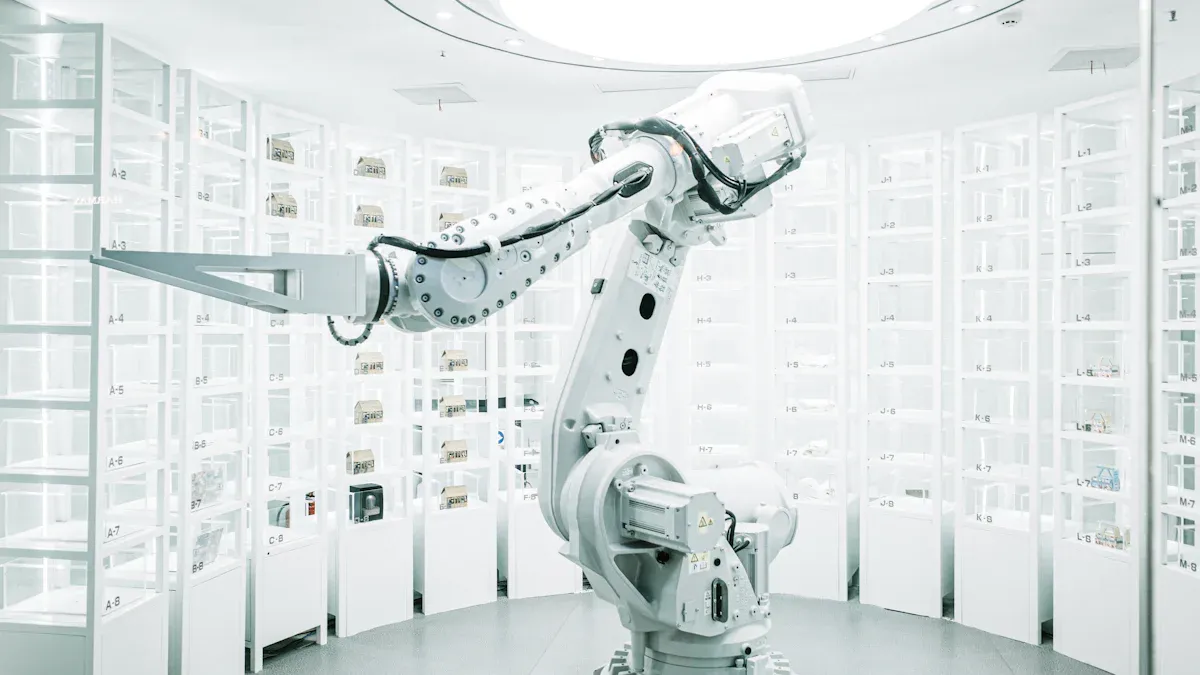
AI and automation are fundamentally reshaping electronics manufacturing, significantly driving down operational costs. These technologies achieve cost reduction through enhanced efficiency, substantial waste reduction, and optimised resource utilisation across the production lifecycle. For electronics manufacturers, embracing AI and automation is no longer optional; it is a strategic imperative for maintaining competitiveness and profitability. The global electronics manufacturing market is substantial, as shown below:
|
Year |
Market Size (USD Billion) |
Growth Rate (CAGR) |
|---|---|---|
|
2023 |
580.2 |
N/A |
|
2024-2032 |
Expected to reach 926.6 |
Over 5% |
This growth underscores the critical need for AI manufacturing to achieve cost savings and improved quality. AI offers significant cost efficiency, particularly in reducing Electronics Manufacturing Costs. AI and automation electronics manufacturing costs are a key focus for smart manufacturing, as AI drives better production.
Key Takeaways
-
AI and automation make electronics manufacturing cheaper. They improve how things are made and use fewer materials.
-
AI helps machines work better for longer. It fixes problems before they stop production, saving money on repairs.
-
AI checks product quality very fast. This means fewer mistakes and less waste, making products better and cheaper to produce.
-
Digital twins and cobots also cut costs. Digital twins test products virtually, and cobots help workers do tasks faster and safer.
-
Manufacturers need good data and trained staff for AI to work well. They must also keep their systems safe from cyber threats.
AI in Manufacturing: Driving Cost Efficiency
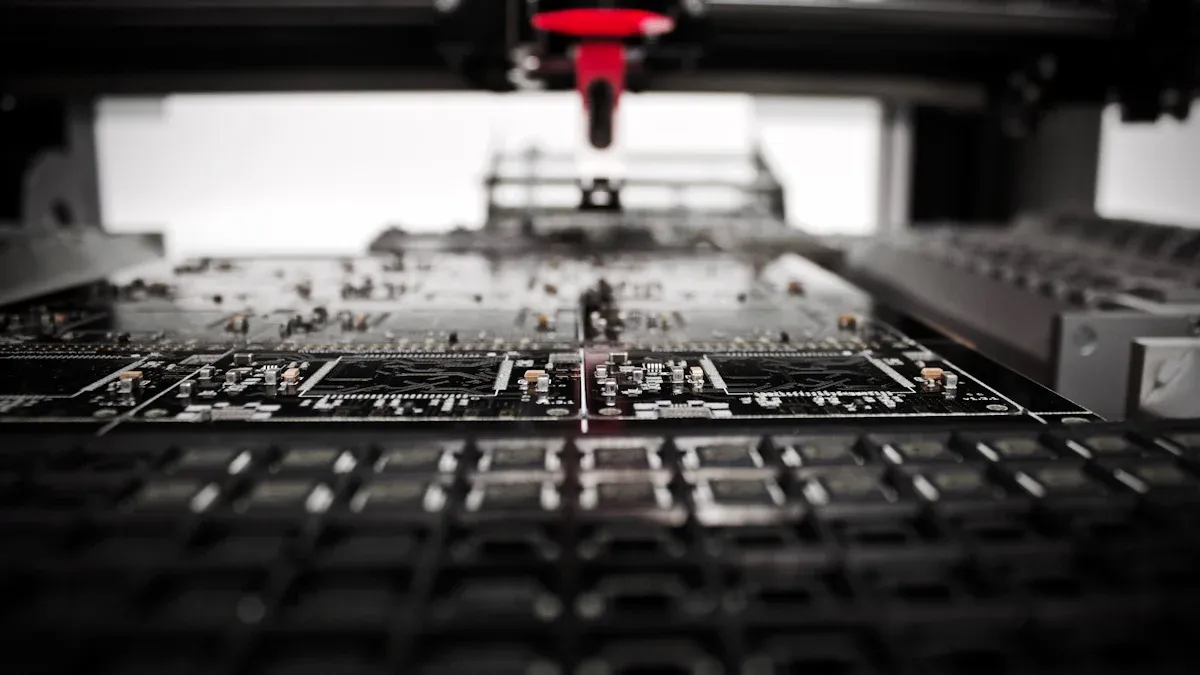
AI and automation directly reduce electronics manufacturing costs across various operational areas. Smarter control systems adjust production speed, minimise waste, and optimise energy consumption. This leads to significant cost efficiency.
Predictive Maintenance: Reducing Downtime and Maintenance Costs
AI revolutionises equipment maintenance in electronics manufacturing. It analyses sensor data from machinery to predict potential failures before they occur. This proactive approach allows manufacturers to schedule maintenance during planned downtime, avoiding unexpected breakdowns. Unplanned downtime can halt production, leading to substantial financial losses. By predicting issues, companies reduce emergency repair costs and extend the lifespan of expensive equipment. This ensures continuous production and maintains operational efficiency.
AI-Powered Quality Control: Minimising Rework and Waste
AI significantly enhances quality control, directly minimising rework and waste. Edge AI enables real-time analysis directly at the point of production. For example, it detects issues like misbonded wires or misaligned caps within fractions of a second. This immediacy prevents errors from spreading. Cybord’s AI-powered Real-Time Interception (RTI) solution actively prevents defective components from being assembled onto Printed Circuit Board Assemblies (PCBAs). It instantly identifies and rejects faulty parts within milliseconds before placement. This proactive approach significantly reduces manufacturing rework and scrap. It safeguards product quality and integrity while optimising operational efficiency.
AI-powered visual inspection detects defects early in the production process. This reduces waste and rework, leading to cost savings and more efficient material use. AI provides data that adjusts machines and processes, thereby minimising defects and optimising resource utilisation. An aviation glass project demonstrated how automated inspection using AI technology led to significant savings. It reduced hundreds of hours of manual checks within a few months. This shows how AI quickly delivers a return on investment through reduced labour, lower scrap rates, and fewer reworks. AI-powered quality assurance helps sustainability-focused businesses by resolving and minimising material waste. It also contributes to waste reduction through unprecedented levels of precision and efficiency. This ensures high quality products.
Supply Chain Optimisation: Cutting Inventory and Logistics
AI optimises the entire supply chain for electronics manufacturing. It analyses vast amounts of real-time data, including market demand, supplier performance, and logistics routes. This allows manufacturers to make data-driven decisions about inventory levels. They can reduce excess stock, which lowers storage costs and minimises the risk of obsolescence. AI also improves logistics planning, finding the most efficient shipping routes and methods. This reduces transportation costs and speeds up delivery times. The result is a leaner, more responsive supply chain, directly impacting the overall cost.
Process Automation: Boosting Efficiency and Throughput
Process automation, powered by AI, dramatically boosts efficiency and throughput in electronics manufacturing. Advanced automation technologies handle repetitive tasks with speed and precision, surpassing human capabilities.
Consider these examples of automation:
-
Automated In-Circuit Testing (ICT): This reduces testing time and improves accuracy by automatically testing individual components and connections on a PCB.
-
Automated Functional Testing: It simulates real-world conditions to verify product performance, ensuring thorough testing before products leave the factory.
-
Automated Material Handling and Transfer: This accelerates the movement of components, PCBs, and assemblies, optimising workflow and reducing manual labour.
-
Robotic Pick and Place: It provides high-speed, high-accuracy placement of PCBs and components, integrating with existing equipment for efficient assembly.
-
Automated Thermal Compound/Adhesive Dispensing: This offers precise control over adhesive application, minimising waste and ensuring consistent bonding quality.
-
Robotic Final Assembly: It integrates PCBs into final products using precise torque control for screwing components and accurate placement of delicate parts.
-
Automated CNC Routing: This precisely de-panels PCBs from larger panels, improving production speed and yield while minimising material waste.
These systems, often incorporating advanced robotics and AI-driven analytics, provide real-time monitoring and predictive insights. They adapt to production demands and identify patterns for proactive adjustments. Smart sensors continuously monitor performance and component positioning, providing instant feedback for dynamic adjustments and quality control. This smart manufacturing approach leads to increased production efficiency, improved quality control, and 24/7 operation. It also reduces labour costs and minimises material waste. Real-time monitoring of these automated processes ensures optimal performance and continuous improvement.
AI for Energy Management: Lowering Utility Costs
AI plays a crucial role in optimising energy consumption within electronics manufacturing facilities. Adaptive intelligence, through adaptive neural networks, analyses real-time data from various sources. These sources include sensors, control systems, and even weather stations. This enables real-time optimisation of equipment and operations. This maximises efficiency, minimises environmental impact, and enhances grid stability. AI and Machine Learning optimise energy consumption by monitoring energy usage patterns and suggesting adjustments to reduce waste. This approach lowers operational costs and enhances sustainability.
For instance, AI significantly reduces energy consumption in HVAC systems. It adapts operating conditions based on factors like weather, thermal conditions, air quality, and occupancy. AI integrates real-time data from these variables to create predictive and optimisation models. This enables global decision-making that leads to reduced consumption, lower operating costs, and improved environmental conditions. Real-time monitoring of energy usage allows for immediate adjustments, ensuring maximum energy efficiency.
Enabling Technologies for Automation and Cost Savings
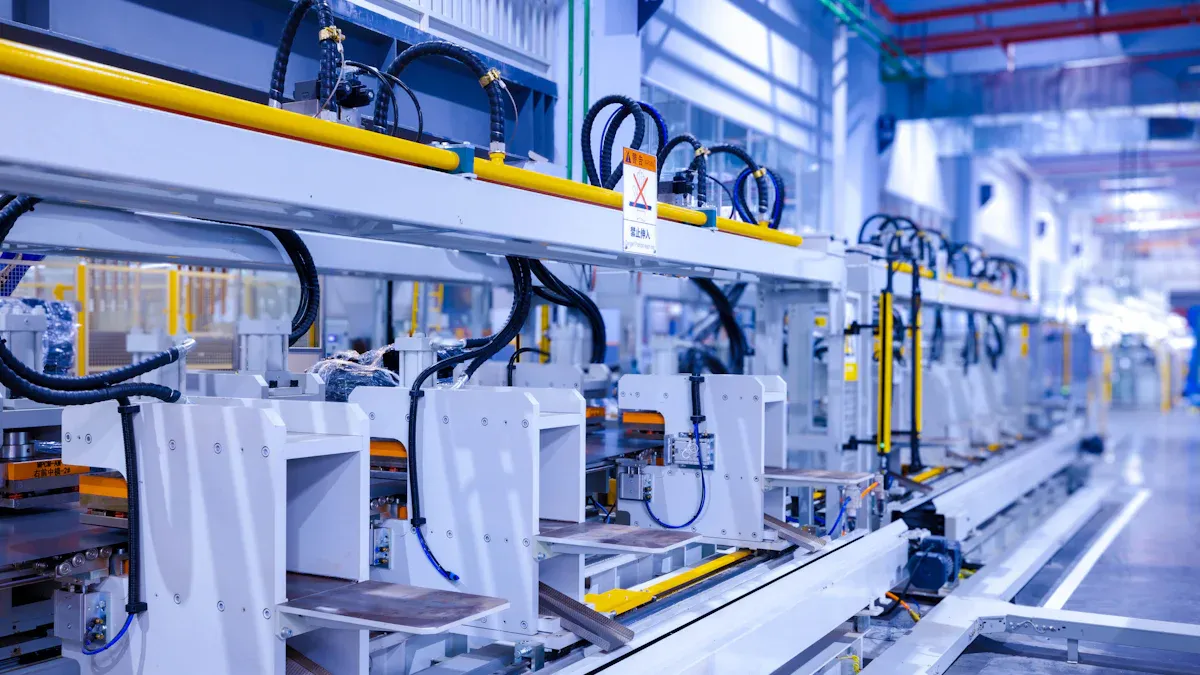
This section explores specific technologies that facilitate cost reduction. These technologies contribute to overall cost efficiency in electronics manufacturing. They leverage AI and automation to drive down ai automation electronics manufacturing costs.
Digital Twins: Virtual Optimisation for Cost Savings
Digital twins offer significant cost savings by allowing engineers to identify and address design flaws within a virtual model. This proactive approach prevents costly revisions and delays that would otherwise occur during the production process. By streamlining the design process, digital twins reduce the necessity for multiple physical prototypes and accelerate the time-to-market for the final product. Research by McKinsey indicates that digital twins can reduce total product development times by 20% to 50%. They also significantly cut costs associated with physical prototyping. Automotive giant Renault, for example, uses complete 3D digital twins of its vehicles. This allows designers to optimise aspects like aerodynamics, ergonomics, and system compatibility in a simulated environment before any physical parts are produced. This optimisation process, informed by the digital twin, then guides the creation of the first prototype, leading to a substantial reduction in design time. Digital twins contribute to cost reduction by enabling scenario testing and product simulation in virtual environments. This helps businesses make more profitable decisions. This approach avoids the expenses of fixing or recovering from incorrect approaches. Digital twins facilitate virtual prototyping and product simulation, allowing designers to optimise product designs. Virtual prototyping enables companies to experiment with various designs without needing to invest capital and resources in physical assets and prototypes. By simulating different scenarios during the design stage, manufacturers can make early decisions to reduce waste, CO₂ emissions, and optimise resource usage. The digital models created can then be used for further simulation, prediction, and optimisation of the product. This is a key aspect of smart manufacturing.
Cobots: Boosting Productivity and Safety
Cobots significantly boost production and enhance safety in electronics manufacturing. Organisations adopting cobots have reported efficiency increases of up to 85%. This boost is attributed to cobots handling repetitive tasks, allowing human teams to focus on more complex activities. Cobots enhance safety through several advanced safety features:
-
Collision Avoidance Sensors: These prevent cobots from crashing into people or objects.
-
Force and Torque Sensors: These detect and measure the force and torque applied by, or to, the cobot, enabling safe responses to changing resistance or obstacles.
-
Advanced Vision and Proximity Sensors: These use technologies like ultrasonic or infrared waves to detect nearby physical obstacles (people or objects).
-
Emergency Stop Buttons: These immediately stop operations if an emergency is detected.
-
Force Limiting: This stops or reverses motion if the cobot encounters resistance exceeding a pre-set threshold.
-
Built-in Redundancies: Multiple backup safety mechanisms are in place, ensuring continued safety even if one system fails.
Cobots also adhere to safety standards like ISO/TS 15066, which provides guidelines on the safe use of collaborative robots. These features reduce the risk of repetitive strain injuries by taking over physically demanding tasks. Cobots can also handle materials in hazardous conditions, protecting human health and improving overall quality. This demonstrates the practical application of AI in manufacturing.
Maximising Cost Savings: Overcoming Implementation Challenges
Electronics manufacturers can achieve significant cost savings with AI and automation. However, they must navigate several challenges during implementation. Addressing these issues ensures successful adoption and maximises benefits.
Addressing Data Quality and Integration Hurdles
High-quality data is essential for effective AI systems. Many manufacturers face issues with fragmented data spread across various systems. This hinders effective algorithm training. Legacy systems also complicate integration due to compatibility issues with modern AI technologies. Existing software architectures often struggle to accommodate AI components, especially with data silos. This is particularly problematic for predictive maintenance systems, which require extensive historical data. This data can be trapped in disparate systems, limiting their effectiveness. Implementing AI-based inspection also faces challenges like data scarcity and lighting conditions. However, manufacturers can overcome these barriers with appropriate strategies, including using synthetic data to address dataset bottlenecks. Ensuring robust data quality and seamless integration of real-time data is crucial for AI success in manufacturing.
Bridging Skills Gaps and Workforce Training
A significant challenge involves the workforce. A generational divide exists where younger workers adapt quickly to new tools, but older employees express concern about the pace of change. They fear being left behind. Senior leaders are cautious about over-reliance on AI and manually cross-check its outputs. Cultural resistance also appears when experienced workers reject new AI tools, as seen with virtual welding simulators. Many businesses lack the necessary strategic approach, skills, and cultural readiness for successful AI implementation. Chris Barlow, Head of Manufacturing and Engineering, advises:
“invest in training, diversify your workforce and build digital confidence across all levels. AI may be part of the answer, but people will remain at the heart of manufacturing.” This highlights the need for comprehensive training programmes to bridge skills gaps and foster trust in new technologies.
Ensuring Cybersecurity and Data Protection
Protecting data and systems is paramount in AI-driven operations. Manufacturers must establish clear usage policies for teams regarding which AI tools they can use and for what purposes. They should vet AI platforms before deployment, checking their security features, data handling practices, and compliance credentials. Training staff on secure prompt engineering prevents accidental sharing of sensitive information. Regularly auditing AI-generated code, reports, and decisions for security flaws or biased outputs is also vital. Monitoring data flows into AI systems ensures confidential information is not included. Implementing human oversight, where experts review AI-generated insights for accuracy and reliability, adds another layer of security. Adhering to regulations like ITAR and EAR, along with frameworks such as NIST AI Risk Management Framework, ensures robust protection for sensitive production data and maintains operational efficiency.
AI and automation profoundly transform electronics manufacturing. They achieve substantial, sustainable cost savings across all facets. These technologies create leaner, more efficient, and ultimately more profitable operations. AI in manufacturing drives better quality and boosts production efficiency. This reduces ai automation electronics manufacturing costs. Strategic adoption of AI and automation is essential for electronics manufacturers. It secures a competitive edge, fosters innovation, and ensures long-term financial viability in modern manufacturing. This approach leads to smart manufacturing. AI helps optimise every stage of production.
FAQ
How does AI specifically reduce costs in electronics manufacturing?
AI reduces costs by optimising processes. It enables predictive maintenance, which lowers downtime. AI also improves quality control, minimising waste and rework. Furthermore, it optimises supply chains, cutting inventory and logistics expenses. This makes manufacturing more efficient.
What are the main benefits of using digital twins in manufacturing?
Digital twins allow virtual optimisation. They help engineers identify design flaws early, preventing costly revisions. This technology streamlines the design process and reduces the need for physical prototypes. AI also enhances the insights gained from these virtual models.
How do cobots contribute to cost savings?
Cobots boost productivity by handling repetitive tasks. This frees human workers for more complex activities. They also enhance safety, reducing injury risks and improving overall working conditions. This leads to more efficient manufacturing operations.
What challenges might manufacturers face when implementing AI?
Manufacturers often encounter data quality and integration hurdles. Bridging skills gaps within the workforce also presents a challenge. Ensuring robust cybersecurity and data protection for AI systems is another critical concern.
Can AI improve product quality?
Yes, AI significantly improves product standards. AI-powered control systems detect defects in real-time. This minimises rework and waste. It ensures higher quality for finished goods. This leads to better customer satisfaction.
See Also
ATIC83E2: Unlocking Industrial Automation’s Potential Through Practical Applications
XCF01SVOG20C: Three Key Innovations Revolutionising Industrial Automation
Integrating AEAT-8800-Q24: Boosting Robotics Performance With Seamless Implementation
Electronic Components: Analysing Innovation, Quality, And Future Trends For Excellence
MC9S12DJ256MFUE: Exploring Its Pivotal Role In Automotive Electronics