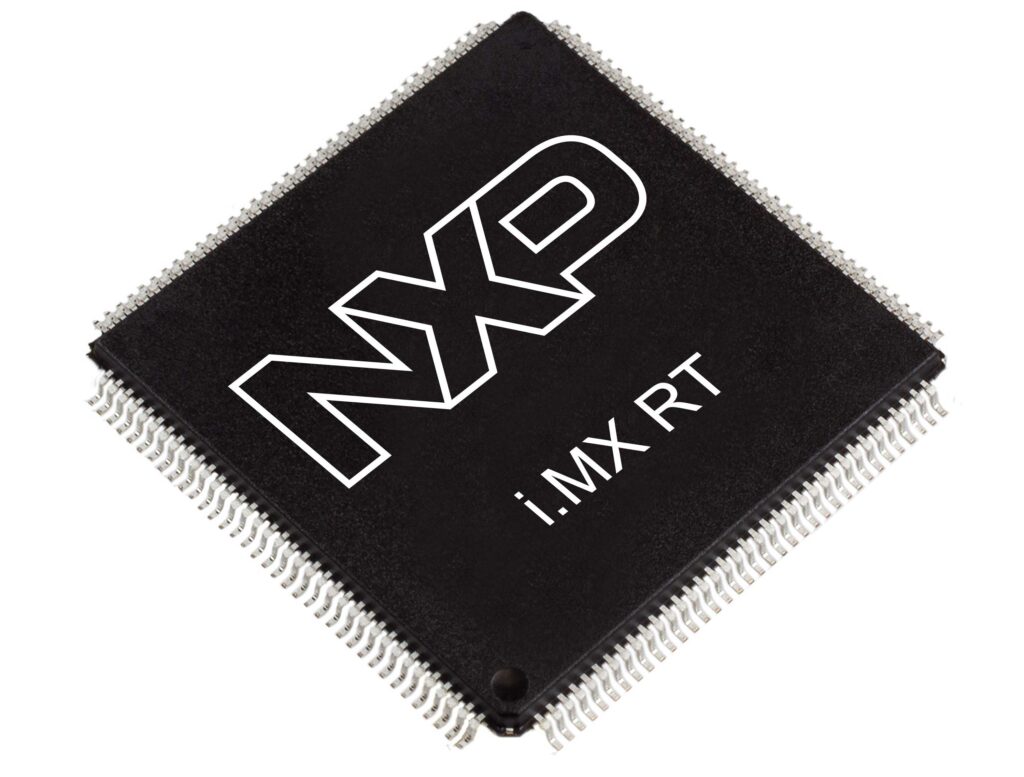

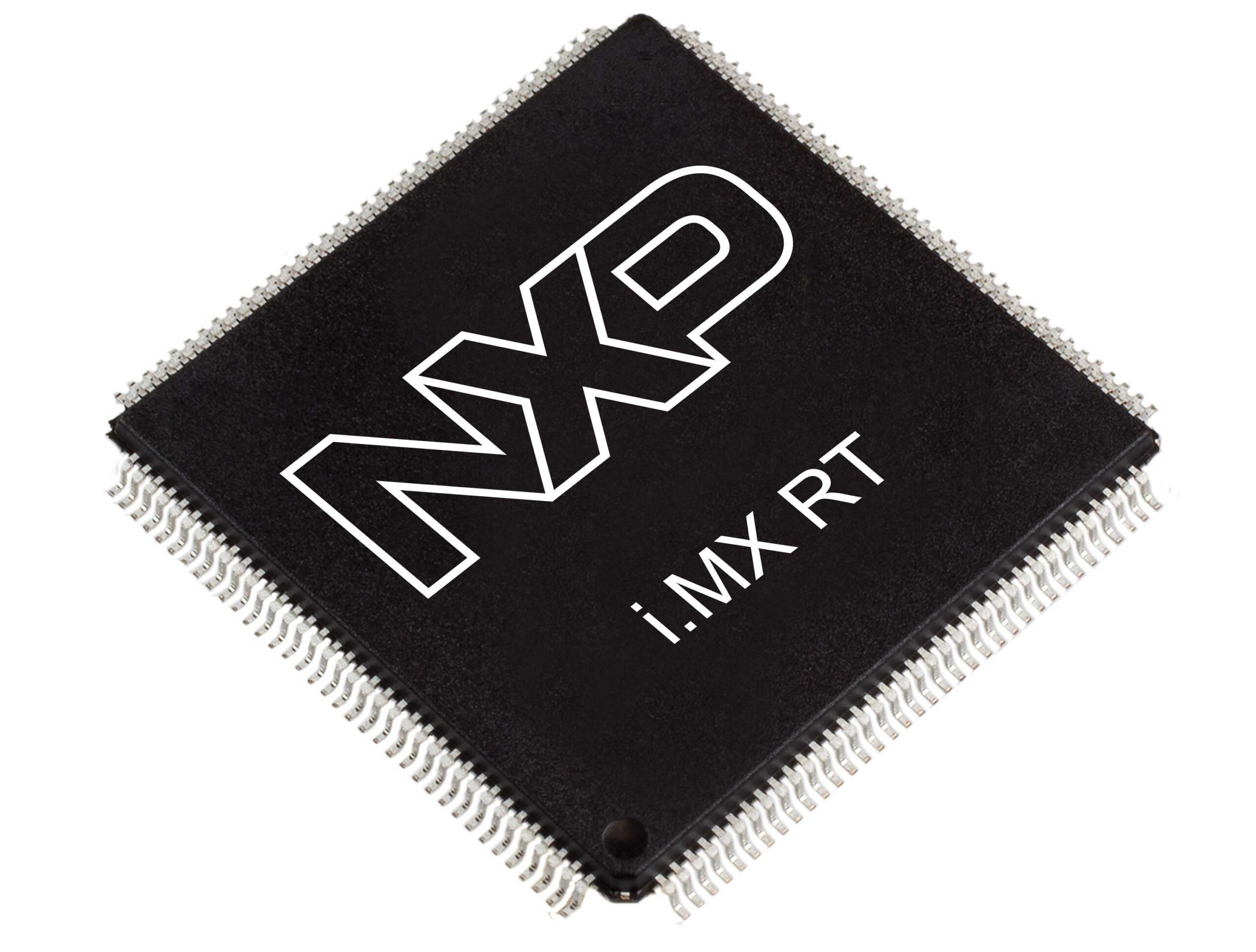
Industrial automation and control systems increasingly demand high-performance, real-time microcontrollers. The NXP MIMXRT1061CVL5B i.MX RT1060 CrossoverProcessors for IndustrialProducts offers powerful processing and a rich peripheral set, making it an excellent choice for applications such as Industrial Human Machine Interfaces (HMI), Motor Control, and Home Appliances. Successful integration of the MIMXRT1061CVL5B requires a systematic approach, covering hardware, software, and industrial-specific considerations. This blog post guides readers through essential steps and best practices to integrate the MIMXRT1061CVL5B into robust industrial embedded systems.
Key Takeaways
-
The MIMXRT1061CVL5B is a powerful chip for industrial systems. It has a fast processor and special parts for factory use.
-
Good hardware design is very important. This includes stable power, careful circuit board layout, and strong connections for sensors.
-
Software needs careful planning. Use the right tools and operating systems to make the chip work well. This helps with real-time control and communication.
-
Industrial systems must be very reliable and safe. Use features like watchdog timers and follow safety rules to prevent problems.
-
Test your system a lot. Make sure it works in harsh environments. Get certifications to show it meets industry standards.
MIMXRT1061CVL5B: i.MX RT1060 Crossover Processors for Industrial Products
Key Features and Industrial Benefits
The MIMXRT1061CVL5B i.MX RT1060 CrossoverProcessors for IndustrialProducts stands out with its robust capabilities. It integrates a high-performance ARM Cortex-M7 core, operating at an impressive 600 MHz. This core delivers exceptional real-time signal processing, crucial for demanding industrial tasks. Engineers utilize this power for applications such as Industrial Human Machine Interfaces (HMI), where smooth graphics and rapid response are essential. It also excels in motor control systems, requiring precise and timely calculations for efficient operation. Its “crossover” designation means it combines the ease of use of a microcontroller with the performance of an applications processor. This blend offers significant advantages for complex industrial designs, providing both flexibility and raw processing power.
Industrial-Specific Peripherals
The MIMXRT1061CVL5B i.MX RT1060 CrossoverProcessors for IndustrialProducts provides a rich set of peripherals tailored for industrial environments. It includes integrated Ethernet, enabling reliable network communication for factory automation and remote monitoring. CAN (Controller Area Network) interfaces support robust in-vehicle and industrial control networks, facilitating communication between various system components. For external memory, the device features a FlexSPI interface. This allows for high-speed access to QSPI Flash, ensuring fast boot times and efficient data storage for complex firmware and application data. These peripherals directly address the critical connectivity and data handling needs of modern industrial systems.
Power and Thermal Management
Effective power and thermal management are vital for industrial reliability and longevity. The MIMXRT1061CVL5B i.MX RT1060 CrossoverProcessors for IndustrialProducts is designed with power efficiency in mind. Its advanced architecture helps minimize power consumption while maintaining high performance, which is crucial for battery-powered or energy-sensitive applications. Proper thermal design ensures stable operation across varying industrial temperatures, preventing performance degradation or component failure. Engineers must implement appropriate power supply filtering and heat dissipation strategies, such as heatsinks or proper PCB layout. This guarantees the MCU performs optimally and reliably over its extended operational lifespan in harsh industrial settings.
Hardware Integration Best Practices
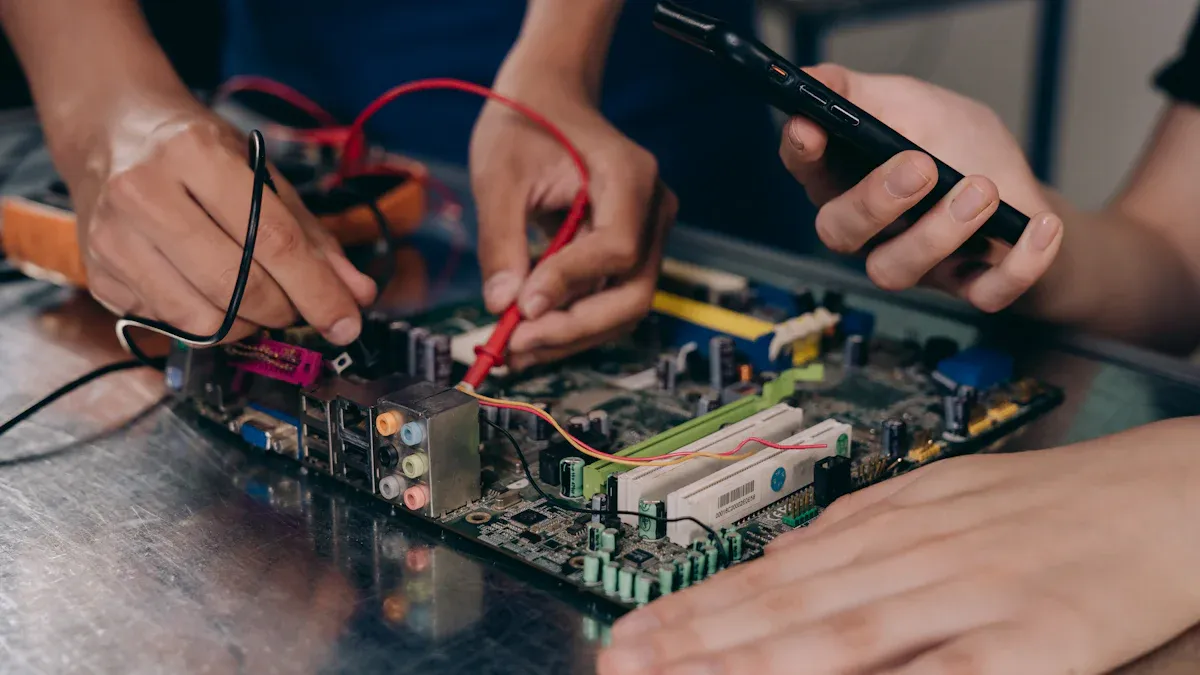
Integrating the MIMXRT1061CVL5B into an industrial system demands careful hardware design. Engineers must consider critical chip-level conditions, system power, clock requirements, and I/O parameters. These elements ensure the MCU operates reliably and performs optimally in harsh industrial environments.
Industrial Power Supply and Filtering
A stable and clean power supply is fundamental for any industrial embedded system. The MIMXRT1061CVL5B requires precise voltage rails. Designers must select industrial-grade power supplies that offer robust regulation and protection against voltage fluctuations, surges, and brownouts. Effective filtering is crucial to minimize electrical noise. This involves using a combination of bulk capacitors for ripple reduction and smaller ceramic capacitors placed close to the MCU’s power pins. These capacitors suppress high-frequency noise. Inductors can also help filter out common-mode noise. A well-designed power delivery network prevents noise from affecting sensitive analog and digital circuits, ensuring stable operation.
Tip: Always refer to the MIMXRT1061CVL5B datasheet for specific voltage tolerances and recommended power sequencing. A schematic diagram showing proper filtering components and their placement is essential for review.
PCB Layout for EMC/EMI Compliance
Electromagnetic Compatibility (EMC) and Electromagnetic Interference (EMI) are critical concerns in industrial settings. A well-executed PCB layout is key to achieving compliance. Designers should use multi-layer PCBs with dedicated ground planes and power planes. These planes provide low-impedance paths for current return and help shield sensitive signals. High-speed signals, such as those for the FlexSPI interface or Ethernet, require careful routing. Maintain controlled impedance traces and minimize trace lengths to preserve signal integrity. Separate analog and digital ground planes, connecting them at a single point, can prevent digital noise from corrupting analog measurements. Proper component placement, including strategic shielding and grounding of connectors, further reduces emissions and improves immunity to external interference.
Memory Subsystem Design
The MIMXRT1061CVL5B relies on external memory for many applications. Designers often use SDRAM (Synchronous Dynamic Random-Access Memory) for high-speed data storage and QSPI Flash for non-volatile code and data storage. For SDRAM, precise routing and impedance matching are vital. Mismatched impedances can cause signal reflections, leading to data corruption. Follow the datasheet’s recommendations for trace lengths, spacing, and termination. QSPI Flash offers fast boot times and reliable storage. Ensure the FlexSPI interface traces are short and well-shielded. Proper memory subsystem design directly impacts system performance and reliability, especially for applications requiring large data buffers or complex operating systems.
Interfacing Industrial Sensors and Actuators
Industrial systems frequently connect to various sensors and actuators. The MIMXRT1061CVL5B provides Analog-to-Digital Converters (ADCs) for reading analog sensor data and Digital-to-Analog Converters (DACs) for analog output control. General Purpose Input/Output (GPIO) pins handle digital signals. When interfacing, designers must consider signal conditioning, such as amplification or attenuation, to match the MCU’s input ranges. Isolation circuits, like optocouplers or digital isolators, protect the MCU from high voltages or ground potential differences common in industrial environments. Protection circuits, including transient voltage suppressors (TVS) and current limiting resistors, safeguard I/O pins from electrical overstress. Level shifters may be necessary if sensors or actuators operate at different voltage levels than the MCU.
Robust Connectivity Solutions
Industrial communication demands robust and reliable connectivity. The MIMXRT1061CVL5B supports Ethernet and CAN interfaces. For Ethernet, selecting an industrial-grade Ethernet PHY (Physical Layer) transceiver is crucial. These PHYs often include enhanced ESD (Electrostatic Discharge) protection and wider operating temperature ranges. Implement proper magnetic isolation between the PHY and the Ethernet connector to protect against electrical surges and ground loops. For CAN communication, integrate a robust CAN transceiver. These transceivers provide differential signaling, which offers excellent noise immunity, and often include built-in protection features. Ensure proper termination resistors are in place on the CAN bus to prevent signal reflections. These robust connectivity solutions ensure reliable data exchange in noisy industrial settings.
Software Development and Firmware Integration
Successful hardware integration is only one part of building a robust industrial system. Software development and firmware integration are equally critical. Engineers must select the right tools, operating systems, and communication protocols to unlock the full potential of the MIMXRT1061CVL5B.
Development Environment and Toolchain Selection
Choosing the correct development environment and toolchain streamlines the software development process. NXP provides the MCUXpresso IDE, a comprehensive and free integrated development environment. It offers powerful debugging capabilities, code analysis tools, and project management features. Engineers often use NXP’s GUI wizard tool within MCUXpresso. This tool simplifies peripheral configuration and clock setup, reducing development time. For Human Machine Interface (HMI) applications, tools like Embedded Wizard UI applications allow for rapid graphical user interface development. These tools help create visually appealing and responsive industrial HMIs.
Many engineers also consider commercial toolchains. IAR Embedded Workbench and Keil MDK are popular choices. These toolchains offer highly optimized compilers and extensive debugging features. They often provide advanced analysis tools for code quality and performance. The choice of toolchain depends on project requirements, team familiarity, and specific debugging needs.
RTOS for Industrial Control
Industrial applications demand real-time performance and efficient resource management. A Real-Time Operating System (RTOS) becomes essential for these needs. An RTOS allows multiple tasks to run concurrently, ensuring critical operations execute within strict time constraints. It manages CPU time, memory, and peripheral access.
FreeRTOS is a widely adopted open-source RTOS. It is known for its small footprint, scalability, and extensive community support. FreeRTOS provides features like task scheduling, inter-task communication, and synchronization primitives. These features are crucial for managing complex industrial control logic.
Zephyr RTOS is another strong contender, especially for industrial IoT applications. Zephyr offers modularity, security features, and broad hardware support. Its focus on security and connectivity makes it suitable for modern industrial systems requiring network integration. Engineers often evaluate both FreeRTOS and Zephyr based on project complexity, security requirements, and available driver support.
Driver Development for Industrial Interfaces
The MIMXRT1061CVL5B features a rich set of industrial peripherals. Developing robust drivers for these interfaces is vital. NXP provides a comprehensive Software Development Kit (SDK) for the MIMXRT1061CVL5B. This SDK includes peripheral drivers, middleware, and example applications. Engineers use these drivers as a foundation.
Key industrial interfaces require careful driver development. Ethernet drivers enable reliable network communication. CAN drivers manage communication on industrial buses. FlexSPI drivers ensure high-speed access to external QSPI Flash memory. Analog-to-Digital Converters (ADCs) and Digital-to-Analog Converters (DACs) need precise drivers for sensor data acquisition and actuator control. General Purpose Input/Output (GPIO) drivers handle digital signals. Robust drivers include error handling, fault detection, and recovery mechanisms. These features ensure system stability in demanding industrial environments.
Implementing Industrial Communication Protocols
Industrial systems rely on standardized communication protocols for interoperability. Implementing these protocols correctly ensures seamless data exchange between devices.
-
Modbus TCP/RTU: Modbus is a widely used serial (RTU) and Ethernet-based (TCP) protocol. It is simple, robust, and easy to implement. Engineers use Modbus for communication between PLCs, HMIs, and other industrial devices.
-
EtherCAT: EtherCAT is a high-performance, real-time Ethernet fieldbus. It offers deterministic communication and high synchronization accuracy. EtherCAT is ideal for demanding motion control and distributed I/O applications.
-
PROFINET: PROFINET is another industrial Ethernet protocol. It provides flexibility for various industrial automation tasks. PROFINET supports real-time communication and integrates well with existing Ethernet networks.
Engineers often leverage existing protocol stacks and libraries. These resources accelerate development and ensure compliance with protocol standards. Proper implementation of these protocols is key to building interconnected and efficient industrial systems.
Firmware Updates and Bootloader Design
Industrial systems often require firmware updates throughout their lifecycle. A well-designed bootloader and firmware update mechanism are crucial for maintenance and security. The bootloader is the first piece of code that runs on the MCU. It initializes the system and loads the main application firmware.
A robust bootloader design includes several features:
-
Secure Boot: This ensures only authenticated and authorized firmware runs on the device.
-
Firmware Integrity Checks: The bootloader verifies the integrity of new firmware images using checksums or cryptographic signatures.
-
Rollback Mechanism: This allows the system to revert to a previous, known-good firmware version if an update fails.
-
Over-the-Air (OTA) Updates: OTA updates enable remote firmware upgrades, reducing downtime and maintenance costs.
Many industrial systems use a dual-bank update approach. The MCU stores two copies of the firmware. One copy runs while the other is updated. This method provides fault tolerance. If an update fails, the system can boot from the untouched, working firmware copy. This ensures high availability, a critical requirement in industrial settings.
Industrial Reliability and Safety Considerations
Industrial embedded systems demand unwavering reliability and stringent safety measures. Engineers must design these systems to operate continuously and safely, even under challenging conditions. This section explores key considerations for achieving high reliability and meeting safety standards.
High Availability and Fault Tolerance
Industrial processes often run 24/7. High availability ensures systems remain operational despite component failures. Fault tolerance allows a system to continue functioning correctly when parts of it fail. Engineers achieve this by incorporating redundancy. They might use duplicate hardware components. If one component fails, the backup takes over seamlessly. This minimizes downtime. Designers also implement hot-swappable modules. These modules allow replacement without shutting down the entire system. The MIMXRT1061CVL5B i.MX RT1060 CrossoverProcessors for IndustrialProducts can manage these redundant systems. It facilitates rapid switching between primary and backup units. This capability ensures continuous operation in critical applications.
Watchdog Timers and Error Handling
Watchdog timers are crucial for system stability. A watchdog timer monitors software execution. The software must periodically “feed” or reset this timer. If the software freezes or enters an infinite loop, it fails to feed the watchdog. The timer then expires. This expiration triggers a system reset. This mechanism prevents the system from locking up indefinitely. Robust error handling routines are equally important. These routines detect and manage unexpected conditions. They log errors for later analysis. They also attempt to recover from faults. This includes handling communication failures or sensor malfunctions. Proper error handling significantly improves system resilience.
Functional Safety Standards
Functional safety is paramount in industrial environments. It ensures systems do not cause harm due to malfunctions. Engineers design systems to comply with specific safety standards. These standards include IEC 61508 for electrical, electronic, and programmable electronic safety-related systems. ISO 13849 addresses the safety of machinery. Compliance requires rigorous design and validation processes. It involves thorough risk assessment. It also includes implementing specific safety functions. Designers must follow strict guidelines for integrating components into safety-certified systems.
Environmental Hardening
Industrial environments are frequently harsh. Systems must withstand extreme conditions. Environmental hardening ensures reliable operation in these settings. This includes protection against wide temperature variations. It also involves resistance to high humidity and dust ingress. Vibration and shock resistance are critical for machinery. Engineers select components rated for industrial temperature ranges. They use robust, sealed enclosures. They apply conformal coatings to printed circuit boards. This protects against moisture and contaminants. Proper thermal management also contributes to environmental hardening. These measures ensure the system’s longevity and consistent performance.
Testing, Validation, and Certification
After hardware and software integration, rigorous testing and validation are essential. These steps confirm the system’s reliability, performance, and compliance with industrial standards. Certification ensures the product meets necessary regulatory requirements for market entry.
Comprehensive Testing Strategies
Developers implement various testing strategies to ensure system robustness. Unit testing verifies individual software modules and hardware components. Integration testing checks the interaction between different parts of the system. System testing evaluates the complete embedded system against its functional and non-functional requirements. Performance testing measures speed, efficiency, and responsiveness. Reliability testing assesses long-term operation under expected conditions. Stress testing pushes the system beyond its normal operating limits to identify breaking points. These tests help identify and fix issues early in the development cycle.
EMC/EMI Compliance Testing
Industrial environments contain significant electromagnetic interference (EMI). Therefore, systems must demonstrate electromagnetic compatibility (EMC). EMC testing ensures the device does not emit excessive electromagnetic noise. It also confirms the device operates correctly when exposed to external electromagnetic fields. Tests include radiated emissions, conducted emissions, radiated immunity, and conducted immunity. These tests often require specialized chambers and equipment. Passing EMC/EMI compliance is critical for preventing operational disruptions and ensuring safety in industrial settings.
Environmental Testing
Industrial products operate in diverse and often harsh environments. Environmental testing simulates these conditions to verify system resilience. Temperature cycling tests expose the device to extreme hot and cold temperatures. Humidity tests check performance in moist conditions. Vibration and shock tests ensure mechanical integrity. Ingress Protection (IP) testing verifies protection against dust and water. These tests confirm the MIMXRT1061CVL5B-based system can withstand the physical stresses of its intended industrial application.
Industrial Market Certifications
Achieving industrial market certifications is a final, crucial step. These certifications demonstrate compliance with industry-specific standards and regulations. Examples include CE marking for European markets, UL certification for safety in North America, and various functional safety standards like IEC 61508. Obtaining these certifications often involves submitting detailed test reports and documentation to accredited bodies. Certification assures customers of the product’s quality, safety, and reliability, enabling its widespread adoption in industrial applications.
The MIMXRT1061CVL5B i.MX RT1060 CrossoverProcessors for IndustrialProducts offers significant potential for advanced industrial embedded systems. Successful integration demands meticulous hardware design, robust software development, adherence to industrial standards, and rigorous testing.
A holistic and systematic approach overcomes integration challenges. This ensures a reliable, high-performance industrial solution.
The MCU presents exciting opportunities for innovation in industrial automation.
FAQ
What makes the MIMXRT1061CVL5B suitable for industrial applications?
The MIMXRT1061CVL5B features a 600 MHz ARM Cortex-M7 core, providing high performance. It includes industrial peripherals like Ethernet and CAN. This MCU supports real-time processing for applications such as HMI and motor control. Its robust design ensures reliability in harsh industrial environments.
Which development tools does NXP recommend for the MIMXRT1061CVL5B?
NXP recommends the MCUXpresso IDE. This environment offers powerful debugging and code analysis. Engineers can also use NXP’s GUI wizard tool for peripheral configuration. Commercial options like IAR Embedded Workbench and Keil MDK are also available for development.
Tip: The MCUXpresso IDE integrates seamlessly with NXP’s SDK, providing a strong starting point for projects.
Why is an RTOS important for industrial control with this MCU?
An RTOS ensures real-time performance and efficient resource management. It allows multiple tasks to run concurrently. This guarantees critical operations execute within strict time constraints. FreeRTOS and Zephyr are popular choices, offering features vital for complex industrial control logic.
How does the MIMXRT1061CVL5B support industrial communication protocols?
The MCU supports essential industrial protocols. It includes Ethernet for Modbus TCP and PROFINET. It also features CAN for robust in-vehicle and industrial networks. Engineers can implement EtherCAT for high-performance real-time communication, ensuring seamless data exchange.
See Also
MC9S12XEQ512CAL: Automotive To Industrial Control Applications Explored Deeply
MC9S12XET512VAG Microcontroller: Automotive System Integration Strategies And Practices
XCF01SVOG20C: Three Key Transformations For Industrial Automation Revealed
Unveiling FREESCALE MCF5251CVM140’s Essential Automotive Features And Benefits
Integrating AEAT-8800-Q24: Boosting Robotics Performance Through Strategic Implementation