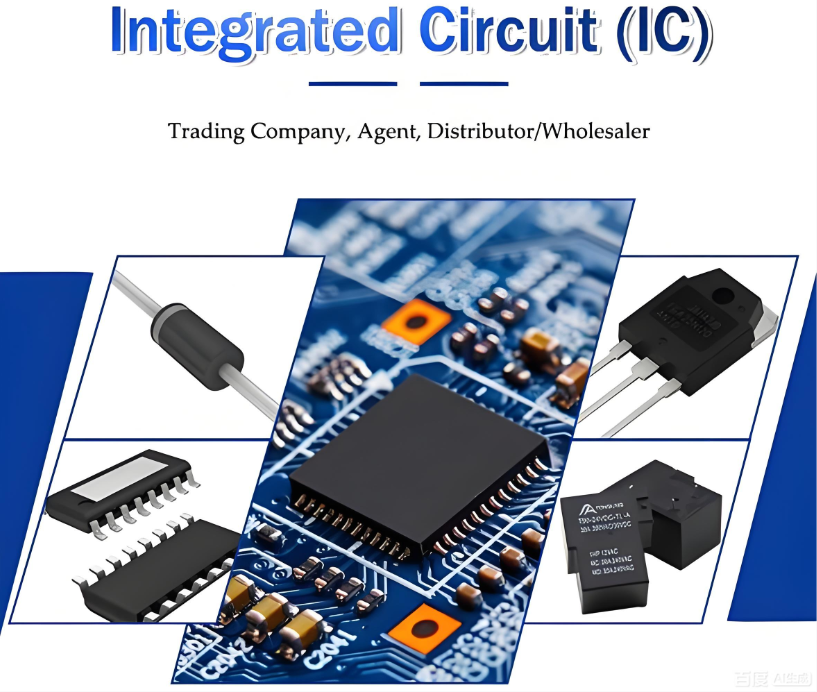
Integrated circuits form the backbone of modern computing. They play a critical role in the specialized field of cryptocurrency mining. These powerful integrated circuits enable the high-performance, energy-efficient computation necessary for solving complex cryptographic puzzles. For the integrated circuits for mining industry, Application-Specific Integrated Circuits (ASICs) represent the pinnacle of this technology, offering specialized processing power.
Key Takeaways
-
ASICs are special chips. They mine cryptocurrency very fast and use little power. This makes mining more profitable.
-
Integrated circuits help miners save money. They use less electricity. They also manage heat well.
-
FPGAs are flexible chips. Miners can change them to mine different coins. This helps small miners compete.
-
New chip technology will make mining better. Smaller chips and AI will improve speed and save energy. This will happen by 2025.
ASICs: Unmatched Computational Power
Specialized Hardware for Mining Algorithms
Application-Specific Integrated Circuits (ASICs) represent a significant leap in mining technology. Engineers design these specialized chips for one purpose: solving the complex mathematical problems in cryptocurrency mining. This dedicated design allows ASICs to perform calculations much faster and more efficiently than general-purpose processors like CPUs or GPUs. Each ASIC targets a specific hashing algorithm, such as SHA-256 for Bitcoin. This specialization means the chip’s entire architecture optimizes for that single task. It does not waste resources on functions unrelated to mining. This focused approach makes ASICs incredibly powerful tools for the integrated circuits for mining industry.
Hash Rate Dominance and Efficiency
ASICs achieve unparalleled hash rates, which measure the speed at which a mining device can solve cryptographic puzzles. A higher hash rate increases a miner’s chance of earning cryptocurrency rewards. Their specialized design also leads to superior energy efficiency. This means ASICs consume less power per hash compared to other hardware. This efficiency directly impacts profitability, as electricity costs form a major operational expense for miners.
Many powerful ASIC miners dominate the market for SHA-256 algorithms. These include models like Bitmain’s Antminer S21 XP Hyd and Antminer S19 Pro. Other strong contenders are the WhatsMiner M30S++, AVALONminer 1246, WhatsMiner M32, AvalonMiner 1166 Pro, DragonMint T1, and Innosilicon A10. Bitmain stands as a global leader in producing these high-tech ASIC cryptocurrency miners. Their innovations consistently push the boundaries of computational power and energy efficiency. These advanced machines offer miners a significant competitive edge in the race to secure blockchain networks and earn digital assets.
Optimizing Costs and Energy Efficiency
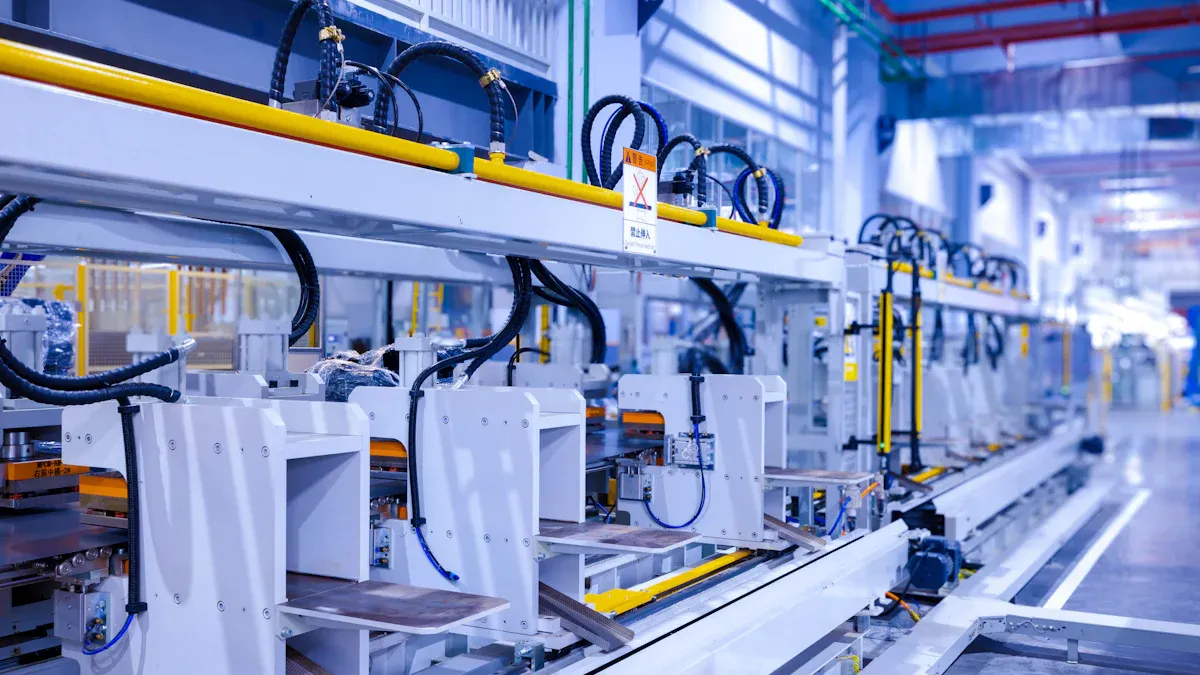
Integrated circuits fundamentally transform the economics of cryptocurrency mining. They significantly reduce operational costs for miners. This reduction comes from their optimized energy consumption and highly effective heat management capabilities. Miners prioritize equipment that delivers the best combination of raw performance, energy efficiency, and a strong return on investment (ROI). Integrated circuits are absolutely essential for achieving these critical objectives.
Power-to-Performance Ratios
The power-to-performance ratio stands as a paramount metric for every cryptocurrency miner. This ratio quantifies the amount of hashing power a device generates relative to its electricity consumption. Application-Specific Integrated Circuits (ASICs) demonstrate exceptional performance in this regard. Their highly specialized architecture enables them to execute complex cryptographic calculations with remarkable energy efficiency. This directly translates into substantially lower electricity bills, which represent a significant portion of a mining operation’s expenses. Miners meticulously analyze this ratio when making hardware procurement decisions. A superior power-to-performance ratio means the miner produces more hashes for less power, directly boosting profitability. This efficiency is crucial for maintaining competitiveness and ensuring long-term viability within the dynamic mining sector.
Advanced Heat Management Solutions
High-performance computing inherently generates substantial heat. This excess heat poses a significant challenge, as it can degrade hardware components and diminish operational efficiency. Integrated circuits, especially ASICs, incorporate sophisticated design features specifically for thermal management. Their highly optimized internal architecture produces considerably less waste heat compared to more general-purpose processors. This inherent efficiency minimizes the demand for elaborate and expensive external cooling systems. Effective heat dissipation designed directly into the chip reduces the need for powerful fans or complex liquid cooling setups, which themselves consume additional electricity. This contributes significantly to the overall cost-effectiveness within the integrated circuits for mining industry. Proper heat management also ensures the longevity of mining hardware and maintains consistent, reliable performance, thereby further enhancing a miner’s ROI.
Innovation and Specialization in Integrated Circuits for Mining Industry
Competitive Advantages through Customization
Integrated circuits drive significant innovation and specialization in mining hardware. This leads to crucial competitive advantages for miners. Manufacturers design these circuits for specific tasks, which allows for highly customized solutions. Field-Programmable Gate Arrays (FPGAs) represent another important type of integrated circuit. FPGAs offer remarkable flexibility. Miners can reconfigure these chips to mine different cryptocurrencies or adapt to new algorithms. This reconfigurability makes FPGAs highly versatile. They can also offer significant cost efficiency, sometimes up to five times better than ASICs for certain niche mining operations. This adaptability allows smaller mining operations to compete effectively. They can quickly pivot to more profitable coins as market conditions change.
Evolution of Mining Rig Architectures
The continuous evolution of integrated circuits has profoundly shaped mining rig architectures. Early mining often used general-purpose CPUs, then GPUs. Now, ASICs dominate for many major cryptocurrencies. However, some cryptocurrencies actively resist ASIC development. They do this to promote decentralization and prevent large mining farms from gaining too much control. Ravencoin (RVN) provides a clear example. It uses an algorithm designed to be ASIC-resistant. This makes Ravencoin more suitable for GPU mining rather than specialized integrated circuits. This strategy ensures that a broader range of participants can mine the currency. It also demonstrates how the integrated circuits for mining industry constantly adapts to the diverse needs and philosophies of various blockchain projects. This ongoing innovation ensures the mining landscape remains dynamic and competitive.
Future IC Advancements by 2025
The landscape of integrated circuits constantly evolves. By 2025, several key advancements will significantly impact the mining industry. These innovations promise to push the boundaries of computational power and efficiency even further. Miners can expect new architectures and materials to redefine what is possible in digital asset extraction.
Emerging Semiconductor Technologies
Semiconductor manufacturers continue to shrink the size of transistors. This trend allows them to pack more processing power onto smaller chips. By 2025, engineers will likely see widespread adoption of 3-nanometer (nm) and even 2-nm process nodes. These smaller nodes mean integrated circuits can perform calculations faster while consuming less power. This directly translates into higher hash rates and lower electricity costs for miners.
Beyond shrinking transistors, new packaging technologies will also emerge. Three-dimensional (3D) stacking, or “chiplets,” allows designers to stack multiple specialized chips vertically. This creates a single, powerful unit. Chiplets enable greater density and improved communication between different parts of the processor. This architecture can lead to more efficient and powerful mining ASICs. Researchers also explore new materials like Gallium Nitride (GaN) for power delivery components. GaN offers superior efficiency and heat dissipation compared to traditional silicon in power management units. These material science breakthroughs will further enhance the performance and longevity of integrated circuits for mining industry.
AI and Machine Learning in IC Design
Artificial Intelligence (AI) and Machine Learning (ML) are revolutionizing the design and optimization of integrated circuits. By 2025, AI tools will play an even more critical role in every stage of chip development. Designers use AI algorithms to explore vast numbers of possible chip layouts. This helps them find the most efficient configurations for performance, power consumption, and thermal management. AI can simulate chip behavior much faster than traditional methods. This speeds up the design cycle and reduces errors.
Furthermore, AI and ML will optimize the operation of integrated circuits within mining rigs. These systems can dynamically adjust clock speeds and voltage levels based on real-time mining conditions. This ensures maximum efficiency and prevents overheating. AI can also predict hardware failures by analyzing performance data from the chips. This allows miners to perform proactive maintenance. Such intelligent design and operational optimization will make mining operations more stable, efficient, and profitable.
Integrated circuits deliver superior computational power, energy efficiency, and cost reduction in cryptocurrency mining. They are not merely components. ICs enable the industry’s technological progress and profitability. Their role is indispensable. ICs will continue to evolve. They shape the future landscape of cryptocurrency mining, especially towards 2025 and beyond. Miners rely on these advancements for sustained success.
FAQ
What is an ASIC in cryptocurrency mining?
An Application-Specific Integrated Circuit (ASIC) is a specialized chip. Engineers design ASICs for one specific task, like mining a particular cryptocurrency. This dedicated design makes them extremely fast and efficient for that single purpose. They do not waste resources on other functions.
How do integrated circuits reduce mining operational costs?
Integrated circuits, especially ASICs, reduce costs through high energy efficiency. They perform more calculations per second while consuming less electricity. This lowers power bills, a major expense for miners. Their optimized design also helps manage heat, reducing cooling system needs.
What is the role of FPGAs in the mining industry?
Field-Programmable Gate Arrays (FPGAs) are reconfigurable integrated circuits. Miners can reprogram FPGAs for different mining algorithms or cryptocurrencies. This flexibility allows them to adapt to changing market conditions. FPGAs offer a cost-effective solution for niche mining operations.
How will AI and machine learning affect future IC design for mining?
AI and machine learning will revolutionize IC design. AI tools help engineers create more efficient chip layouts. They optimize for performance, power, and heat. AI also enables dynamic adjustments to mining rig settings. This ensures peak efficiency and prevents overheating, leading to more profitable operations.
See Also
ATIC83E2: Powering Industrial Automation Through Core Functionality And Practical Applications
EP2C50F484I8N FPGA: Bridging Theory To Practical High-Performance Embedded System Design
Integrating AEAT-8800-Q24 For Superior Robotics Performance And Advanced Control
IRF820 N-Channel MOSFET: Essential For Power Management And Motor Control Applications