Introduction: The Evergreen Secret of a “Veteran” Chip
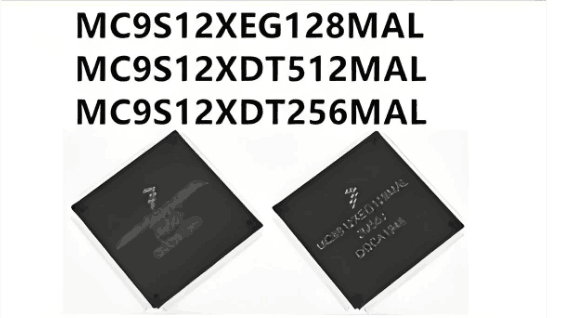
In an electronics engineer’s toolkit, there are always a few classic chips, like Swiss Army knives, that find their place in various projects. Today, I’d like to discuss the MC9S12XEQ512CAL from Freescale (now part of NXP). While this 16-bit microcontroller (MCU) isn’t the newest model on the market, it continues to play an indispensable role in fields like automotive electronics and industrial automation, thanks to its exceptional stability and rich set of peripherals. My first encounter with it was in a Body Control Module (BCM) project, where its powerful CAN bus functionality and abundant I/O ports left a deep impression. In this article, I will delve into the technical features of this MCU based on my project experience and share insights from practical applications.
Core Architecture: Why is the HCS12X “Heart” So Powerful?
The core of the MC9S12XEQ512CAL is the 16-bit HCS12X CPU. One might ask, in an era dominated by 32-bit MCUs, why should we still pay attention to a 16-bit “veteran”? The answer lies in being “just right.”
-
Balance of Processing Power and Consumption: The HCS12X core runs at a 50MHz bus frequency, which is more than sufficient for most body control and industrial field applications. It doesn’t pursue extreme computational speed like high-performance 32-bit processors but focuses more on achieving lower power consumption and higher stability while meeting performance requirements. In an industrial data acquisition system requiring 24/7 uninterrupted operation, we compared several MCUs; the S12X series stood out for its stability and low heat generation under prolonged full load.
-
Instruction Set and Development Efficiency: The HCS12X features a concise and efficient instruction set, very friendly for engineers with assembly or C language basics. Its flexible addressing modes, especially during real-time task handling, result in fast interrupt response speeds. I recall a project requiring precise control of multiple stepper motors where we leveraged its interrupts and timers to achieve microsecond-level precise synchronous control – something difficult to accomplish with many MCUs in the same class.
-
XGATE Coprocessor: This is a major highlight of the S12X series. The XGATE is an independent, event-driven RISC core, acting as an “intelligent assistant” to the main CPU. It offloads substantial work from the main CPU, such as handling I/O data and executing simple communication protocols, allowing the main CPU to focus on core algorithm execution. In a CAN gateway project, we used the XGATE to handle CAN message reception, filtering, and forwarding, reducing the main CPU load by nearly 40% and significantly enhancing the system’s real-time responsiveness.
Memory Configuration: Tailored for Complex Applications
-
512KB Flash and 32KB RAM: This memory combination was quite “generous” in its day. The 512KB Flash space is ample for accommodating complex control algorithms, diagnostic protocol stacks (like UDS), and extensive calibration data. A China VI standard Engine Control Unit (ECU) project I worked on had a code size close to 400KB, which this MCU handled competently. The 32KB RAM also provides sufficient headroom for applications needing to process large amounts of real-time data and communication buffers.
-
EEPROM Emulation: Although the MC9S12XEQ512CAL lacks dedicated EEPROM, its Flash supports partitioning and erase/write operations, allowing easy software-based EEPROM emulation for storing frequently updated non-volatile data like odometer readings and fault codes. NXP provides complete driver libraries, making implementation straightforward, and the reliability has been proven through long-term market validation.
Peripheral Interfaces: The “Tentacles” Connecting to the Real World
The strength of this MCU lies significantly in its rich and practical peripherals.
-
CAN Controller: Integration of 5 MSCAN modules is its foundation in the automotive electronics sector. Modern vehicles require extensive real-time data exchange between body, chassis, and powertrain systems, where the CAN bus is paramount. I once designed a body domain controller utilizing 4 of its CAN channels for High-Speed CAN (powertrain), Mid-Speed CAN (body comfort), Low-Speed CAN (diagnostics), and a private CAN (for custom nodes). It managed data routing and processing effortlessly.
-
Communication Interface “Full House”: Beyond CAN, it includes 8 Serial Communication Interfaces (SCI), 3 Serial Peripheral Interfaces (SPI), and 1 I2C interface. This allows easy connection to various sensors, memory, displays, and wireless modules. In an Industrial IoT (IIoT) gateway project, we used SPI for an Ethernet module, SCI for 4G and GPS modules, and I2C for temperature/humidity sensors – all communication tasks were centrally managed by this MCU, resulting in a very clear system architecture.
-
Powerful Timers and ADC: It features an 8-channel 16-bit Timer Module (TIM) supporting input capture, output compare, pulse accumulation, etc., making it ideal for motor control, PWM generation, and similar applications. It also integrates two 12-bit Analog-to-Digital Converters (ADC) with 16 total channels, sufficient for most analog signal acquisition needs. In a Battery Management System (BMS) project, we used its ADC for precise measurement of individual cell voltages and temperatures, providing a reliable data foundation for battery balancing and protection.
Practical Experience and Deep Insights
-
Regarding Stability: When designing the hardware circuit, pay utmost attention to power supply stability and EMC (Electromagnetic Compatibility). The S12X series is somewhat sensitive to power supply ripple; using a high-quality LDO and placing decoupling capacitors close to each power pin is recommended. Crystal oscillator circuit design also requires careful attention – load capacitors must be precisely matched according to the datasheet to avoid startup issues or frequency drift.
-
Regarding Software Development: CodeWarrior is recommended as the development environment, being the official NXP IDE with the best support for the S12X series. When developing low-level drivers, deeply understand the details of its register configuration. Don’t rely solely on official library functions; sometimes writing direct register operations can achieve higher efficiency and greater flexibility. For instance, when configuring the XGATE, direct register manipulation can unlock advanced features not exposed by the official libraries.
-
Long-Term Perspective: Although newer, more powerful MCUs are available, the MC9S12XEQ512CAL remains the “king of cost-performance” in many mature, cost-sensitive, and high-reliability applications. Its development ecosystem is mature, with abundant documentation and reference designs, allowing small-to-medium-sized teams to significantly shorten development cycles and reduce project risk. It’s like a battle-hardened veteran – without the latest weapons, it still wins battles through proven experience and reliable capability.
Conclusion
The MC9S12XEQ512CAL is an MCU worthy of in-depth study by every embedded engineer. It is more than a collection of technical specifications; it represents an era, embodying the relentless pursuit of reliability, stability, and cost-effectiveness in automotive electronics and industrial control. I hope my sharing helps you better understand and utilize this classic chip, maximizing its value in your projects.
See Also
Best Methods for Incorporating MC9S12XET512VAG
Simple Integration Tips for SN74LVC4245APW Sensor
The Secret to Sustaining Excellence with Booming Technology in Electronics
Complete Tutorial for Implementing AD620AN in TV Power Systems
Key Transformations by XCF01SVOG20C in Industrial Automation