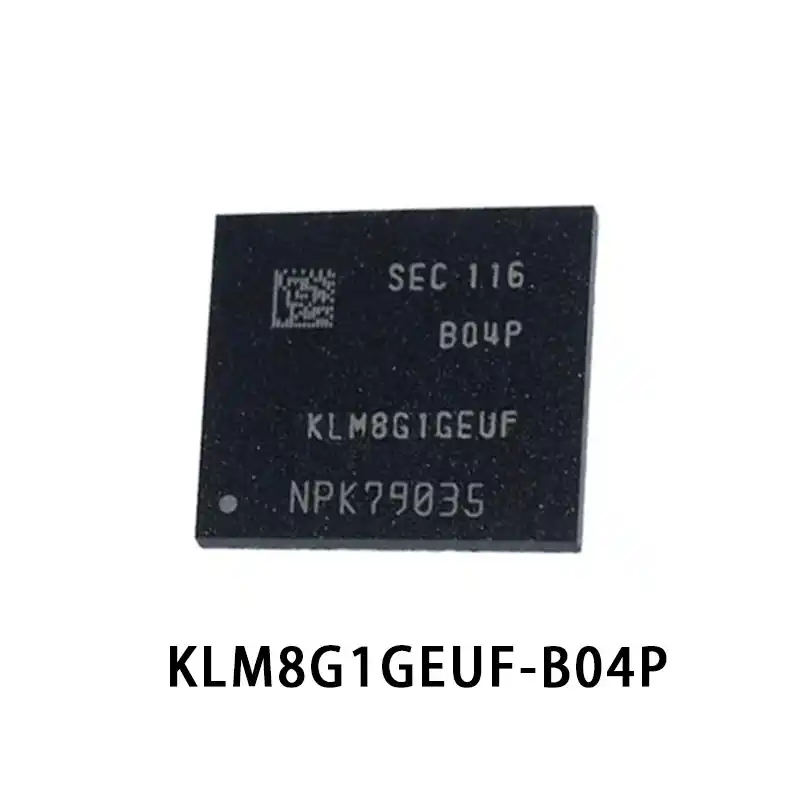
The KLM8G1GEUF-B04Q 8GB eMMC from Samsung is a cornerstone for high-load industrial automation. It features robust NAND technology, advanced error correction, and optimized wear-leveling algorithms. These integrated design principles ensure exceptional reliability. The KLM8G1GEUF-B04Q 8GB eMMC consistently delivers steadfast performance, even in the most demanding operational environments. Its engineering specifically addresses the rigorous requirements of industrial applications.
Key Takeaways
-
The KLM8G1GEUF-B04Q eMMC is a strong storage device for industrial machines. It has special features that make it very reliable.
-
This eMMC uses advanced technology to keep data safe. It fixes errors and spreads out data writing to make the device last longer.
-
The device works well in tough places. It can handle very hot or cold temperatures and protects data if the power goes out.
-
It helps industrial systems run smoothly. The eMMC’s design means less downtime and lower costs over time.
KLM8G1GEUF-B04Q 8GB eMMC: Core Specifications
The KLM8G1GEUF-B04Q 8GB eMMC offers fundamental specifications. These specifications contribute to its reliability in industrial settings. This section details these core features. It explains how each supports robust performance in demanding environments. Product specifications are subject to variations by the user’s system configuration.
eMMC 5.1 Standard
The KLM8G1GEUF-B04Q 8GB eMMC adheres to the eMMC 5.1 standard. This standard significantly boosts data transfer efficiency. It supports multiple data lanes. This design increases throughput. It leads to faster read and write operations. Industrial systems demand rapid data processing, and this is crucial for them. The eMMC 5.1 specification includes features like HS400 Enhanced strobe mode, HS400 mode, and Command Queuing Engine (CQE). These features offload software overhead to the controller. This makes data transfer highly efficient. The standard also supports tuning of HS200 mode. It improves system reliability through enhanced strobe at the PHY layer.
8GB Storage Capacity
The 8GB storage capacity of the KLM8G1GEUF-B04Q provides a good balance. It offers enough space for industrial logs and operating systems. This capacity ensures the device can store critical data without excessive wear on the NAND flash. It is ideal for embedded systems where space and power efficiency are important. This capacity supports long-term data logging and system operations.
HS400 Interface
The HS400 interface is a key feature for high-speed data processing. It allows for rapid communication between the host and the eMMC.
|
Mode |
Data Lines |
Frequency |
Speed |
|---|---|---|---|
|
HS400 |
8 |
0-200 MHz |
400 MB/second |
The HS400 mode significantly boosts programming speeds for eMMC devices. It achieves data transfer rates of up to 400 MB/second with enhanced throughput. This improvement is crucial for high-speed data processing in industrial applications. The 9th Generation Site Technology supports HS400. It further optimizes programming times and throughput for high-density managed NAND devices. This makes it ideal for demanding industrial environments. The HS400 interface benefits industrial environments, especially in automotive applications. These include Advanced Driver Assistance Systems (ADAS), navigation, and autonomous driving. These applications require reliable and fast data processing. The HS400’s 400 MB/second maximum interface speed effectively supports them. It performs well even in extreme environmental conditions.
Voltage Requirements
The KLM8G1GEUF-B04Q operates within specific voltage requirements. These typically include a core voltage and an I/O voltage. Stable voltage supply is critical for the eMMC’s reliable operation. It prevents data corruption and ensures consistent performance. Industrial environments often have fluctuating power. Therefore, the device’s ability to operate stably within its specified voltage range is vital.
NAND Technology for Endurance
This section explores the specific NAND flash technology and internal mechanisms. These features ensure the eMMC’s longevity and data integrity during continuous operation.
MLC NAND Flash
The KLM8G1GEUF-B04Q 8GB eMMC uses Multi-Level Cell (MLC) NAND Flash. This specific eMMC contains one 64Gb die. MLC technology stores multiple bits of data per memory cell. This allows for higher storage density compared to Single-Level Cell (SLC) NAND. While MLC offers greater capacity at a lower cost, it typically has lower endurance than SLC. However, advanced management techniques overcome this limitation for industrial applications.
Advanced ECC Algorithms
Advanced Error Correction Code (ECC) algorithms are crucial for data integrity. These algorithms detect and correct data errors. Errors can occur during data storage or retrieval. ECC works by adding redundant data bits to the original data. When the system reads the data, it uses these extra bits to check for and fix errors. This process ensures data remains accurate and reliable. It is especially important in industrial settings where data corruption can lead to critical system failures.
Wear Leveling Strategies
NAND flash memory cells have a limited number of program/erase (P/E) cycles. Repeated writes to the same memory block cause it to wear out faster. Wear leveling strategies distribute data writes evenly across all memory blocks. This extends the overall lifespan of the eMMC device.
Without wear leveling, logical addresses permanently link to physical addresses. Frequent writes to the same block cause rapid wear. This leads to early device failure. Other blocks remain unused.
-
Dynamic wear leveling uses a map to link logical block addresses (LBAs) to physical flash memory. When data rewrites, the system marks the original physical block as invalid. It then writes the new data to a fresh block. This method extends life by distributing writes for dynamic data. However, static data blocks may not benefit.
-
Static wear leveling works similarly to dynamic wear leveling. It also periodically moves static, unchanging data blocks to new locations. This allows low-usage cells to be utilized by other data. It ensures more uniform wear across the entire device. This continues until most blocks are near their end of life.
-
Global wear leveling manages all blocks from all chips as a single pool in multi-chip products. It ensures all memory cells across all chips wear out evenly. This prevents individual chips from failing prematurely while others remain active.
Industrial-grade eMMC, like the KLM8G1GEUF-B04Q 8GB eMMC, features optimized wear-leveling algorithms. These algorithms are specifically designed for high-write environments. This is vital in applications such as industrial automation. Here, sensors and operational logs frequently write data. These sophisticated algorithms distribute data evenly across memory cells. This extends the usable lifespan and maintains consistent performance of the eMMC devices.
eMMC devices use an LBA-PBA (Logical Block Address to Physical Block Address) mapping scheme. This balances block wear and improves write speed. It involves an address translation table. This table maps logical sectors to physical blocks. The address mapping process groups sequential sector addresses into page-sized units. If a sector within a page group modifies, the controller reads the entire group. It then updates the modified sectors. Finally, it programs the new data to a new page. The mapping table then updates to reflect the new page’s location.
Write Amplification Factor (WAF) occurs because NAND Flash must program a full page, even if only one sector modifies. WAF is the ratio of NAND Flash writes to eMMC device-level writes. A lower WAF achieves with large sequential writes. Small, random, non-page-aligned rewrites lead to a higher WAF. This can cause earlier device failure. The Total Bytes Written (TBW) for an eMMC device calculates using the formula: (Device Capacity * Endurance Factor) / WAF = TBW. For example, a 4GB eMMC with an endurance factor of 3000 and a WAF of 8 results in a TBW of 1.5TB.
Bad Block Management
NAND flash memory can develop bad blocks over its lifespan. These blocks become unreliable and cannot store data correctly. Bad Block Management (BBM) is a critical scheme. It manages the changing reliability of NAND flash over time. This change happens due to repeated erase/program cycles. BBM ensures that the system decommissions blocks when they become too unreliable. This prevents data loss by not using them for storage again. This is crucial for maintaining device functionality and data integrity.
Manufacturers generally state that the factory bad block ratio for NAND flash, including MLC, does not exceed 2%. They also ensure this ratio maintains even at the maximum P/E Cycle limit.
Bad Block Management (BBM) ensures that blocks are decommissioned when they become too unreliable, preventing data loss by not using them for storage again. This is crucial for maintaining device functionality and data integrity.
-
Bad Block Replacement Strategy defines how the algorithm handles bad blocks. When the system finds a bad block, it redirects data intended for it to an alternate good block. Two main strategies exist:
-
Skip Bad Blocks: This skips to the next good block. It causes a physical-logical data shift. Partitioning often resolves this.
-
Reserve Block Area: This uses a reserved pool of blocks for replacements. It requires a mapping table. These strategies ensure data writes to functional areas. This prevents data loss.
-
-
Partitioning divides memory into physical regions. It guarantees specific data resides at a predetermined physical block, even with bad blocks. For the Skip Bad Blocks strategy, partitioning prevents data from one region from encroaching on adjacent regions when bad blocks cause data shifts. This maintains data integrity and organization.
-
Error Correction Codes (ECC) are stored in the spare area of each NAND page. They allow the system to detect and correct data corruption. As long as the number of corrupt bits does not exceed the ECC’s correction capability, data reliability maintains. This prevents data loss due to bit errors that occur during programming or over time.
Reliability Features for Industrial Loads
The KLM8G1GEUF-B04Q 8GB eMMC includes critical features. These features protect data and ensure stable operation. They perform well in harsh industrial environments. This section highlights these design considerations.
Power Loss Protection
Unexpected power outages pose a significant threat to data integrity. The KLM8G1GEUF-B04Q 8GB eMMC incorporates internal mechanisms. These mechanisms mitigate data corruption during such events. The eMMC controller uses a combination of hardware and firmware. This design ensures that data in transit completes its write operation. It also protects the file system structure. For example, the device might use internal capacitors. These capacitors provide enough power for the controller to flush cached data to NAND flash. This process prevents partial writes. It also avoids file system corruption. This robust protection is essential. It maintains system stability in industrial settings. Power fluctuations are common in these environments.
Wide Operating Temperature
Industrial environments often experience extreme temperatures. The KLM8G1GEUF-B04Q operates across a wide temperature range. It functions from -40 to 105 °C. This broad range makes it suitable for many harsh industrial applications.
The Arrhenius equation shows a strong link between operating temperature and device lifetime. Even small temperature increases significantly reduce a device’s lifespan. For instance, increasing a device’s temperature by just 10°C can reduce its lifetime by over 2x. This aligns with the rule that a 50% lifetime decrease occurs for each 10°C increase in channel temperature. A 25°C increase from 225°C to 250°C can reduce lifetime by almost an order of magnitude. This highlights the critical impact of keeping devices cool on reliability.
All electronic components can fail due to overheating. Any temperature increase can lead to a reduced lifespan. This includes heat from the ambient environment. It also includes the device’s self-heating. The efficiency of heat removal also plays a role. Effective temperature control and appropriate cooling techniques are crucial. They produce reliable and long-lasting electronic products.
Extreme temperatures can cause various issues:
-
Temperature reduces the stiffness, strength, and creep resistance of materials. These materials include polymers and metals used in electronics. This leads to sudden fracture, delamination, or gradual creep rupture.
-
Mechanical stresses from temperature changes and thermal expansion mismatches cause warpage. They also deform chips and packages. They affect electronic bandbandgap energy. They generate cracking or delamination at interfaces.
-
Cyclical temperature excursions lead to fatigue failures in ductile materials.
-
Extreme temperature spikes cause phase transitions in materials. For example, polymers cross glass transition temperatures.
-
Temperature increases exacerbate fretting wear in connectors. They also increase the risk of whisker growth on metallic surfaces.
-
High temperatures cause electrical failures. These include sudden runaway electrical conditions (e.g., electrical overstress). They increase the risk of dielectric breakdown. They accelerate various electrical degradation mechanisms. These include hot carrier injection, bias temperature instability, time-dependent dielectric breakdown, and electromigration.
-
Temperature accelerates diffusion and other defect migration mechanisms. It also accelerates chemical reactions. This increases the risk of corrosion. It promotes the growth of brittle intermetallic compounds. It also speeds up aging in polymers.
The KLM8G1GEUF-B04Q’s design accounts for these challenges. It ensures stable performance even under thermal stress.
Data Retention Capabilities
Data retention refers to the ability of the eMMC to hold stored data. It maintains this data without power over time. This capability is vital for industrial systems. These systems often store critical configuration files or operational logs for extended periods.
Organizations like JEDEC establish industry standards for SSD data retention. These standards specify requirements at end-of-life wear (100% Program/Erase cycles). They also specify requirements at elevated temperatures (often 55°C). This ensures a consistent and comparable baseline across different vendors and products. This represents a worst-case scenario. It guarantees reliability.
Industrial applications often require specific data retention periods. These periods align with regulatory guidelines or operational needs.
|
Document Type / Regulation |
Retention Period |
|---|---|
|
Business Records |
3-7 years |
|
Corporate Formation Documents |
Permanent |
|
Healthcare Records |
6+ years |
|
Tax Returns & Supporting Documentation (IRS) |
Minimum 3 years (6 years for significant underreporting, 7 years for bad debt deductions) |
|
Financial Statements, General Ledgers, Audit Reports (GAAP) |
Permanent |
|
Supporting Documentation (GAAP) |
Minimum 7 years |
|
Transaction Records (GAAP) |
3-7 years (based on materiality) |
|
Tax Returns, Financial Statements, Employment Records, Client Communications (Federal Regulations) |
7 years |
Effective data retention management involves several steps:
-
Establish a Formal Policy: Define clear rules for document retention, access, and disposal.
-
Classify Documents by Type: Group documents to apply appropriate retention schedules.
-
Follow Regulatory Guidelines: Align retention timelines with industry laws such as GDPR, HIPAA, SOX, or SEC requirements.
-
Automate Retention Schedules: Use software tools to automate archival and deletion.
-
Restrict Access by Role: Limit document access to authorized users.
-
Maintain Audit Trails: Track file access, edits, and deletions.
-
Train Employees Regularly: Provide ongoing training on policy adherence.
-
Review and Update Annually: Revisit retention policies regularly.
The eMMC’s design ensures data integrity. It meets these demanding retention requirements.
Health Monitoring
Proactive health monitoring prevents system failures. It transforms technology management from reactive to predictive. Modern monitoring platforms collect vast amounts of data. This includes temperature fluctuations, network latency spikes, and memory usage trends. It also includes software performance metrics. Machine learning algorithms process this information. They recognize early warning signs. For example, a slight increase in processing temperature indicates cooling system problems. Intermittent network connectivity issues signal cable degradation. Software response delays precede system crashes. Catching these signals early allows organizations to shift from expensive emergency repairs to planned maintenance. This significantly improves system reliability. It also reduces support costs by 30-40%.
Implementing predictive maintenance offers significant benefits:
-
It can cut equipment downtime by up to 50%.
-
It can extend machine life by 20-40%.
-
Businesses using predictive maintenance often see maintenance costs reduced by up to 30%.
-
Breakdowns can decrease by 70%.
Proactive health monitoring in industrial automation prevents system failures. It detects early indicators of issues. These include hardware wear, communication faults, and software errors. This allows for prompt resolution before problems escalate. It reduces unexpected downtime. It extends equipment lifespan. It optimizes overall performance. Tools like the Diagnostic Buffer, Watch Tables, and System Diagnostics within TIA Portal are leveraged for this purpose. They provide a comprehensive view of active faults, warnings, and device statuses.
Effective health monitoring involves:
-
Monitoring equipment performance in real-time, 24/7.
-
Analyzing operational patterns with AI-driven insights.
-
Recommending prescriptive actions to prevent failure and optimize uptime.
The KLM8G1GEUF-B04Q supports these monitoring capabilities. It provides internal health status registers. These registers allow the host system to query the eMMC’s condition. This enables predictive maintenance. It ensures maximum uptime in critical industrial applications.
KLM8G1GEUF-B04Q in Industrial Automation
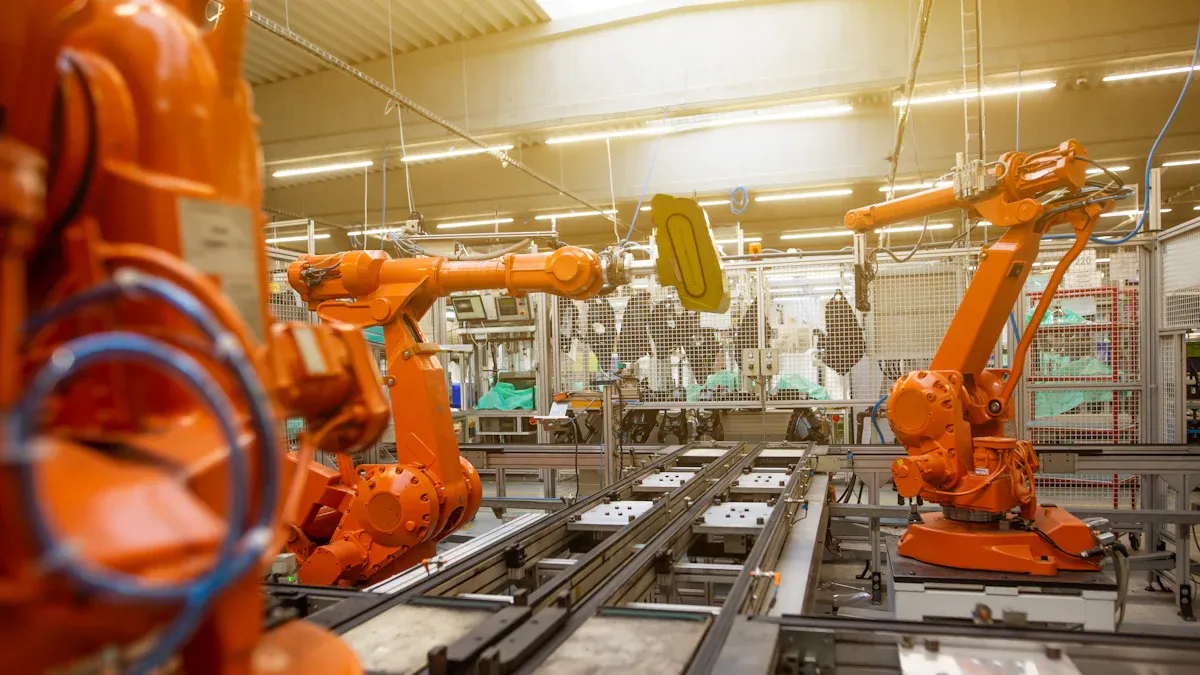
The KLM8G1GEUF-B04Q 8GB eMMC finds its place in demanding industrial scenarios. Its robust design and performance characteristics make it ideal for critical applications. This section illustrates its practical uses and operational strengths.
Key Industrial Use Cases
The reliability of the KLM8G1GEUF-B04Q is paramount in various industrial applications. Industrial automation systems widely utilize eMMC storage. Specific examples include:
-
Single Board Computers (SBC)
-
Digital signage systems
-
Point of Sale (POS) terminals
-
Security and surveillance equipment
-
IoT devices
Industrial robotics also uses eMMC storage. This technology is crucial for their operational integrity. Furthermore, eMMC storage is present in general industrial equipment. It shows sustained growth in sectors like industrial automation, automotive, aerospace, and medical devices. These fields require reliable performance under extreme conditions.
Sustained Performance
The KLM8G1GEUF-B04Q maintains consistent read/write performance. It performs well even during prolonged, high-intensity operations. While originally designed for mobile applications, its power efficiency and speed translate effectively to industrial needs. eMMC 5.1 devices, such as 64GB models, achieve maximum sequential Read/Write speeds of 330MB/s and 200MB/s, respectively. The 8GB model delivers comparable performance, ensuring rapid data access and storage for industrial processes. This consistent performance prevents bottlenecks in data-intensive industrial tasks.
Longevity and TCO
The KLM8G1GEUF-B04Q offers significant longevity. Its advanced reliability features contribute to a lower Total Cost of Ownership (TCO). The eMMC’s endurance, data integrity, and stable operation reduce maintenance needs and replacement cycles. This translates into long-term savings for industrial operators. Its robust design minimizes downtime, ensuring continuous operation and maximizing productivity.
The Samsung KLM8G1GEUF-B04Q offers a comprehensive reliability design. It includes advanced NAND management, robust error correction, and power loss protection. These features establish it as a dependable cornerstone for high-load industrial automation applications. Its specifications are carefully crafted. They ensure sustained performance and data integrity. This eMMC performs reliably in the most demanding industrial environments.
FAQ
What makes the KLM8G1GEUF-B04Q suitable for industrial use?
The KLM8G1GEUF-B04Q features robust design elements. It includes advanced NAND technology, strong error correction, and optimized wear-leveling. These features ensure reliable performance in demanding industrial environments. Its specifications meet the rigorous requirements of automation systems.
How does wear leveling extend the eMMC’s life?
Wear leveling distributes data writes evenly across all memory blocks. This prevents specific blocks from wearing out too quickly. By spreading the write cycles, the eMMC’s overall lifespan significantly increases. This ensures long-term durability for industrial applications.
What is the purpose of advanced ECC algorithms?
Advanced Error Correction Code (ECC) algorithms detect and correct data errors. These errors can occur during data storage or retrieval. ECC ensures data remains accurate and reliable. This is crucial for maintaining data integrity in critical industrial systems.
Can this eMMC withstand extreme temperatures?
Yes, the KLM8G1GEUF-B04Q operates across a wide temperature range. It functions from -40 to 105 °C. This broad range makes it highly suitable for harsh industrial environments. Its design ensures stable performance even under thermal stress.
See Also
ATIC83E2: Powering Industrial Automation with Core Insights and Practical Applications
MC9S12XEQ512CAL: Versatile Applications in Automotive Electronics and Industrial Control Systems
SPC56 Microcontrollers: Mastering Automotive Powertrains Through Core Applications and Practice
XCF01SVOG20C: Three Key Innovations Transforming Industrial Automation Processes
AD74413RBCPZ: Unlocking Enhanced Precision for Superior Process Control Systems