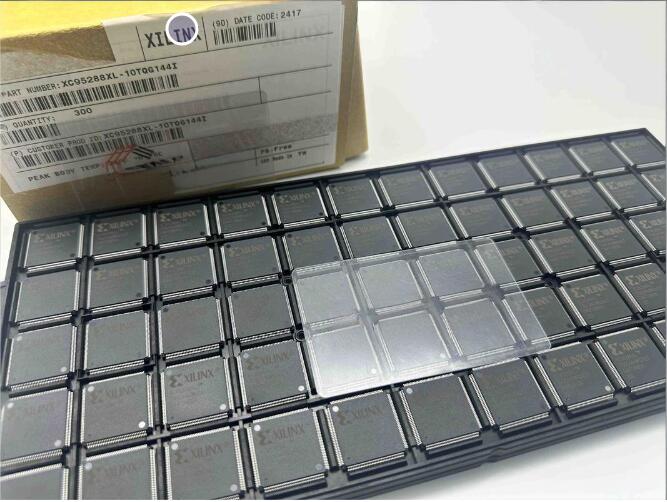
CPLDs serve as the critical ‘nerve center’ in modern industrial control systems, enabling real-time decision-making. The Xilinx XC95288XL, a robust cpld from the XC9500XL family of Complex Programmable Logic Devices, exemplifies a type of programmable logic devices engineered for demanding environments. Its 288 macro cells form the fundamental building blocks for highly reliable control logic. This powerful cpld, the xc95288xl-10tqg144i for industrial control and automation, demonstrates the capabilities of these advanced programmable logic devices. This article explores how its unique architecture and features contribute to its indispensable role in industrial automation, serving as a comprehensive guide for system designers.
Key Takeaways
-
The XC95288XL CPLD is like a ‘nerve center’ for industrial machines. It uses 288 small parts called macro cells to make control systems strong and reliable.
-
This CPLD makes sure things happen at the right time. It has predictable timing. This is very important for machines that need to work perfectly and safely.
-
The XC95288XL can put many functions onto one chip. This saves space and makes designs simpler. It helps build complex systems like those that control factory robots.
-
You can change the XC95288XL’s programming while it is still in the machine. This makes it easy to update or fix things. It saves time and keeps machines running.
-
The XC95288XL is a good choice for industrial control. It offers a balance of speed, power, and cost. It is reliable for important tasks.
XC95288XL Architecture: 288 Macro Cells for Robust Logic
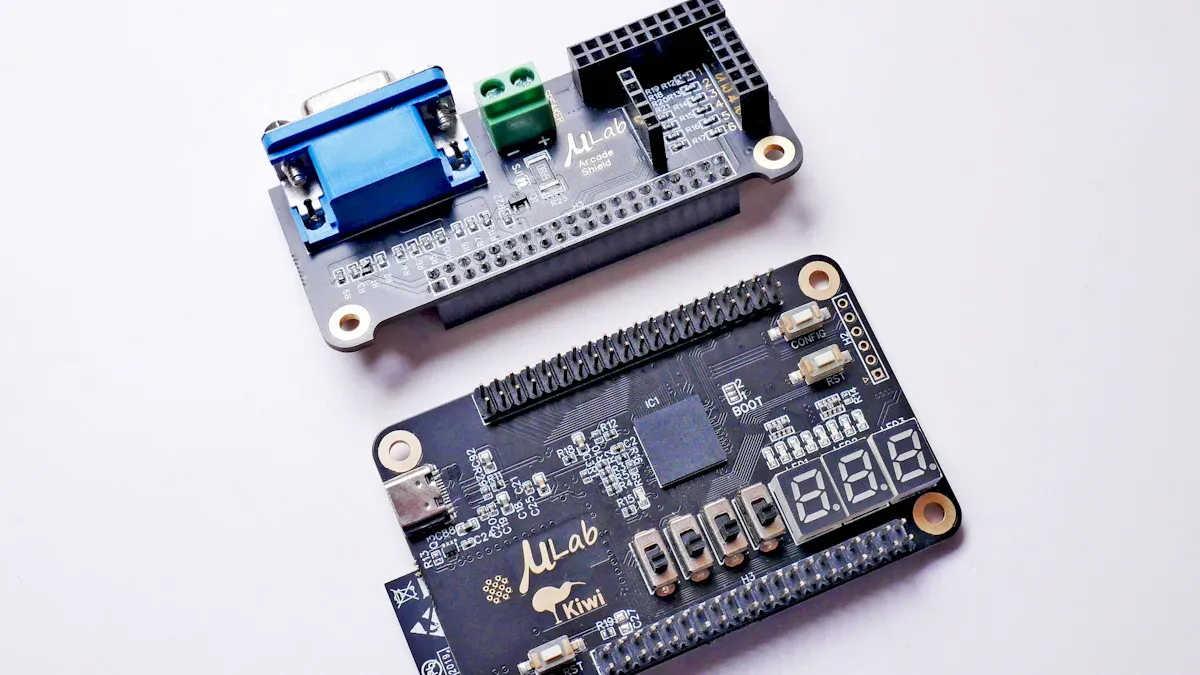
The Xilinx XC95288XL stands as a powerful example among programmable logic devices. Its internal structure is specifically designed for industrial applications. This cpld logic chip organizes its 288 macro cells into a highly efficient architecture. This design directly supports the creation of robust and reliable control logic.
Macro Cell Structure and Functionality
Each of the 288 macro cells within the XC95288XL acts as a fundamental building block. A macro cell contains several key features. It includes a product term array, an OR gate, an XOR gate, and a configurable D-type flip-flop. The product term array forms the core of the logic. It generates sum-of-products logic expressions. This array allows designers to implement complex Boolean functions. The OR gate combines these product terms. The XOR gate provides additional logic flexibility, useful for parity generation or comparison functions.
The D-type flip-flop offers sequential logic capabilities. It can store a logic state. This is crucial for creating state machines and memory elements. Designers can configure the flip-flop for registered outputs or bypass it for combinatorial outputs. This flexibility allows the macro cell to handle both combinational and sequential logic requirements. Each macro cell also connects to an I/O block. This connection allows the device to interface with external signals. This structure ensures precise and predictable logic execution, which is vital for industrial control systems.
Logic Implementation in Function Blocks
The XC95288XL groups its 288 macro cells into Function Blocks. Each Function Block contains 16 macro cells. It also includes a dedicated product term array. This organization allows for localized logic implementation. When a designer creates logic, the development software maps it into these Function Blocks. The product term array within each block can generate up to 54 product terms. These terms are then “steered” to the macro cells within that block. This steering mechanism ensures efficient use of logic resources.
This block-based approach enhances logic density. It also improves the overall efficiency of the cpld. Complex state machines, counters, and decoders fit well within these Function Blocks. The localized nature of the logic within a Function Block minimizes signal travel distances. This contributes to predictable timing performance. Such predictability is a critical requirement for real-time industrial automation tasks.
Interconnect Matrix for Efficient Routing
The FastCONNECT II switch matrix forms the central nervous system of the XC95288XL. This matrix connects the outputs of Function Blocks to the inputs of other Function Blocks. It also routes signals to and from the device’s I/O pins. The FastCONNECT II matrix is designed for low and predictable propagation delays. This is a significant advantage for industrial control systems. It ensures that signals travel across the chip with minimal and consistent latency.
This efficient routing mechanism prevents timing uncertainties. It allows designers to create complex control logic without worrying about unpredictable signal delays. The interconnect matrix also provides a high degree of connectivity. This means that any Function Block can communicate with virtually any other Function Block or I/O pin. This flexibility is essential for integrating diverse control functions onto a single cpld logic chip. The robust design of the interconnect matrix ensures reliable signal integrity, even in noisy industrial environments. This makes the XC95288XL a highly dependable choice among programmable logic devices for critical applications.
Predictable Timing for Industrial Control Systems
Industrial control systems demand precise timing. The XC95288XL provides this precision. Its architecture ensures that logic operations happen at expected times. This predictability is vital for reliable automation.
Guaranteed Propagation Delays
The XC95288XL offers guaranteed propagation delays. This means signals travel through the device in a known amount of time. Designers can find these exact timing specifications in the device’s datasheet. This fixed timing contrasts with other programmable logic devices where delays can vary. The consistent delay ensures that control signals arrive when expected. This feature prevents timing errors in critical industrial processes. It allows engineers to design robust control logic with confidence.
Synchronous Design for Reliability
Synchronous design is key for reliable industrial control. The XC95288XL supports this approach effectively. It uses a global clock signal to synchronize all internal operations. Flip-flops within each macro cell capture data on the clock’s edge. This synchronization prevents race conditions and glitches. A stable clock distribution network ensures the clock signal reaches all parts of the cpld simultaneously. This design method makes the control system more stable and less prone to errors. It is essential for applications requiring high data integrity.
High-Speed Operation in Critical Loops
The XC95288XL enables high-speed operation in critical control loops. Its predictable timing allows for fast execution of logic. This speed is crucial for real-time applications. For example, motor control or safety interlocks require rapid responses. The device processes inputs quickly and generates outputs without significant delay. This capability ensures the control system reacts promptly to changes in its environment. It maintains tight control over industrial processes.
High-Density CPLD Logic Chip Integration
The XC95288XL excels at integrating many functions onto a single chip. This capability makes it a high-density programmable logic device (hdpld). It significantly simplifies industrial control designs.
Consolidating Discrete Logic
Industrial control boards often use many discrete logic gates. These include AND gates, OR gates, and flip-flops. Each gate typically resides on its own small integrated circuit. The XC95288XL, a powerful hdpld, replaces dozens of these individual chips. It consolidates all their functions into one device. This integration saves valuable board space. It also reduces the number of solder joints, which improves reliability. Fewer components mean less power consumption and a simpler manufacturing process. Engineers achieve a cleaner, more compact design by using a single cpld logic chip.
Implementing Complex State Machines
Complex state machines are fundamental to industrial automation. They control sequential operations in machinery. For example, a state machine might manage the steps of an assembly line. The XC95288XL’s architecture is ideal for building these machines. Its 288 macro cells, each containing a flip-flop, directly support state machine implementation. Designers can define states and transitions using hardware description languages. The cpld logic chip then executes these sequences with predictable timing. This capability allows for sophisticated control logic within a single component.
Efficient Resource Utilization
The XC95288XL ensures efficient use of its internal resources. Its Function Block structure groups macro cells logically. This organization allows the development software to map logic effectively. The FastCONNECT II interconnect matrix routes signals between these blocks with minimal overhead. This design maximizes the logic density available on the chip. It means designers can implement more complex functions using fewer resources. This efficiency translates into lower costs and smaller footprints for industrial control systems. Such an hdpld simplifies design and enhances overall system performance.
In-System Programmability and Design Flexibility
The Xilinx XC95288XL offers significant advantages through its in-system programmability. This feature allows engineers to modify and update the device’s logic directly on the circuit board. This capability enhances the overall design flexibility of industrial control systems.
Field Upgrades and Maintenance
The XC95288XL’s in-system programmability simplifies field upgrades and maintenance. Engineers can update the control logic without physically replacing the cpld. This saves considerable time and reduces operational costs. For instance, a new control algorithm or a bug fix can be loaded remotely or on-site. This process minimizes downtime for industrial equipment. It ensures that systems remain current with evolving requirements. This feature is crucial for long-lifecycle industrial applications.
Rapid Prototyping and Iteration
Designers benefit greatly from the XC95288XL’s rapid prototyping capabilities. They can quickly test different logic configurations during the development phase. If a design needs adjustment, engineers can reprogram the device in minutes. This iterative process accelerates the design cycle for complex control systems. The extensive programmable capabilities offer great flexibility. It allows for quick experimentation and optimization of control logic. This speeds up product development and reduces time-to-market.
Non-Volatile Configuration for Stability
The XC95288XL utilizes non-volatile memory for its configuration. This means the device retains its programming even after power loss. It does not require external configuration memory or a boot-up sequence. Upon power-up, the cpld immediately begins executing its programmed logic. This feature is critical for the stability and reliability of industrial programmable logic devices. It ensures consistent and immediate operation, which is essential in environments where power interruptions can occur. This robust behavior makes the XC95288XL a dependable choice for critical industrial applications.
CPLD vs. FPGA: Choosing the Right Logic for Industrial Automation
Engineers often choose between CPLDs and FPGAs for industrial control systems. Both are programmable logic devices, but they serve different purposes. Understanding their differences helps in selecting the best option for specific industrial automation tasks.
Architectural Distinctions and Performance
CPLDs, like the XC95288XL, and FPGAs have distinct internal structures. These differences affect their performance and suitability for various applications. The table below highlights key distinctions:
|
Feature |
CPLDs |
FPGAs |
|---|---|---|
|
Primary Suitability |
Control-focused applications |
Data-intensive operations |
|
Key Advantage |
Predictable timing |
Parallel processing capabilities |
|
Relevance to Industrial Automation |
Ideal for precise control tasks where timing is critical |
Suited for complex data processing and high-throughput applications |
|
Decision Factor |
Specific system requirements (speed, power, complexity) |
Specific system requirements (speed, power, complexity) |
CPLDs offer predictable timing. This makes them excellent for precise control tasks. FPGAs excel at parallel processing. They handle complex data operations well. For industrial automation, a cpld logic chip often provides the necessary speed and reliability for critical control loops.
Power Consumption and Cost Considerations
Power consumption and cost are important factors in industrial designs. CPLDs generally consume less power than FPGAs. Their simpler architecture requires fewer transistors. This leads to lower operational power. FPGAs, with their vast resources, typically use more power. Regarding cost, CPLDs usually have lower unit pricing. This makes them a more economical choice for many control applications. FPGAs, due to their complexity and larger capacity, often come with higher costs.
Design Flow and Complexity
The design process also differs between these programmable logic devices. CPLDs offer a simpler design flow. Their fixed architecture makes routing and timing more straightforward. This predictability simplifies verification. FPGAs, on the other hand, involve a more complex design flow. Their highly flexible architecture requires more sophisticated design tools and longer compilation times. For simpler control tasks, a cpld provides a faster and easier development path.
Real-World Applications of XC95288XL for Industrial Control and Automation
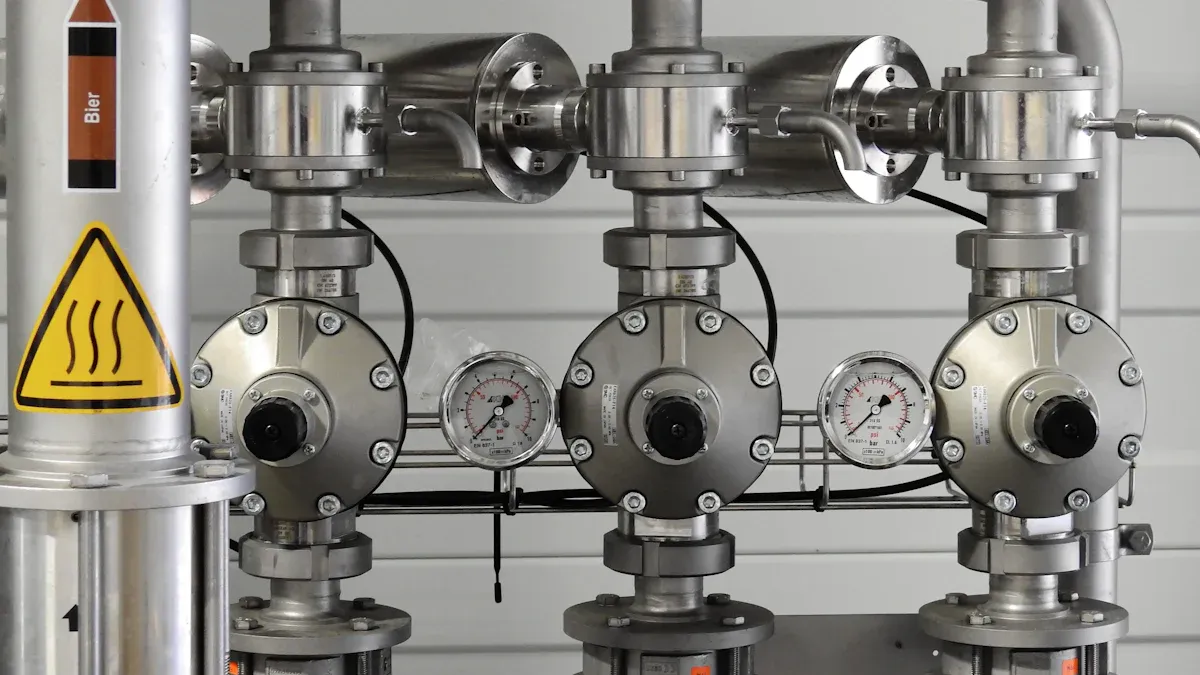
The Xilinx XC95288XL finds extensive use across various industrial applications. Its robust architecture makes it ideal for critical control functions. This cpld-based control system provides reliable performance in demanding environments.
Motor Control and Motion Systems
The XC95288XL plays a vital role in motor control and motion systems. It precisely generates Pulse Width Modulation (PWM) signals for motor drivers. This allows for accurate speed and position control of industrial motors. For example, in robotic arms or conveyor belts, the XC95288XL manages complex motion sequences. Its predictable timing ensures smooth and synchronized movement. These applications benefit from the CPLD’s ability to execute logic quickly and reliably. The xc95288xl-10tqg144i for industrial control and automation ensures precise control over mechanical components.
Sensor Interfacing and Data Acquisition
Industrial processes rely heavily on sensor data. The XC95288XL effectively interfaces with various sensors. It can condition sensor signals, filter noise, and buffer data before sending it to a main processor. For instance, it processes signals from encoders, temperature sensors, or pressure transducers. This ensures accurate data acquisition. The CPLD handles the initial processing, freeing up the main controller for higher-level tasks. This capability is crucial for monitoring and controlling complex industrial systems.
Safety Interlocks and Monitoring
Safety is paramount in industrial settings. The XC95288XL implements critical safety interlocks and monitoring functions. It provides fast, deterministic responses to emergency conditions. For example, it can immediately shut down machinery if a safety guard opens. This prevents accidents and protects personnel. Its reliable operation contributes to the overall security of industrial operations. These security-centric applications demand the CPLD’s predictable timing and non-volatile configuration. The system’s integrity relies on such robust components.
I/O Expansion and Memory Interfacing
Modern industrial controllers often need more I/O pins than available. The XC95288XL serves as an excellent I/O expander. It creates custom interfaces for various peripherals. It also acts as “glue logic,” connecting different integrated circuits. For example, it can interface a microcontroller with external memory or specialized communication modules. This expands the system’s capabilities without adding complex custom ASICs. Its low power consumption also makes it suitable for power-sensitive expansion applications.
Selecting the Right CPLD: A Guide for 2025
Choosing the correct CPLD for an industrial application requires careful consideration. Engineers must evaluate several factors to ensure the selected device meets the system’s demands. This guide helps navigate the selection process, offering an outlook for 2025 and beyond.
Key Criteria for Evaluation
When evaluating CPLDs for industrial applications, several evaluation criteria stand out. These factors directly impact a system’s performance, reliability, and long-term viability in the market.
-
Performance & Speed: This criterion is essential for high-frequency applications. It indicates how quickly the chip processes signals. For instance, in telecommunications, CPLDs integrate into 5G base stations. They demonstrate high-speed data handling and low latency.
-
Power Efficiency: Lower power consumption is crucial for extending device lifespan and reducing heat generation. This directly impacts operational cost and system reliability.
-
Density & Capacity: This determines the complexity of tasks a CPLD can handle. It depends on the number of logic elements and I/O pins available.
-
Design Flexibility: This refers to the ease of programming and reconfiguring the CPLD for various use-cases. Rapid prototyping benefits greatly from this flexibility.
-
Supply Chain & Availability: Project timelines depend on consistent delivery and component access. A robust supply chain is vital for long-term industrial projects.
-
Cost & Pricing: Engineers must evaluate if the pricing is competitive relative to the CPLD’s performance and features. This helps manage the overall project cost.
-
Support & Ecosystem: This encompasses the quality of documentation, development tools, and technical assistance available. A strong ecosystem simplifies design and troubleshooting.
-
Security Features: Built-in measures protect against tampering and unauthorized access. This is increasingly important for industrial security in connected environments.
In the automotive market, CPLDs undergo testing in in-vehicle infotainment systems. This confirms their robustness against temperature fluctuations. Similarly, CPLD-based control systems deploy in factories. They maintain performance during power surges and electromagnetic interference. These real-world scenarios highlight the importance of these criteria.
Robust Design Practices
Implementing robust design practices ensures the reliability and longevity of CPLD-based industrial systems. Designers must consider the harsh conditions often found in industrial environments.
First, proper power supply decoupling is critical. Industrial systems often experience electrical noise. Adequate capacitance near the CPLD pins filters this noise. This ensures stable power delivery to the device. Second, designers should implement strong ESD (Electrostatic Discharge) protection on all I/O pins. This safeguards the CPLD from static electricity, a common threat in manufacturing settings. Third, careful clock management prevents timing issues. Using a single, stable clock source and proper clock distribution networks minimizes skew. This ensures synchronous operations, which are vital for predictable system behavior.
Furthermore, designers should utilize all available security features within the CPLD. This includes configuration bitstream encryption or read-back protection. These measures protect intellectual property and prevent unauthorized modifications. Thorough simulation and testing of the design under various operating conditions are also essential. This includes temperature extremes and voltage variations. These practices contribute to a highly reliable and secure industrial control system.
Considering Other CPLD Families [e.g., CoolRunner-II]
While the XC95288XL offers robust performance, other CPLD families might suit specific applications. The market offers a range of devices, each with unique strengths. For example, Xilinx’s CoolRunner-II family focuses on ultra-low power consumption. This makes it ideal for battery-powered or energy-sensitive industrial applications. These trends towards lower power are significant in the evolving industrial landscape.
CoolRunner-II devices achieve their low power through advanced process technology and architectural optimizations. They might offer fewer macro cells than the XC95288XL. However, their power efficiency can be a decisive factor where energy conservation is paramount. When selecting a cpld, engineers must weigh the trade-offs between performance, density, power consumption, and cost. A detailed comparison of datasheets helps identify the best fit. This ensures the chosen device aligns perfectly with the project’s technical and budgetary requirements. The pricing and availability of different families also influence the final decision. The market continues to evolve, offering new options and trends in programmable logic.
The XC95288XL serves as a vital nerve center in industrial control systems. Its 288 macro cells build robust, reliable logic. Predictable timing, high-density integration, and in-system programmability are key benefits. These features ensure industrial performance and longevity. CPLDs like this xc95288xl-10tqg144i for industrial control and automation remain relevant. They adapt to future challenges. Consider the XC95288XL for your next industrial control design. This cpld offers proven capabilities. It optimizes power usage. Use this guide for informed selection. What experiences have you had with the xc95288xl-10tqg144i for industrial control and automation? Share them below!
FAQ
What makes the XC95288XL’s 288 macro cells crucial for industrial control?
The 288 macro cells provide the fundamental building blocks for complex logic. Each cell contains a product term array and a flip-flop. This structure allows the device to implement both combinational and sequential logic. It ensures robust and reliable execution of control functions. This capability is essential for industrial automation.
Why does predictable timing matter so much in industrial CPLDs?
Predictable timing ensures that control signals arrive exactly when expected. The XC95288XL offers guaranteed propagation delays. This prevents timing errors in critical industrial processes. It allows engineers to design reliable systems. These systems operate consistently, which is vital for safety and efficiency.
How does in-system programmability benefit industrial applications?
In-system programmability allows engineers to update the control logic directly on the circuit board. This feature simplifies field upgrades and maintenance. It minimizes downtime for industrial equipment. Designers can also rapidly prototype and iterate designs. This speeds up development and reduces time-to-market.
When should one choose a CPLD like the XC95288XL over an FPGA for industrial tasks?
Engineers often choose a CPLD for precise control tasks. CPLDs offer predictable timing and lower power consumption. They are also more cost-effective for many applications. FPGAs suit complex data processing. The XC95288XL provides the necessary speed and reliability for critical control loops.
See Also
MC9S12XEQ512CAL: Automotive to Industrial Control Applications Explored
NXP Microcontrollers: Powering Automotive Electronics, Analysis and Applications
MC9S12XET512VAG Microcontroller: Automotive System Integration Strategies and Practices
ATIC83E2: Core Insights for Industrial Automation and Real-World Uses
MC9S12DJ256MFUE: Automotive Electronics Pillar, Exploration and Implementation