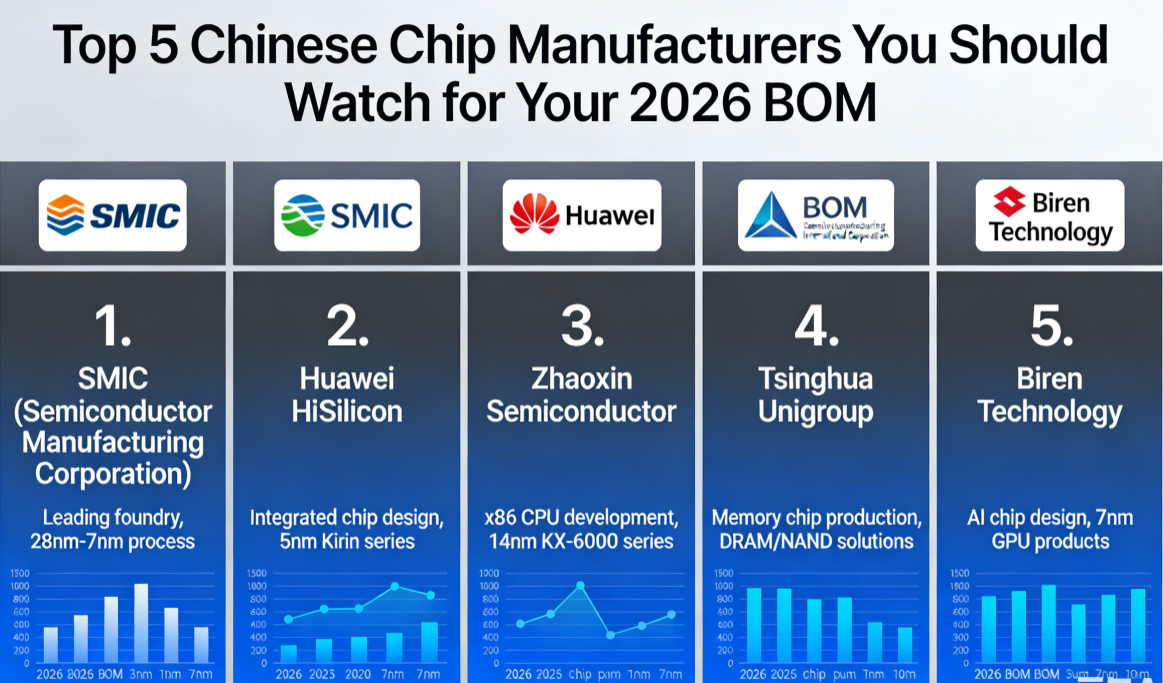
Monitoring Chinese chip companies holds great significance for future technology needs. The Chinese semiconductor industry, valued at approximately $180 billion in 2024, is projected to grow at a compound annual growth rate of 8.4% through 2032. This growth stems from China’s strategic initiatives aimed at enhancing technological self-sufficiency. Despite contributing only 6% to the global semiconductor supply chain, the potential impact of China semiconductor manufacturers on BOM considerations cannot be overlooked. Their innovations may shape the landscape of technology products in the coming years.
Key Takeaways
-
China’s semiconductor industry is growing fast, driven by strong government support and big investments.
-
Leading Chinese chip makers like SMIC, Hua Hong, and HiSilicon are innovating in memory, AI, and mobile chips.
-
China still depends heavily on imported chips but aims to become more self-sufficient through new technologies.
-
Monitoring Chinese chip companies helps businesses plan better and avoid supply chain risks.
-
Chinese manufacturers are improving chip performance and production, shaping the future of global technology.
China Semiconductor Industry Overview
Industry Growth and Trends
The Chinese semiconductor industry has experienced remarkable growth in recent years. Government policies have played a crucial role in this expansion. Initiatives like the National IC Promotion Guidelines and the Made in China 2025 Plan aim to enhance self-sufficiency and competitiveness. These policies set ambitious targets for production capacity and technological advancements. As a result, the industry has seen significant investments, with the National IC Fund contributing approximately $39 billion to support these goals.
Recent data highlights several key trends driving this growth:
-
Rapid adoption of advanced semiconductor devices in consumer electronics, automotive, and industrial applications.
-
Focus on upgrading manufacturing infrastructure and increasing industrial automation.
-
Growing demand for specialized semiconductor devices, including sensors and integrated circuits.
Global Market Position
Despite its growth, China’s share of global semiconductor sales remains relatively small at 7.6%. In the fabless semiconductor segment, China holds a 16% market share, ranking third globally after the U.S. and Taiwan. Chinese firms have made strides in mid-tier mobile processors and AI chip design. However, they still lag behind in high-end logic and advanced memory products.
China’s reliance on imports remains a significant challenge. In 2020, the country imported $350 billion worth of semiconductors, making them its most significant import, surpassing even crude oil. The self-sufficiency rate for semiconductors was only 16% at that time. This heavy reliance on foreign suppliers underscores the need for continued innovation and development within the semiconductor manufacturing sector.
As the Chinese semiconductor industry continues to evolve, its potential impact on the global supply chain and technology development will be substantial. The focus on achieving self-sufficiency will drive further advancements in semiconductor technology and innovation.
Leading China Semiconductor Manufacturers
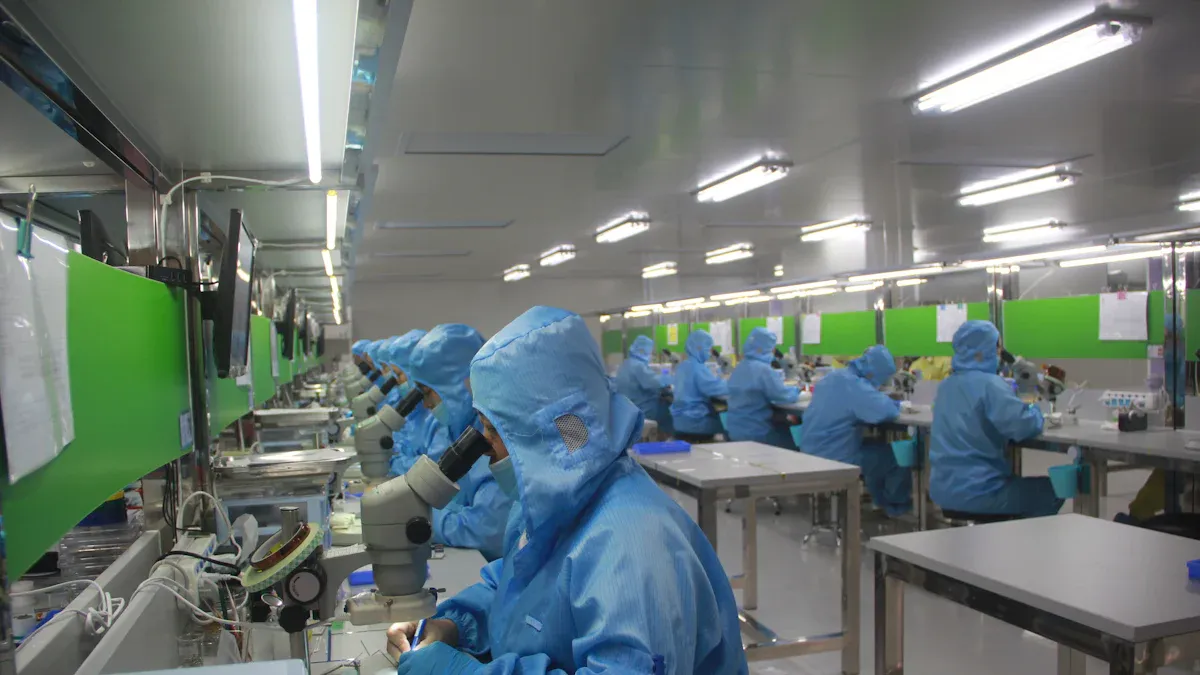
China’s semiconductor landscape features several key players that drive innovation and growth. These manufacturers are not only significant in terms of revenue but also in their contributions to technology advancement. Below is an overview of the leading Chinese semiconductor manufacturers:
|
Manufacturer |
Description |
|---|---|
|
SMIC |
The largest chip-maker in mainland China. |
|
Hua Hong Semiconductor |
The second largest chip-maker in mainland China and the 6th largest globally with a 2.6% market share. |
|
HiSilicon |
The largest domestic designer of integrated circuits in China. |
|
ChangXin Memory Technologies (CXMT) |
Specializes in the production of DRAM memory. |
|
YMTC |
Known for advanced NAND flash technology, including a 128-layer vertical NAND chip in mass production. |
These companies play a crucial role in the global semiconductor supply chain. They focus on various segments, including memory chips, integrated circuits, and advanced nodes. Their innovations significantly impact the technology landscape.
Chinese chip manufacturers are making strides in technology innovation. For instance, Baidu’s Kunlun AI chips achieve approximately 345 Tflops at FP16, rivaling Nvidia’s A100. Alibaba’s Hanguang 800 chip processes 78,000 images per second, performing up to 820 trillion operations per second (TOPS). Additionally, Alibaba’s PPU chip, equipped with 96 GB of high-bandwidth memory, competes with Nvidia’s H20, showcasing high-speed PCIe 5.0 connections.
Moreover, these manufacturers are advancing semiconductor manufacturing techniques. They extend lithography tools for 5nm chips and implement 3D in-die stacking of DRAM. Such advancements enhance chip performance and meet the growing demand for advanced AI chips.
The market positions of these manufacturers reflect their growth potential. Hua Hong Semiconductor Limited, for example, boasts a market capitalization of $19.98 billion. Other notable companies include VeriSilicon Microelectronics at $15.39 billion and GigaDevice Semiconductor at $24.15 billion.
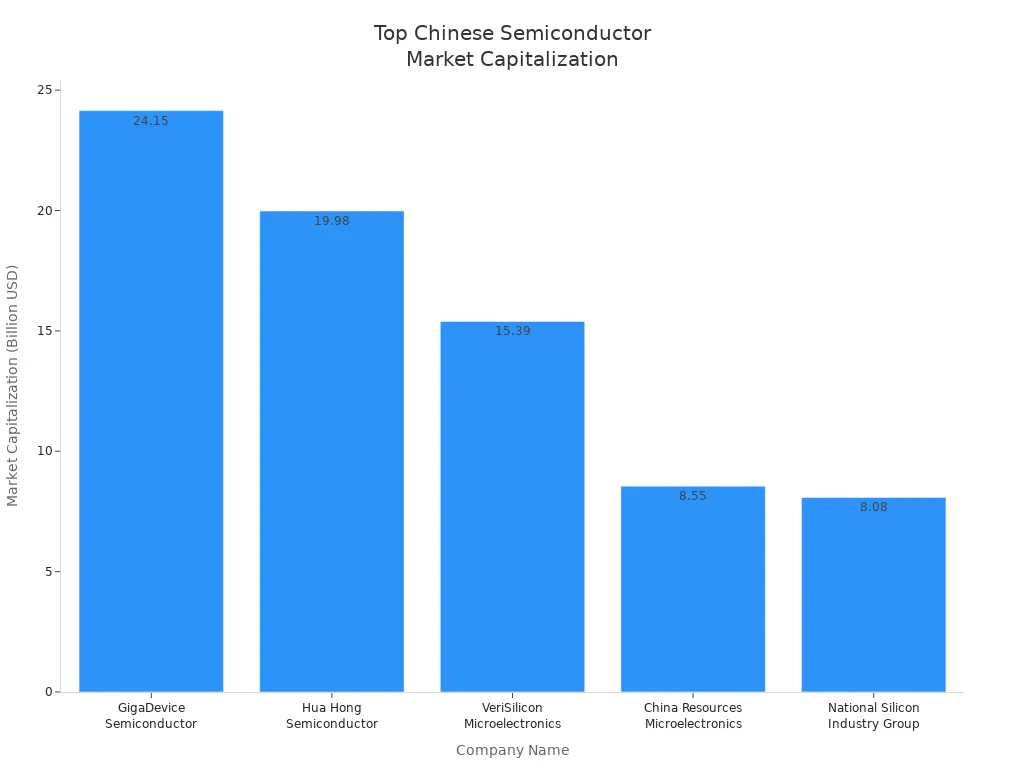
As the industry evolves, these manufacturers will likely play a pivotal role in achieving China’s goal of semiconductor self-sufficiency. Their ongoing innovations and strategic initiatives will shape the future of the semiconductor landscape.
Manufacturer 1: [Company Name]
Company Overview
Semiconductor Manufacturing International Corporation (SMIC) stands as the largest chip manufacturer in mainland China. Founded in 2000, SMIC has established itself as a key player in the global semiconductor landscape. The company focuses on advanced technology nodes and offers a wide range of semiconductor manufacturing services. SMIC aims to enhance its capabilities through continuous investment in research and development.
Key Products and Innovations
SMIC has introduced several innovations that significantly impact the semiconductor market. The company focuses on various areas, including:
|
Description |
|
|---|---|
|
Advanced semiconductor device structures |
Innovations aimed at enhancing performance and integration. |
|
Semiconductor fabrication methods |
Developing sophisticated techniques to improve miniaturization and efficiency. |
|
Transistor technologies |
Advancements designed to boost processing power and energy efficiency. |
|
Fabrication techniques for yield improvement |
Innovations focused on increasing manufacturing yield and reducing defects. |
|
High-speed and low-power component design |
Crafting semiconductor components optimized for superior performance with minimal power consumption. |
These innovations position SMIC as a leader in the semiconductor manufacturing sector.
Market Position and Growth Potential
SMIC holds a significant market share in the global semiconductor industry. The company has made substantial investments to expand its production capacity and improve its technology. Analysts predict that SMIC’s growth potential remains strong, especially as demand for advanced chips continues to rise. The company is well-positioned to capitalize on the increasing need for semiconductors in various applications, including consumer electronics and automotive sectors.
Strategic Partnerships
SMIC has formed strategic partnerships with several global technology firms. These collaborations enhance its research capabilities and facilitate access to cutting-edge technologies. Notable partnerships include collaborations with leading companies in the semiconductor supply chain. Such alliances enable SMIC to leverage shared expertise and resources, driving further innovation in semiconductor manufacturing.
Through these efforts, SMIC continues to strengthen its position in the semiconductor market, contributing to China’s goal of achieving self-sufficiency in semiconductor production.
Manufacturer 2: [Company Name]
Company Overview
Hua Hong Semiconductor, founded in 2002, ranks as the second-largest chip manufacturer in mainland China. The company specializes in semiconductor manufacturing services, focusing on advanced technology nodes. Hua Hong operates several fabrication plants, which enhance its production capabilities. The company aims to support various industries, including automotive, consumer electronics, and industrial applications.
Key Products and Innovations
Hua Hong Semiconductor offers a diverse range of products. Their portfolio includes:
-
Analog and Mixed-Signal Chips: These chips serve various applications, from automotive to consumer electronics.
-
Power Management ICs: These integrated circuits optimize power usage in devices, enhancing energy efficiency.
-
RF and Wireless Communication Chips: These products enable seamless connectivity in modern devices.
Hua Hong emphasizes innovation in its manufacturing processes. The company invests in advanced lithography techniques to improve chip performance. Their focus on developing smaller nodes allows for increased transistor density, which enhances processing power.
Market Position and Growth Potential
Hua Hong Semiconductor holds a significant position in the global semiconductor supply chain. The company has achieved a market share of approximately 2.6%, making it the sixth-largest semiconductor manufacturer worldwide. Analysts predict strong growth potential for Hua Hong, driven by the increasing demand for semiconductors across various sectors. The company’s commitment to innovation and expansion positions it well for future success.
Strategic Partnerships
Hua Hong Semiconductor has established strategic partnerships with several global technology firms. These collaborations enhance its research capabilities and facilitate access to cutting-edge technologies. Notable partnerships include alliances with leading companies in the semiconductor industry. Such relationships enable Hua Hong to leverage shared expertise, driving further innovation in semiconductor manufacturing.
Through these efforts, Hua Hong Semiconductor continues to strengthen its position in the semiconductor market, contributing to China’s goal of achieving self-sufficiency in semiconductor production.
Manufacturer 3: [Company Name]
Company Overview
HiSilicon, a subsidiary of Huawei, ranks as the largest domestic designer of integrated circuits in China. Established in 2004, HiSilicon focuses on developing advanced semiconductor solutions. The company plays a crucial role in China’s semiconductor manufacturing landscape. It aims to enhance the capabilities of various electronic devices through its innovative designs.
Key Products and Innovations
HiSilicon offers a diverse range of products that cater to different market needs. Their key offerings include:
-
Kirin Processors: These chips power many Huawei smartphones, providing high performance and energy efficiency.
-
Ascend AI Chips: Designed for artificial intelligence applications, these chips support machine learning and data processing tasks.
-
Balong Modems: These modems enable high-speed connectivity for mobile devices, supporting 5G technology.
HiSilicon emphasizes innovation in its product development. The company invests heavily in research and development to advance lithography techniques and improve chip performance. Their focus on smaller nodes allows for increased transistor density, which enhances processing power and efficiency.
Market Position and Growth Potential
HiSilicon holds a significant position in the global semiconductor supply chain. The company has gained a substantial market share, particularly in the mobile and AI chip sectors. Analysts predict strong growth potential for HiSilicon, driven by the increasing demand for advanced chips in consumer electronics and telecommunications. The company’s commitment to innovation positions it well for future success.
Strategic Partnerships
HiSilicon has formed strategic partnerships with various technology firms. These collaborations enhance its research capabilities and facilitate access to cutting-edge technologies. Notable partnerships include alliances with leading companies in the semiconductor industry. Such relationships enable HiSilicon to leverage shared expertise, driving further innovation in semiconductor manufacturing.
Through these efforts, HiSilicon continues to strengthen its position in the semiconductor market, contributing to China’s goal of achieving self-sufficiency in semiconductor production.
Manufacturer 4: [Company Name]
Company Overview
ChangXin Memory Technologies (CXMT) is a leading semiconductor manufacturer based in China. Founded in 2016, CXMT focuses on producing dynamic random-access memory (DRAM) chips. The company plays a vital role in strengthening China’s semiconductor supply chain by reducing reliance on foreign memory suppliers. CXMT operates advanced fabrication facilities that emphasize cutting-edge lithography techniques to produce high-quality memory chips. The company aims to expand its production capacity and improve technology nodes to meet growing market demands.
Key Products and Innovations
CXMT specializes in DRAM memory chips used in computers, servers, and mobile devices. The company has developed several generations of DRAM products, including DDR4 and DDR5 chips. CXMT invests heavily in lithography innovation to achieve smaller nodes, which help increase chip performance and energy efficiency. The company also explores 3D stacking technology to enhance memory density and speed. These innovations allow CXMT to compete with global memory manufacturers and support China’s goal of semiconductor self-sufficiency.
Market Position and Growth Potential
CXMT holds a growing position in the global semiconductor market, especially in the memory segment. The company benefits from China’s strong demand for domestic semiconductor products. Analysts expect CXMT to expand its market share as it improves its lithography processes and advances to smaller nodes. The company’s focus on innovation and capacity expansion positions it well for future growth. CXMT’s success will contribute to strengthening China’s semiconductor manufacturing ecosystem and reducing supply chain vulnerabilities.
Strategic Partnerships
CXMT collaborates with several technology firms and research institutions to advance semiconductor manufacturing. These partnerships focus on improving lithography techniques and developing next-generation memory chips. CXMT works closely with equipment suppliers to adopt state-of-the-art fabrication tools. The company also engages in joint research projects to accelerate innovation in semiconductor technology. These strategic alliances help CXMT enhance its product portfolio and maintain competitiveness in the global chip market.
Manufacturer 5: [Company Name]
Company Overview
Yangtze Memory Technologies Co. (YMTC) is a prominent player in China’s semiconductor manufacturing sector. Established in 2016, YMTC focuses on producing NAND flash memory chips. The company aims to enhance China’s position in the global semiconductor supply chain. YMTC operates advanced fabrication facilities that utilize cutting-edge lithography techniques. These facilities enable the production of high-density memory chips, which are essential for various electronic devices.
Key Products and Innovations
YMTC specializes in NAND flash memory technology. Their product lineup includes:
-
3D NAND Flash: This technology stacks memory cells vertically, increasing storage density and performance.
-
128-Layer NAND Chips: These chips represent a significant advancement in memory technology, offering improved speed and efficiency.
YMTC emphasizes innovation in its manufacturing processes. The company invests heavily in research and development to refine its lithography techniques. This focus on smaller nodes allows YMTC to produce chips that meet the growing demands of the market.
|
Description |
|
|---|---|
|
Expertise |
Differentiates manufacturers based on skill sets and proven track records. |
|
Cost Efficiency |
Saves time and money by utilizing existing equipment and knowledge. |
|
Time Management |
Allows brands to focus on their business while the manufacturer develops the product. |
Market Position and Growth Potential
YMTC holds a strong position in the global semiconductor market. The company has gained recognition for its innovative memory solutions. Analysts predict that YMTC will continue to grow as demand for high-performance memory chips increases. The company’s commitment to advancing its technology and expanding production capacity positions it well for future success.
Strategic Partnerships
YMTC has formed strategic partnerships with various technology firms and research institutions. These collaborations enhance its research capabilities and facilitate access to advanced technologies. Notable partnerships include alliances with leading companies in the semiconductor industry. Such relationships enable YMTC to leverage shared expertise, driving further innovation in semiconductor manufacturing.
Through these efforts, YMTC continues to strengthen its position in the semiconductor market, contributing to China’s goal of achieving self-sufficiency in semiconductor production.
Chinese semiconductor manufacturers play a crucial role in shaping the future of technology. Their innovations and strategic investments enhance the global supply chain. As the industry evolves, companies like SMIC, Hua Hong, and HiSilicon will significantly influence BOM planning.
Key considerations for future procurement strategies include:
-
Visibility in supply chains to avoid disruptions.
-
Diversification of suppliers to mitigate geopolitical risks.
-
Resilience in procurement practices to adapt to challenges.
China’s semiconductor industry is on a positive trajectory, supported by national investments and policies. Staying informed about these developments will be essential for businesses aiming to thrive in the electronics sector.
FAQ
What is the significance of Chinese chip manufacturers in the global market?
Chinese chip manufacturers play a crucial role in the global semiconductor supply chain. They contribute to technological advancements and aim for self-sufficiency, impacting various industries worldwide.
How do Chinese semiconductor companies compare to their global counterparts?
Chinese semiconductor companies focus on innovation and advanced manufacturing techniques. While they lag in high-end products, they excel in mid-tier mobile processors and AI chip design.
What challenges do Chinese chip manufacturers face?
Chinese chip manufacturers face challenges such as reliance on imports, geopolitical tensions, and competition from established global players. These factors can hinder their growth and innovation efforts.
How can businesses benefit from monitoring Chinese semiconductor trends?
Businesses can gain insights into emerging technologies and market shifts by monitoring Chinese semiconductor trends. This knowledge helps in making informed decisions for future procurement strategies.
What are the future prospects for the Chinese semiconductor industry?
The Chinese semiconductor industry is poised for growth, driven by government support and increasing demand for advanced chips. Continued innovation will enhance its global market position.
See Also
Exploring Excellence in Electronic Components: Trends and Innovations
NXP Microcontrollers: Essential Chips Powering Automotive Electronics
Exploring SPC5605BMLL6 and SPC5607BMLL6 ECUs: Future Automotive Tech
MC9S12XEQ512: Comprehensive Applications in Automotive and Industry
Harnessing SPC56 Microcontrollers: Key Applications in Automotive Powertrains