The Adidas Trionda connected ball technology for the 2026 World Cup represents a significant advancement in soccer innovation. As the official 2026 World Cup match ball, it features cutting-edge 500Hz sensor technology that enhances gameplay by providing real-time data on player actions. Soccer enthusiasts will appreciate that Adidas holds a 17 percent share of the global market, producing approximately 34 million balls annually. This commitment to innovation is evident in the development of the official 2026 World Cup match ball. This technology is set to revolutionize how the game is played and evaluated.
Key Takeaways
-
The Adidas Trionda ball has a 500Hz sensor. It tracks movement 500 times every second. This makes the game better and helps referees be more accurate.
-
The real-time data from the Trionda ball helps referees make faster and better offside calls. This reduces mistakes during important moments in the game.
-
The ball’s smart design has four panels that are bonded together. This makes it fly better and last longer, so players really like it.
-
Coaches can use the detailed stats from the Trionda ball. They can study how players interact and improve their training plans.
-
Future upgrades in Trionda technology might have surfaces that fix themselves. They may also use smarter materials, changing what sports gear can do.
Adidas Trionda Technology Overview
Motion Sensor Features
The Adidas Trionda ball uses new motion sensor technology. This sets a high standard in soccer. The ball has a 500Hz inertial measurement unit (IMU) motion sensor chip. Unlike older systems, the sensor is placed inside a special layer of one of its four panels. This smart placement helps the ball fly better and stay balanced by using counterweights on the other panels. The sensor tracks the ball’s movement right away. It records acceleration, trajectory, rotation, and impact 500 times every second. This is a big step up from older sensor technologies. The Trionda ball continues the work of the Al Rihla ball from 2022, which also had motion-tracking technology. The new sensor collects real-time data about ball speed, trajectory, and spin. This helps referees make offside calls and shows how sensor technology has improved.
Construction and Design
The Adidas Trionda ball is built with a focus on innovation and performance. It has connected ball technology with a side-mounted IMU chip for accurate movement data. The ball is made of four thermally bonded polyurethane panels, which is the fewest for any FIFA World Cup match ball. This design helps the ball’s aerodynamics and makes it last longer. The surface has special patterns that improve flight stability, swerve, and grip. These design features ensure the ball meets FIFA’s strict quality and performance standards. Robotic systems check for consistency, durability, and aerodynamics before approval. AI testing runs thousands of simulated shots to ensure uniformity in weight, bounce, and flight path. The Trionda ball’s sensor needs charging and lasts about 6 hours on a full charge, which is enough for a full match plus extra time.
500Hz Sensor Technology for 2026 World Cup
Real-time Data Tracking
The Adidas Trionda ball has special 500Hz sensor technology. This helps the ball track performance data right away. The sensor collects information 500 times every second. It gives details about different parts of the game. Here are some important metrics the sensor gathers:
|
Metric Type |
Description |
|---|---|
|
Acceleration |
The sensor notices changes in speed when players touch the ball. |
|
Angular Velocity |
It measures how fast the ball spins and its spin axis while flying. |
|
Contact Detection |
It finds the exact moment when the ball is touched during the game, helping analyze player actions. |
This real-time data tracking helps understand how players interact with the ball. Coaches and analysts can better evaluate player performance. This technology works with the Video Assistant Referee (VAR) system to make officiating more accurate.
Impact on Officiating
The 500Hz sensor technology greatly affects officiating in soccer. It makes game decisions more accurate by giving exact measurements of contact moments, speed, spin, path, and position. This detail is better than older methods.
-
The Adidas Trionda ball’s sensor technology helps make quicker and more accurate offside calls.
-
It improves handball detection, lowering the chances of mistakes during important game moments.
-
FIFA uses advanced computer vision technology to help referees make faster and more precise calls during the World Cup.
For example, in a recent World Cup match, the sensor ball found a tiny touch that people could not see. This helped officials change an offside call, showing how sensor data can improve officiating accuracy in soccer.
The mix of the Adidas Trionda ball’s technology with systems like VAR and goal-line technology creates a better officiating system. This combination reduces human mistakes and makes sure important decisions are based on correct data.
Trionda’s Role in Gameplay
Enhancing Player Performance
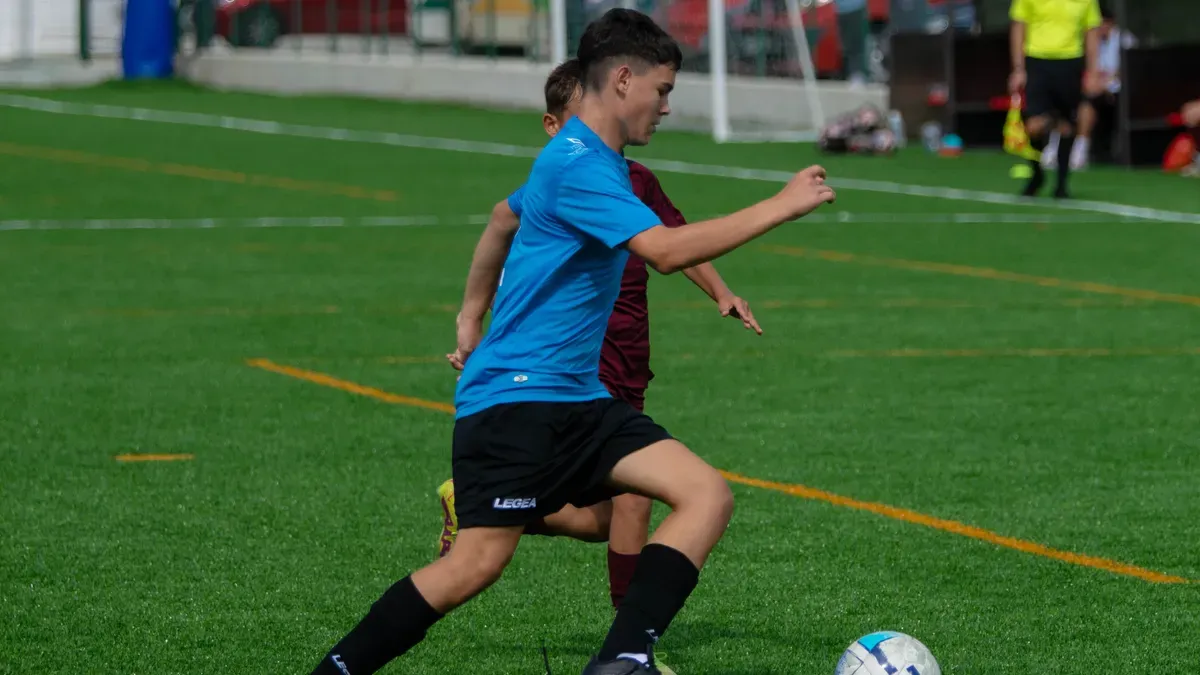
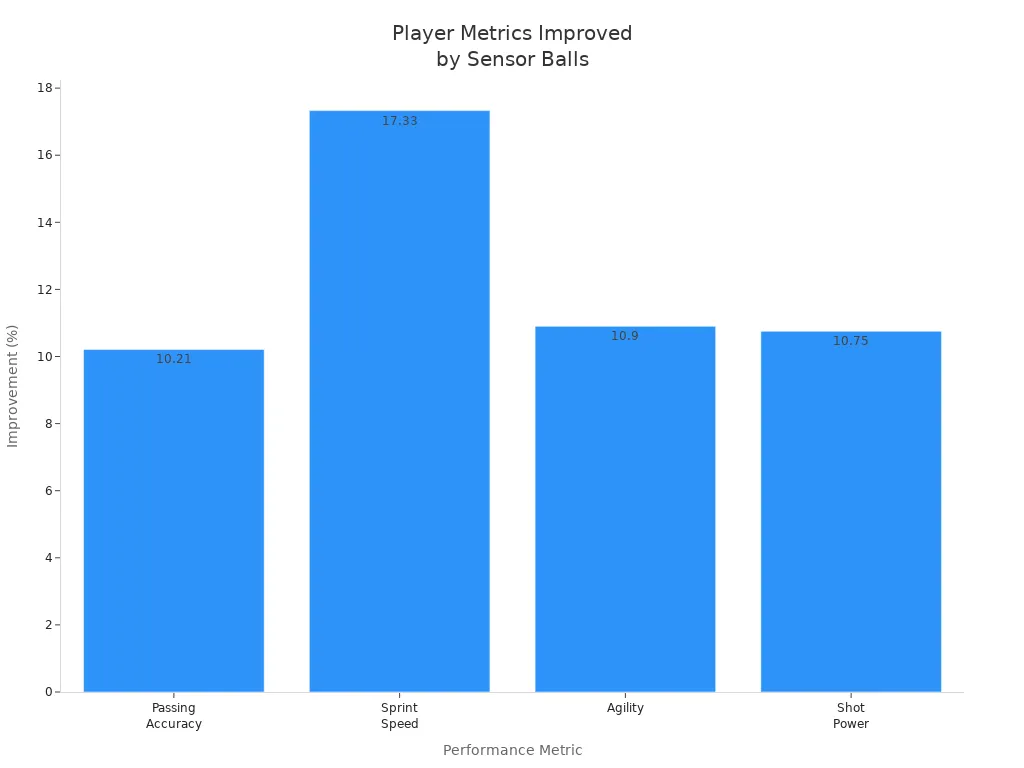
The Adidas Trionda ball helps players perform better with its smart technology. Players noticed many benefits during practice games. Forwards liked how the ball flew predictably and had low drag, making long shots more accurate. Goalkeepers enjoyed its grip and stability, especially when making fast saves. Midfielders appreciated the ball’s quick response, which is great for control and passing.
Adidas made the Trionda ball with deep seams and special lines. These features help keep drag steady and balanced, ensuring a stable flight. The ball’s 500Hz IMU sensor tracks motion 500 times every second. This detailed tracking helps coaches study how players interact with the ball.
|
Improvement (%) |
Effect Size (η²p) |
Statistical Significance |
|
|---|---|---|---|
|
Passing Accuracy |
10.21 |
.88 |
p < 0.001 |
|
Sprint Speed |
17.33 |
.76 |
p < 0.001 |
|
Agility |
10.90 |
.59 |
p < 0.001 |
|
Shot Power |
10.75 |
.89 |
p < 0.001 |
Semi-Automated Offside Calls
The semi-automated offside call system uses the Trionda ball’s sensors to give exact timestamps when a player touches the ball. This timing is important for matching with tracking data to find player positions at that moment. The ball’s sensors, which include an accelerometer and gyroscope, notice changes in motion and spin. This information helps find the kick point, making the decision process accurate and trustworthy.
Semi-automated offside technology improves the accuracy of offside calls by using the ball’s chip. This chip gives precise timing of when the ball is touched, down to one or two milliseconds. The system’s algorithms check offside positions every time a touch signal is sent. This technology has been successfully used in big tournaments, like the Qatar World Cup and the 2023 Women’s World Cup. It greatly cuts down the time needed for decisions compared to older VAR systems, ensuring reliable and effective offside calls.
Future of Trionda Technology
Innovations Beyond 2026
The Adidas Trionda ball sets a new level for soccer gear. Future changes might include:
-
Ongoing studies on smart materials that change with conditions.
-
Creation of self-repairing surfaces to make soccer balls last longer.
-
Better sensor technology for tracking performance.
-
Use of artificial intelligence and machine learning to improve ball design for better flight.
These improvements will likely create modern balls that perform better and last longer. The science behind World Cup soccer balls will grow, focusing on making gear that meets the needs of professional players while keeping them safe.
Broader Sports Technology Implications
Using sensor technology in sports gear goes beyond soccer. Other sports are also using similar innovations, leading to great results. For example, many sports have started using sensor technology to boost performance and training.
|
Sport |
Sensor Technology Used |
Outcomes Observed |
|---|---|---|
|
Baseball |
Force-sensitive resistive sensor with RFID tag |
Better accuracy in measuring pressure on gear, possible data-driven performance analysis. |
|
Tennis |
Racquet-mounted sensors (e.g., Babolat, Sony, Zepp) |
Instant feedback on swing metrics, helping with player training and performance improvement. |
|
Golf |
Launch monitors (e.g., TrackMan, Foresight GC Quad) |
Quick feedback on swing metrics, improving training effectiveness and performance analysis. |
The future of sports technology will likely include:
-
Combining multiple sensors for complete movement and health insights.
-
Better injury prediction models using AI and long-term data.
-
Equipment that changes based on sensed data and training stages.
These trends show a move towards more personalized and data-focused methods in sports. As technology grows, athletes will gain from accurate ball data and insights that improve their performance and lower injury risks.
The Adidas Trionda ball is a big step in soccer technology. Here are some important points:
-
The ball’s design shows unity between the USA, Mexico, and Canada.
-
Its four-panel shape helps it fly better.
-
The 500 Hz motion sensor chip helps referees, especially with offside calls.
Fans and others now see the ball as part of the game because of AI and data analysis. The Trionda’s low drag speed of 27 mph helps it perform consistently, changing how the game is played and viewed.
FAQ
What makes the Trionda ball’s sensor technology unique?
The Trionda ball has a special 500Hz IMU sensor chip. It tracks movement 500 times every second. This gives real-time data on speed, path, and spin. This cool technology makes the game better and helps referees be more accurate.
How does the Trionda ball improve player performance?
The ball’s design and sensor technology help it fly better and grip well. Players enjoy how the ball behaves predictably. This helps them pass more accurately, kick harder, and move quickly. Coaches use sensor data to study and improve how players interact with the ball.
How does the Trionda ball assist in officiating?
The Trionda ball’s sensor technology helps referees by giving exact data on contact times, speed, and position. This info helps make correct offside calls and find handballs. It reduces mistakes and helps referees make better choices during games.
What future innovations can we expect from Trionda technology?
Future changes might include smart materials, surfaces that fix themselves, and better sensors. These upgrades aim to make the ball perform better and last longer. They will also use AI and machine learning to improve design and function.
How does Trionda technology impact other sports?
Trionda’s sensor technology affects other sports by inspiring new ideas. Sports like baseball, tennis, and golf use sensors to analyze performance. This helps with training and gameplay. This trend leads to more personalized and data-focused methods in sports technology.
See Also
Boosting Smartphone Screens With MAX8647ETE+T Technology
Exploring Excellence: Innovation And Trends In Electronic Components
AD9736BBCZ: Revolutionizing The Future Of Wireless Connectivity
AI Edge Computing In Robotics Driven By RV1126
R5F64219JFB Microcontroller: Key To Audio Equipment Innovation