
A reliable car battery is crucial. It prevents unexpected breakdowns and gives you peace of mind. A dead car battery is frustrating. It leaves your car stranded at the worst times. This car battery buying guide helps you make an informed decision for your car. You will save time, money, and stress. Choosing the right car battery involves more than just picking the cheapest battery for your vehicle. Your car deserves a quality power source.
Key Takeaways
-
Check your car’s owner’s manual to find the right battery size and power needs.
-
Look for a battery with good Cold Cranking Amps (CCA) for cold weather starts and Reserve Capacity (RC) for backup power.
-
Consider the battery type, like AGM or EFB, if your car has many electronics or a start-stop system.
-
Always check the battery’s manufacturing date and choose one with a good warranty.
-
Compare battery value, not just price, and have it installed by a professional.
Understanding Your Vehicle’s Car Battery Needs
Consulting Your Owner’s Manual
You must understand your car’s specific needs. Your owner’s manual is your primary source for this information. It gives you original equipment manufacturer (OEM) recommendations. A quick look at this guide helps you find the correct battery size. It also lists other important details. Ideally, you should choose the brand that originally came with your vehicle. If that brand is not available in your area, pick one that matches the specifications in your owner’s manual. Your car’s owner’s manual tells you the correct car battery size. It also provides other electrical requirements. Many vehicles have different needs. Consult your car manufacturer’s manual to see the recommended reserve capacity rating for your car. Choose only automotive batteries within the recommended range. If you cannot find this guide, use online tools. Enter your car’s make, model, year, and trim. These tools help you find compatible options. If specifications are unclear, ask a professional. They can help you understand your vehicle’s specifications. This ensures optimal vehicle’s performance.
Battery Size and Group Numbers
Batteries come in different sizes. These sizes are called group numbers. A group number tells you its physical dimensions. It also indicates the terminal locations. You must choose a battery that fits your car’s battery tray. It also needs to connect properly to your car’s cables. Using the wrong size battery can cause problems. It might not fit securely. This can lead to damage or poor performance for your car. Here are some common battery group numbers and their dimensions:
|
SIZE |
LENGTH (mm) |
WIDTH (mm) |
HEIGHT (mm) |
TOTAL HEIGHT (mm) |
|---|---|---|---|---|
|
NS40LS / B20LS |
191 |
123 |
201 |
221 |
|
NS40 / B20 |
196 |
128 |
201 |
222 |
|
DIN44 |
214 |
175 |
153 |
175 |
|
1SNF / N40L / C24L |
223 |
130 |
210 |
231 |
|
N40L / C24L / N40 R |
229 |
138 |
210 |
231 |
|
N40ZL / N40 / 1SN |
229 |
137 |
210 |
230 |
|
NS60LS / B24LS |
231 |
123 |
200 |
221 |
|
1SMF / NS50/ NS50R / D23 |
233 |
173 |
201 |
222 |
|
DIN55 |
235 |
175 |
153 |
175 |
|
NS60/B24 |
236 |
173 |
200 |
221 |
|
1SMF / NS50L / D23L |
242 |
166 |
205 |
226 |
|
G58 |
250 |
182 |
155 |
177 |
|
G34/78 |
258 |
171 |
183 |
205 |
|
2SMF / N50 / D26 |
259 |
173 |
202 |
222 |
|
DIN66 |
277 |
175 |
153 |
175 |
|
G65 |
286 |
189 |
172 |
194 |
|
3SMF / N70 / D31 |
304 |
174 |
203 |
223 |
|
DIN88 |
351 |
175 |
153 |
175 |
|
N100 / 6SM |
391 |
175 |
199 |
219 |
|
N120 / 2D |
502 |
180 |
207 |
227 |
|
N150 / 4D |
505 |
220 |
207 |
227 |
|
N200 / 8D |
524 |
277 |
213 |
240 |
|
Din66R |
2767 |
174 |
153 |
175 |
This chart shows various battery sizes. You can see the length, width, and height for each.
Cold Cranking Amps (CCA) Explained
Cold Cranking Amps (CCA) is a vital rating. It measures a car battery’s ability to start your car in cold weather. CCA is the current a battery can discharge for 30 seconds at -18°C (0°F). It must maintain at least 7.2 volts. This applies to JIS, SAE, and BCI standards. For EN and DIN standards, it is 10 seconds at -18°C, maintaining at least 7.5 volts. A higher CCA rating means the battery can start an engine better. This is especially true in cold conditions. Cold weather makes engine oil thicker. It also reduces power. A strong CCA rating ensures dependable starts. Batteries with higher CCA ratings, like those from 330 to 800 amps, provide reliable starts even in severe cold. You can measure CCA using an automotive digital battery analyzer. These devices give you full information on battery condition. They check various electrical test criteria, including CCA. They require minimal user input.
Reserve Capacity (RC) Importance
Reserve Capacity (RC) is another important specification. It measures its standing power. RC tells you how many minutes it can supply minimum voltage. This is the voltage needed to operate your vehicle. It applies if the alternator or fan belt fails. A higher RC rating means your car can run longer on power alone. This happens if the alternator stops working. The RC rating is usually in minutes. A longer duration shows better battery performance. This can prevent you from getting stranded. Modern ones often show their reserve capacity in minutes. They do not use amp-hours. For example, a 70-minute reserve capacity means the battery can power an accessory with a 25-amp load for 70 minutes. Its voltage will not drop below 10.5 volts. You can calculate how long one will last. Use the formula: ’10 x RC / Load = Battery’s operating time’. Here, RC is in amp-hours. For instance, one with an 80 RC (amp-hours) powering a 300-watt audio system would last about 2.66 hours (10 x 80 / 300 = 2.66 hours).
Types of Car Batteries
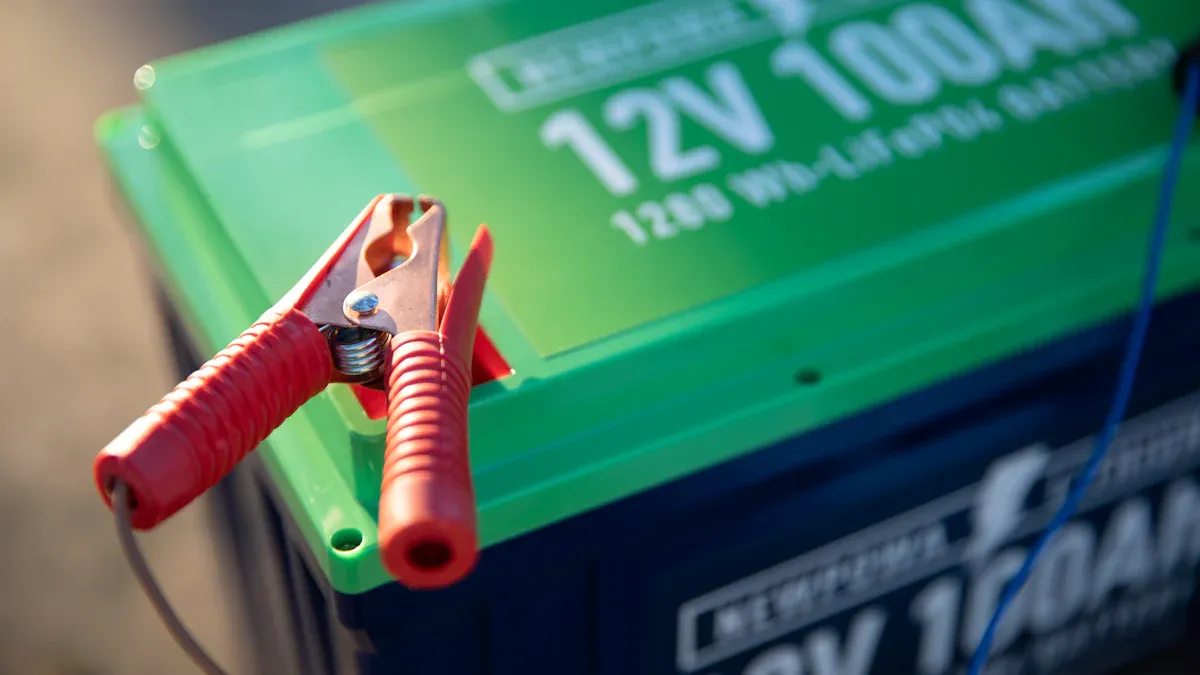
Choosing the right car battery means understanding the different types available. Each battery type offers unique benefits. You need to match the battery to your car’s specific needs.
Traditional Lead-Acid Batteries
You often find traditional lead-acid batteries in many cars. These are the most common type. They are also the most affordable. These batteries typically last 3 to 5 years. Several factors can affect their lifespan. Extreme cold and hot weather can shorten their life. Short trips also reduce their lifespan. Corrosion and using car accessories too much, like charging your phone or listening to the radio, also affect them. You need to check the fluid levels in some of these batteries.
Absorbent Glass Mat (AGM) Batteries
Absorbent Glass Mat (AGM) batteries are a step up from traditional ones. They use a special glass mat to absorb the electrolyte. This design makes them spill-proof. They are also more resistant to vibration. AGM batteries offer better performance in cold weather. They also recharge faster. You will find them in many modern cars with advanced electronics. They are also common in vehicles with start-stop systems. This battery type provides more consistent power.
Enhanced Flooded Batteries (EFB)
Enhanced Flooded Batteries (EFB) are another option. They bridge the gap between traditional lead-acid and AGM batteries. EFB batteries are designed for high corrosion resistance. They use ultra-high density plate material. You get increased charge acceptance with an EFB battery. They also provide a high depth of discharge lifecycle. EFB batteries are ideal for active management charging systems. They also suit high demand applications. An EFB battery can provide about 85,000 engine starts. This is much more than the 30,000 starts from a standard wet-flooded battery. This shows their durability for frequent start-stop cycles. Volvo recommends an EFB type battery for cars with start-stop functions. This shows their suitability for modern car technologies.
Advanced Lithium-Ion Batteries
Advanced lithium-ion batteries offer superior performance. They are becoming more common in electric vehicles. These batteries have high energy density. They also have a low self-discharge rate. You will find they lack a memory effect. This means you do not need to fully charge and discharge them. This extends the battery life. The cost of these batteries has dropped significantly. A 40-kWh Nissan Leaf battery cost $300,000 in 1991. It cost only $7,300 in 2018. Auto engineers design electric vehicle batteries to last the life of the car. Some Toyota HEV batteries have lasted 16 years. They have reached up to 800,000 kilometers. Auto manufacturers now offer an eight-year warranty on these batteries. This shows their confidence in durability.
|
Battery specifications |
Lead-acid |
Nickel-iron (Ni-Fe) |
Lithium-ion (Li-ion) |
|---|---|---|---|
|
Energy density |
25–40 Wh/kg |
40–60 Wh/kg |
90–190 Wh/kg |
|
Efficiency |
50 %–70 % |
70 %–90 % |
80 %–90 % |
|
Life cycle discharge (80 %) |
200–1000 |
1000 |
2000–4000 |
|
DoD |
60 % |
80 % |
80 % |
|
Charging capacity |
8–16 h |
2–4 h |
1 h |
|
Self-discharge/month |
5–15 % |
20 % |
<5 % |
|
Maximum charge current |
0,05C |
1C |
2C |
|
Charging temperature limit |
-20–50ºC |
0–45ºC |
-15–45ºC |
|
Maintenance requirements |
3–6 months (equalization) |
30–60 dpi (discharge) |
Nothing |
|
Toxicity |
High |
High |
Low |
|
Cost (cycles/kwh) |
Medium |
Medium |
Very Low |
|
Application |
Stationary |
Stationary |
Prime |
Essential Car Battery Buying Tips
You need to consider several factors when you choose a new car battery. These car battery buying tips help you make the best decision.
Climate and Driving Conditions
Your local climate greatly affects your car battery’s lifespan. Extreme temperatures, both hot and cold, significantly impact a car battery’s longevity. In very hot climates, the heat can cause the battery’s fluid to evaporate more quickly. This leads to internal damage. Conversely, extremely cold temperatures can reduce the battery’s ability to hold a charge. It can also cause the battery to freeze. This can lead to permanent damage. Car batteries are also less effective in cold weather. This leads to reduced performance during cold spells. If you live in a very hot or very cold region, you should look for a battery designed to withstand these conditions. Your driving habits also matter. Frequent short trips do not allow your battery to fully recharge. This can shorten its life. Long commutes help keep your battery charged.
Vehicle Electronics and Power Demands
Modern cars have many electronic features. These include advanced infotainment systems, navigation, and numerous sensors. These features increase your vehicle’s electrical demands. A standard battery might struggle to power everything. If your car has a start-stop system, you need a battery specifically designed for it. These systems frequently turn the engine off and on. This puts more stress on the battery. You should choose a battery with higher Reserve Capacity (RC) and Cold Cranking Amps (CCA) if your car has many electronics. This ensures your car starts reliably and all systems function correctly.
Checking Battery Age and Manufacturing Date
Always check the manufacturing date before you buy a battery. A battery loses power over time, even when it sits on a shelf. You want the freshest battery possible. The manufacturing date code on a car battery is typically found on a sticker or stamped directly onto the battery case. This code often consists of a letter and a number. The letter represents the month of manufacture (A for January, B for February, and so on). The number indicates the last digit of the year of manufacture (e.g., 9 for 2019, 0 for 2020). Some manufacturers may use a different format. This could be a four-digit code where the first two digits are the week and the last two are the year. Or it could be a longer alphanumeric code that requires a specific key from the manufacturer to decipher. You should aim to buy a battery manufactured within the last six months. This ensures you get maximum life from your new battery.
Warranty Coverage and Quality Correlation
A good warranty gives you peace of mind. It also indicates the battery’s quality. The length of a car battery’s warranty is directly correlated with its quality and cost. Batteries offering longer warranties, typically ranging from 1 to 3 years, are generally indicative of higher quality. While the actual lifespan of these batteries often surpasses the warranty period, the warranty itself serves as a reliable, albeit conservative, indicator of the battery’s expected longevity. Look for a warranty that offers free replacement for a significant period. Some warranties are prorated. This means you only get a partial credit if the battery fails later in its life. A longer free replacement period shows the manufacturer’s confidence in their product. Always read the warranty terms carefully. This helps you understand what it covers.
Making the Right Car Battery Choice
Researching Trusted Car Battery Brands
You need to research trusted car battery brands. Many brands offer reliable products. Consider brands like Amaron for superior performance and high heat tolerance. Panasonic provides dependable performance and long service life. Yuasa, a Japanese brand, is known for high-quality batteries and minimal maintenance. AC Delco offers premium car batteries with high-cranking power and corrosion resistance. Energizer delivers powerful performance and longevity, resisting harsh weather. Varta, a German company, provides optimal power for various vehicles. EverStart, a Walmart brand, is popular for affordability and reliability. Choosing a reputable brand helps you find the best automotive battery.
Comparing Value, Not Just Price
Do not just look at the price when you choose the right car battery. Consider the overall value. Evaluate the power source’s overall score, which reflects various performance aspects. Look at its life, or how well it handles repeated draining and recharging. Check the reserve capacity; this tells you how long the power source can supply power if your car’s charging system fails. Cold weather performance is crucial for reliability in diverse climates. You might also consider a “Green Choice” indicator for environmental impact. A good warranty, a handle or loop for easy lifting, and accessories like a float/trickle charger or jump starter add value. Absorbent Glass Mat (AGM) power sources, though more expensive, withstand repeated cycles better than regular lead-acid options. This makes them a better long-term investment for many cars.
Professional Installation Benefits
Professional installation offers significant benefits. It ensures correct setup and avoids potential problems. Improper installation carries risks. Reversed terminals can severely damage your car’s electrical system. Loose terminals or incorrect polarity can prevent your car from starting or cause it to shut off unexpectedly. Car batteries contain toxic chemicals and heavy metals. These pose risks if you do not handle them properly during installation. Professionals have the right tools and expertise. They install your new battery safely and correctly.
Responsible Battery Disposal
You must dispose of old batteries responsibly. Treat used car batteries as dangerous, hazardous waste. Palletized junk batteries need storage in a covered facility with cement flooring. This prevents acid or electrolyte from seeping into the ground. Improper disposal leads to health hazards from leaking gases or fluids. Do not store multiple batteries at home. This prevents toxic leaks. Never put them in regular trash bins. This avoids contaminating garbage collectors and the environment. Bring them to a proper, hazardous waste recycling center. You can also trade them in for a new battery. This is often more cost-effective. Turn them over to responsible and licensed hazardous waste collectors. Volkswagen actively researches advanced recycling methods for electric vehicle batteries. They aim to establish a closed-loop system for cell materials. This ensures you make the best automotive battery choice for the environment.
Choosing the right car battery prevents you from getting stranded. You now understand your vehicle’s specific needs. Consider different battery types. Evaluate crucial specifications like CCA and RC for your battery. Prioritize reputable brands and strong warranties. Take a proactive approach to your car’s battery maintenance. This ensures long-term reliability and safety for your car. Your car will thank you.
FAQ
What is the average lifespan of a car battery?
A car battery typically lasts between 3 to 5 years. Extreme temperatures and frequent short trips can shorten its life. Regular maintenance helps extend its lifespan.
How do I know if my car battery is dying?
You might notice slow engine cranking or dim headlights. Your car’s check engine light could also turn on. A battery test at an auto shop confirms its condition. 🚗
Can I replace my car battery myself?
Yes, you can replace your car battery. However, professional installation ensures safety and correctness. Improper installation can damage your car’s electrical system.
What is the difference between CCA and RC?
CCA (Cold Cranking Amps) measures starting power in cold weather. RC (Reserve Capacity) indicates how long your battery can power essential systems if your alternator fails. Both are important for reliable performance.
Should I choose an AGM battery over a traditional lead-acid battery?
AGM batteries offer better performance and durability. They are spill-proof and more resistant to vibration. They are a good choice for modern cars with many electronics or start-stop systems.
See Also
LPQ252-CEF: Unlocking Efficient Power Management Solutions For Modern Devices
NXP Microcontrollers: Driving Automotive Electronics With Core Chip Power
Electronic Components: Innovation, Quality, And Future Trends For Excellence
MC9S12DJ256MFUE: Essential Automotive Electronics Pillar Explored With Practical Implementation
Automotive Audio DSP: Unlocking Superior Sound Technologies And Applications