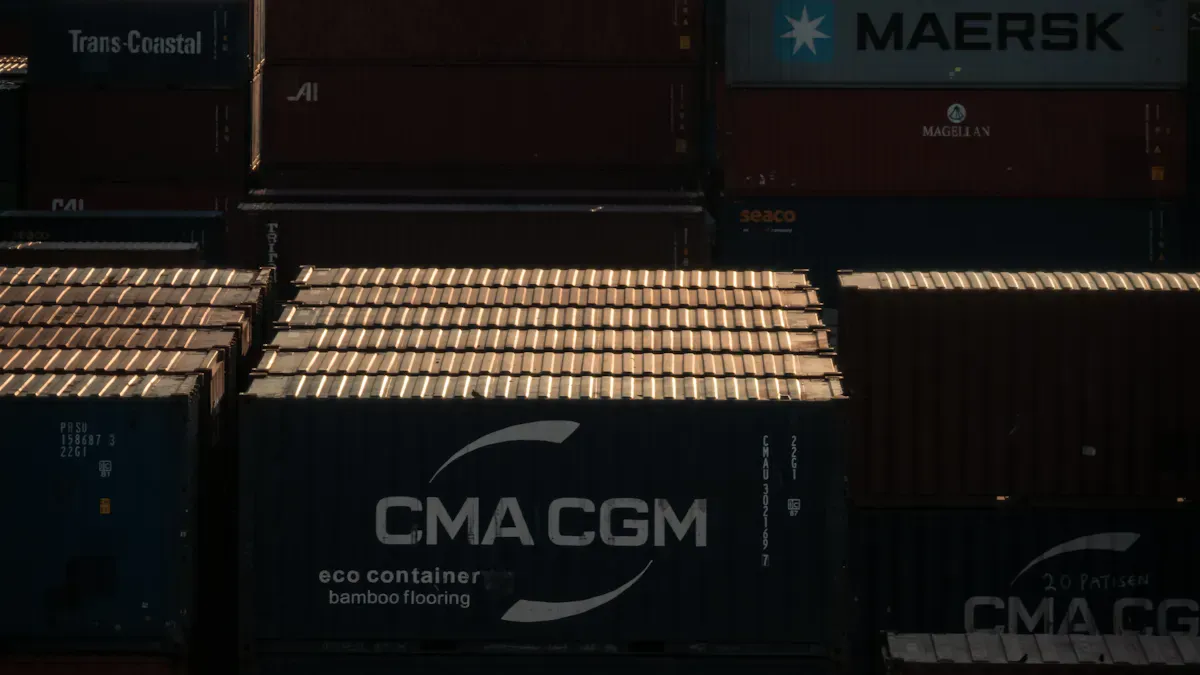
Malaysia’s logistics sector experiences a surge in demand for automation, driven by various factors. The e-commerce boom, with a market value exceeding USD 4 billion in 2022, fuels this trend. Additionally, rising labor costs and shortages push businesses to seek efficient automated solutions. The government actively supports these advancements through initiatives like Industry4WRD, promoting smart technology adoption in warehouses.
The MAX14819AATM+T for Smart Warehousing Malaysia plays a crucial role in this transformation, serving as a high-performance dual-channel IO-Link master transceiver. Its integration enhances communication between sensors and programmable logic controllers (PLCs), essential for the efficiency of smart logistics complexes in Malaysia.
|
Key Drivers of Adoption |
Details |
|---|---|
|
E-Commerce Boom |
Malaysia’s e-commerce market valued at over USD 4 billion in 2022, with a 16% CAGR expected till 2025. |
|
Rising Labor Costs & Shortages |
Increasing minimum wages and high turnover push businesses towards automation. |
|
Government Support |
Industry4WRD incentives by agencies like MIDA promote smart technology adoption. |
Key Takeaways
-
The MAX14819AATM+T enhances communication in smart warehouses, improving efficiency and productivity.
-
Integration of this transceiver allows for real-time data collection, enabling faster order management and better decision-making.
-
Adopting smart warehousing solutions can lead to significant cost savings by optimizing resource allocation and minimizing waste.
-
The growing e-commerce market in Malaysia drives the need for automation, making the MAX14819AATM+T essential for future logistics.
-
Scalability of the MAX14819AATM+T supports future growth, allowing businesses to easily integrate more sensors and devices.
MAX14819AATM+T Features
Technical Specs
The MAX14819AATM+T stands out with its advanced technical specifications. This dual-channel IO-Link master transceiver supports various communication protocols, making it versatile for different applications. Key specifications include:
-
Operating Voltage: 3.3V to 5.5V, allowing compatibility with a wide range of systems.
-
Data Rate: Supports data rates up to 230.4 kbps, ensuring fast and reliable communication.
-
Channel Configuration: Two independent channels enable simultaneous connections to multiple sensors, enhancing operational efficiency.
-
Integrated Diagnostics: Built-in diagnostics help monitor system performance, reducing downtime and maintenance costs.
These features make the MAX14819AATM+T an ideal choice for smart warehouses in Malaysia, where automation and efficiency are paramount.
Integration in Smart Warehousing
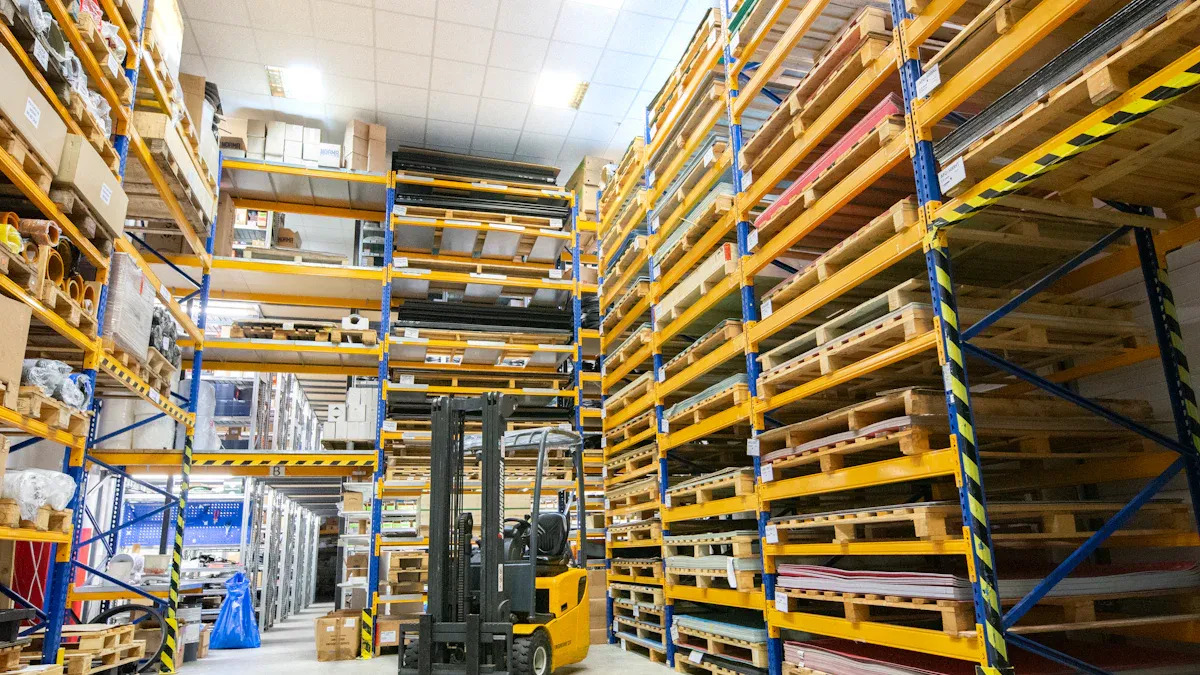
Integrating the MAX14819AATM+T into smart warehousing systems significantly enhances operational capabilities. This transceiver acts as a bridge between sensors and programmable logic controllers (PLCs), facilitating seamless communication.
-
Sensor Connectivity: The device connects various sensors, such as temperature, pressure, and proximity sensors, to the central control system. This connectivity allows for real-time data collection and monitoring.
-
Automation Systems: The MAX14819AATM+T supports automated sorting and inventory management systems. These systems rely on accurate sensor data to optimize warehouse operations.
-
Scalability: As businesses grow, the integration of the MAX14819AATM+T allows for easy expansion of smart warehousing systems. Companies can add more sensors and devices without overhauling existing infrastructure.
In Malaysia, where the logistics sector is rapidly evolving, the MAX14819AATM+T for smart warehousing Malaysia plays a crucial role. Its ability to enhance communication and streamline processes positions it as a vital component in the future of automated warehouses.
Benefits of Smart Warehousing
Efficiency Gains
Smart warehouses significantly enhance operational efficiency in the logistics sector. By integrating advanced technologies, these facilities streamline processes and improve productivity. The MAX14819AATM+T plays a vital role in this transformation. It connects various sensors and devices, enabling real-time data collection and analysis. This capability allows managers to monitor key performance indicators (KPIs) effectively.
-
Faster Order Management: Smart warehousing is the backbone of faster, smarter order management. Automated systems reduce the time taken to process orders, leading to quicker delivery times.
-
Real-Time Decision-Making: With real-time tracking, managers can make informed decisions based on current data. This agility helps in adapting to changing demands in the growing e-commerce sector.
-
Bottleneck Identification: Smart systems quickly identify operational inefficiencies. This feature allows teams to address issues before they escalate, ensuring smooth operations.
The integration of the MAX14819AATM+T enhances these efficiency gains by providing reliable communication between devices. As a result, warehouses can operate at peak performance, meeting the demands of the logistics sector in Malaysia.
Cost Reduction
Implementing smart warehousing solutions leads to significant cost savings. The MAX14819AATM+T contributes to this by optimizing resource allocation and minimizing waste. Here are some key benefits:
|
Benefit |
Description |
|---|---|
|
Comprehensive Overview |
Provides visibility into the entire warehouse operation, including inventory management, order processing, labor scheduling, and equipment monitoring. |
|
Resource Allocation |
Optimizes resource distribution by automatically assigning tasks to the nearest available worker or robot, improving workflow efficiency and minimizing downtime. |
|
Financial Returns |
Smart warehousing delivers financial and competitive returns, reflecting strong investment in the region. |
By reducing labor costs and improving inventory management, smart warehouses can lower operational expenses. The use of RFID technology enhances stock counts and provides end-to-end visibility of the supply chain. This visibility allows for precise inventory management, speeding up order fulfillment and providing a competitive edge.
Applications in Malaysia
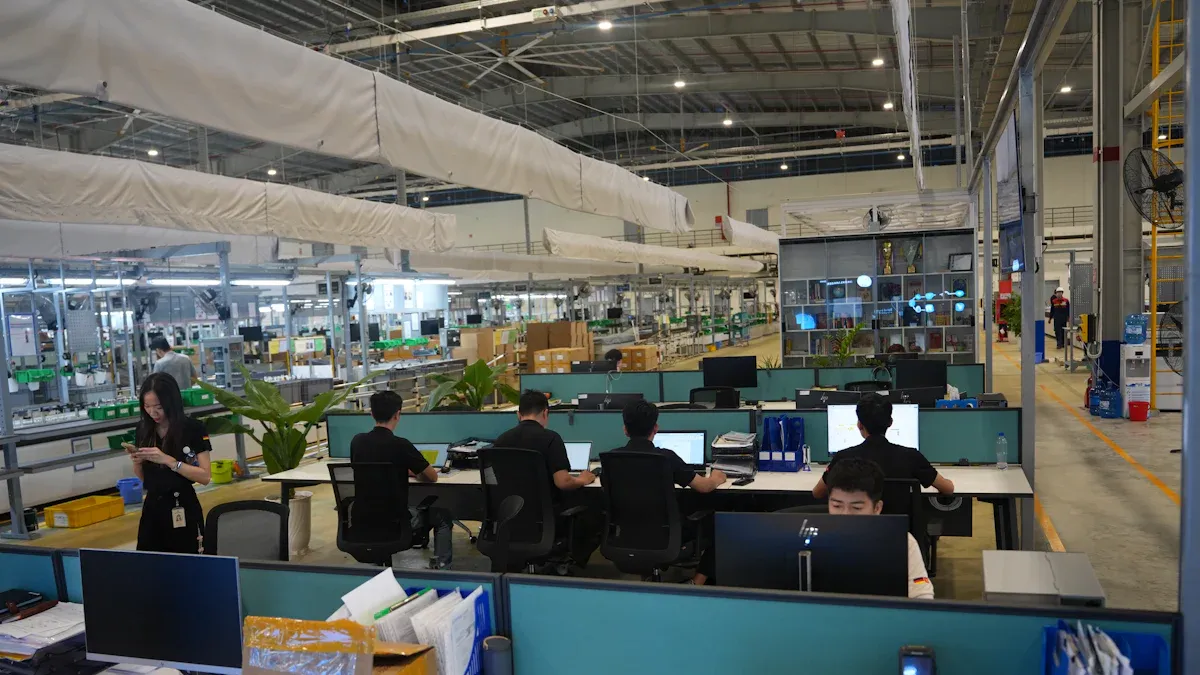
The MAX14819AATM+T has found significant applications in Malaysian smart warehouses, enhancing efficiency and productivity. Several case studies illustrate its impact on the logistics sector.
Case Studies
-
E-Commerce Fulfillment Center: A leading e-commerce company integrated the MAX14819AATM+T into its fulfillment center. This upgrade allowed for real-time inventory tracking and automated sorting. As a result, the company reduced order processing time by 30%, significantly improving delivery speed.
-
Automated Warehouse for Food Distribution: A food distribution warehouse adopted the MAX14819AATM+T to connect temperature and humidity sensors. This integration ensured optimal storage conditions for perishable goods. The warehouse reported a 25% decrease in spoilage rates, demonstrating the importance of smart warehousing in maintaining product quality.
-
Robotics in Manufacturing: A manufacturing facility utilized the MAX14819AATM+T to enhance communication between robotic arms and PLCs. This setup improved the precision of assembly lines, leading to a 20% increase in production efficiency.
Industry Use Cases
The adoption of the MAX14819AATM+T addresses several challenges faced by Malaysian warehouses:
|
Challenge |
Solution |
|---|---|
|
Relocating to integrated industrial hubs improves employee retention and well-being. |
|
|
Logistics Inefficiencies |
Moving to industrial hubs with better connectivity reduces delays and costs. |
|
Sustainability Concerns |
Implementing energy-efficient designs meets regulations and promotes sustainability. |
|
Digital Transition Hurdles |
Transitioning to smart industrial parks enhances efficiency through advanced technologies. |
|
Safety Issues |
Enhancing security measures protects assets and workers in modern facilities. |
These applications highlight how the MAX14819AATM+T supports the growth of smart warehousing in Malaysia. By addressing key challenges, it enables warehouses to operate more efficiently and effectively in a competitive market.
Future of Smart Warehousing in Malaysia
Technological Trends
The logistics sector in Malaysia is on the brink of transformation, driven by several technological trends. These trends shape the future of smart warehousing and enhance operational efficiency. Key trends include:
|
Trend |
Description |
|---|---|
|
Digital Transformation and Automation |
Companies shift from manual labor to data-driven operations, incorporating automation and robotics. |
|
Smart Infrastructure and Connectivity |
Advanced infrastructure, including 5G networks, supports operational continuity and efficiency. |
|
Sustainable Engineering and Energy Efficiency |
New industrial hubs focus on sustainability with features like rainwater harvesting and solar lighting. |
|
Smart Warehouse Management System |
Integration of various technologies provides visibility and real-time decision-making in warehouse operations. |
|
Automation and Robotics |
Automated Guided Vehicles (AGVs) and robotic arms improve goods handling efficiency. |
|
Internet of Things (IoT) |
Sensors collect and transmit data for inventory monitoring and environmental condition checks. |
|
Artificial Intelligence (AI) |
AI analyzes data to optimize inventory levels and predict maintenance needs. |
These advancements will enable warehouses to operate more efficiently, meeting the demands of e-commerce brands and enhancing order fulfillment capabilities.
Market Predictions
By 2030, the logistics sector in Malaysia will likely see significant changes due to automation. Dr. Chua Wen-Shyan, head of Malaysian Smart Factory 4.0, emphasizes that reducing reliance on low-skilled foreign labor will drive the adoption of automation. He notes that advancements in AI and robotics will enhance operational efficiency while creating new job opportunities in higher-skilled roles.
The Malaysian government plays a crucial role in this transition. Various incentives encourage businesses to adopt advanced technologies. These initiatives aim to develop high-tech warehouses that meet modern logistics demands. As the e-commerce market continues to expand, the demand for smart warehousing solutions will grow.
The MAX14819AATM+T serves as a cornerstone for Malaysia’s automated warehouses. Its advanced features enhance communication between sensors and PLCs, driving efficiency and cost savings. Key benefits include:
-
Improved Operational Efficiency: Real-time data collection boosts productivity.
-
Cost Reduction: Optimized resource allocation lowers operational expenses.
-
Scalability: Easy integration supports future growth.
Adopting the MAX14819AATM+T positions businesses to thrive in a competitive logistics landscape. Embracing this technology ensures they meet the evolving demands of the market. 🚀
FAQ
What is the MAX14819AATM+T?
The MAX14819AATM+T is a dual-channel IO-Link master transceiver. It enhances communication between sensors and programmable logic controllers (PLCs) in automated warehouses.
How does the MAX14819AATM+T improve warehouse efficiency?
This transceiver connects various sensors, enabling real-time data collection. It streamlines processes, allowing for faster order management and better decision-making.
What industries benefit from the MAX14819AATM+T?
Industries such as e-commerce, food distribution, and manufacturing benefit from the MAX14819AATM+T. It supports automation and improves operational efficiency in these sectors.
Can the MAX14819AATM+T support future expansions?
Yes, the MAX14819AATM+T allows for easy integration of additional sensors and devices. This scalability supports future growth in smart warehousing systems.
How does the MAX14819AATM+T contribute to cost savings?
By optimizing resource allocation and minimizing waste, the MAX14819AATM+T helps reduce operational expenses. This leads to significant cost savings for businesses.
See Also
Exploring ATIC83E2: Key Insights into Industrial Automation Applications
ARTESYN NPT42-M: Essential Power Source for Industrial Automation
Integrating AEAT-8800-Q24: Boosting Robotics Efficiency and Performance
SN74LVC4245APW: A Key Bus Transceiver for Sensor Integration
Three Key Innovations of XCF01SVOG20C in Industrial Automation