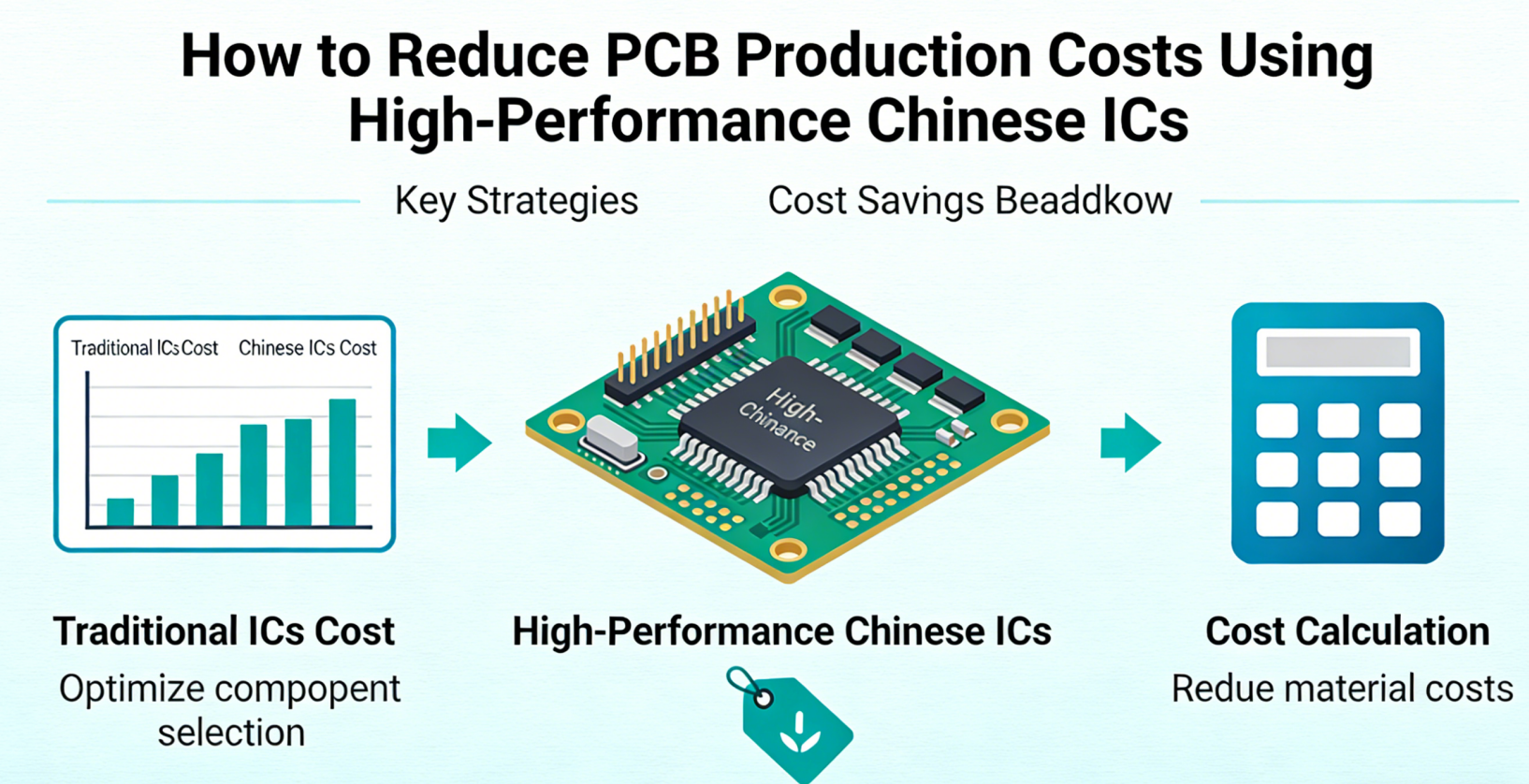
High-performance Chinese ICs, known for their functional equivalency, present a compelling solution for reducing PCB production costs. These integrated circuits offer significant advantages in terms of performance, reliability, and integration. For instance, they utilize advanced materials that enhance signal integrity and bandwidth, allowing stable operation at high frequencies. Additionally, effective thermal management techniques improve heat dissipation, which is crucial for maintaining device reliability. Manufacturers can also benefit from high-density interconnect technologies, enabling complex designs while optimizing space. Furthermore, when considering reliable Chinese IC brands for medical devices, these features make high-performance Chinese ICs a smart choice for cost-effective PCB manufacturing. As we look ahead to 2026, navigating semiconductor supply volatility will be essential for ensuring the continued success of these technologies.
Key Takeaways
-
High-performance Chinese ICs can reduce PCB production costs by 20% to 40%, making them a cost-effective choice for manufacturers.
-
These ICs offer advanced features like improved thermal management and high-density interconnects, enhancing performance and reliability.
-
Integrating Chinese ICs into PCB designs requires careful planning, including checking part availability and optimizing layouts for soldering efficiency.
-
Long-term savings from using Chinese ICs include reduced energy costs and fewer maintenance issues, leading to lower operational expenses.
-
Successful case studies show that companies can achieve significant cost reductions while maintaining high performance by adopting high-performance Chinese ICs.
Cost Benefits

Price Comparison
High-performance Chinese chips offer significant financial advantages compared to traditional semiconductor brands. The initial costs of these ICs often appear lower, making them attractive for manufacturers. For example, a typical high-performance chip from China may cost 20% less than its counterpart from a well-known brand. This price difference can lead to substantial savings, especially for companies that require large quantities of chips for their PCB production.
|
IC Type |
Average Cost (USD) |
Brand A |
Brand B |
Chinese IC |
|---|---|---|---|---|
|
Standard Chip |
$5 |
$6 |
$7 |
$4 |
|
High-Performance Chip |
$10 |
$12 |
$13 |
$8 |
This table illustrates the cost differences between various IC types. The savings from using Chinese ICs can accumulate quickly, especially for businesses that rely on high-volume production.
Long-Term Savings
Beyond initial costs, high-performance Chinese semiconductors can lead to long-term savings. These chips often integrate advanced technologies that enhance efficiency and reduce power consumption. For instance, a manufacturer may find that using a Chinese IC reduces energy costs by 15% over time. This reduction in energy usage translates to lower operational expenses, which can significantly impact the bottom line.
Moreover, the reliability of these chips contributes to fewer failures and lower maintenance costs. Companies that switch to high-performance Chinese ICs often report a decrease in warranty claims and repairs. This reliability can save manufacturers both time and money, allowing them to focus on innovation rather than troubleshooting.
Functional Equivalency of High-Performance Chinese ICs
Performance Metrics
High-performance Chinese ICs demonstrate impressive performance metrics that often rival those of established international brands. For instance, Huawei’s 910B chip has shown performance levels comparable to Nvidia’s A100 chip, which debuted in 2019. This indicates that Chinese semiconductors can compete effectively in the global market. Additionally, DeepSeek’s efficient computing resource utilization has led to performance levels similar to more expensive models, showcasing the competitiveness of Chinese technology in the AI sector.
The advancements in semiconductor manufacturing technology in China have played a crucial role in achieving these performance metrics. The following table outlines some key advancements:
|
Advancement Type |
Description |
|---|---|
|
IC Substrate Design |
Innovations in design have led to higher performance and miniaturization of components. |
|
Material Selection |
Use of low-loss dielectrics and high thermal conductivity materials enhances performance and durability. |
|
Manufacturing Processes |
Advanced methods like laser via technology allow for smaller, more accurate vias, improving substrate density. |
|
High Density Interconnect (HDI) |
Multi-layered substrates with smaller pitches improve efficiency and enable miniaturization of devices. |
These advancements contribute to the overall performance and efficiency of high-performance Chinese ICs, making them a viable option for manufacturers seeking cost-effective solutions.
Reliability and Quality
Reliability remains a critical factor in the selection of ICs for PCB production. High-performance Chinese ICs have made significant strides in this area. Manufacturers report fewer failures and lower maintenance costs when using these chips. This reliability stems from the advanced manufacturing processes and quality control measures implemented by Chinese semiconductor companies.
Moreover, the use of high-quality materials enhances the durability of these ICs. The combination of innovative design and rigorous testing ensures that these chips can withstand demanding applications. As a result, companies that adopt high-performance Chinese ICs often experience a decrease in warranty claims and repairs, allowing them to allocate resources more effectively.
Efficient Design Integration
Adapting Designs
Incorporating high-performance Chinese chips into existing PCB designs requires careful planning. Manufacturers should follow these best practices:
-
Check for part availability and obsolescence early in the design process: Use standard, widely available ICs to reduce costs and simplify the supply chain. Verify component availability and lifecycle during design to ensure all BOM parts are readily available.
-
Consider thermal and mechanical aspects of parts to maintain solder joint integrity: Ensure all chip components can withstand mechanical forces during automated assembly. Place large packages along the horizontal direction of the assembly line to minimize bow and twist effects.
-
Maintain optimum component clearances to prevent tombstoning and solder bridging: Adhere to component spacing as per IPC-2221 to prevent soldering defects. Define a minimum placement courtyard around chip components to ensure sufficient spacing for assembly and rework.
-
Optimize PCB layout for soldering efficiency and reliable joint formation: Prefer surface-mount technology (SMT) components over through-hole for chip integration due to compatibility with automated reflow soldering. Align ICs perpendicular to the solder wave to prevent solder bridging.
BOM Optimization
Optimizing the bill of materials (BOM) is crucial when integrating Chinese ICs into PCB projects. Here are some effective strategies:
-
Audit Your BOM Early: Identifying high-cost components early can lead to significant savings.
-
Standardize Components Across Products: Reusing common parts can reduce costs and simplify inventory management.
-
Leverage Value Engineering and Simplified Design: Evaluating alternative materials can lower costs without sacrificing quality.
-
Negotiate Strategic Supplier Terms: Building strong supplier relationships can lead to better pricing and logistics.
By implementing these strategies, manufacturers can enhance their PCB designs while maximizing cost efficiency. The integration of advanced semiconductor manufacturing techniques from China allows for high-volume manufacturing, ensuring that companies can meet market demands without compromising on quality.
Case Studies of Successful Implementations
Real-World Examples
Several companies have successfully integrated high-performance Chinese ICs into their PCB production processes. These implementations showcase the advantages of using advanced technology from China. For instance, a US IoT company transitioned to Chinese chips for their smart home devices. This switch resulted in a remarkable 40% reduction in production costs.
Here are two notable case studies:
|
Case Study |
Board Type |
Key Features |
|---|---|---|
|
4-Layer Rigid-Flex PCB for 5G Wearable Devices |
4-layer Rigid-Flex PCB |
– Space optimization for compact designs |
|
4-Layer FR4 PCB for 5G Small Cell Base Stations |
4-layer FR4 PCB |
– Thermal management for high-power applications |
Measurable Cost Savings
The measurable outcomes from these implementations highlight the effectiveness of high-performance Chinese ICs. Companies report significant savings due to lower initial costs and reduced operational expenses. The following factors contributed to these successes:
|
Description |
|
|---|---|
|
Technological Advancement |
Investments in cutting-edge technologies have propelled China into the hi-tech zone. |
|
Skilled Manpower |
A well-trained workforce supports the manufacturing of complex products. |
|
Competitive Pricing |
Low-priced products with satisfactory performance attract international markets, enhancing trade. |
|
Manufacturing Growth |
The expansion across various sectors contributes significantly to overall manufacturing success. |
|
High-End Technology |
Development of advanced products like the C919 aircraft showcases China’s technological excellence. |
These case studies illustrate how companies can achieve substantial cost savings while maintaining high performance and reliability in their PCB production. By leveraging the advancements in Chinese semiconductor technology, manufacturers can enhance their competitiveness in the global market.
High-performance Chinese ICs offer compelling advantages for PCB manufacturers. They provide significant cost savings, with production costs 20%-40% lower than in Europe and the United States. The delivery cycle for regular orders is efficient, taking only 7-15 days. Manufacturers can rely on these ICs due to their advanced quality control measures and international certifications.
Furthermore, continuous investment in research and development allows for customized solutions tailored to various applications. As the demand for miniaturized electronics grows, embracing these advanced technologies will enhance competitiveness in the global market. PCB designers and manufacturers should explore these options to optimize their production processes and meet evolving industry needs.
FAQ
What are high-performance Chinese ICs?
High-performance Chinese ICs are integrated circuits designed in China that offer advanced functionality and reliability. They compete with established brands in terms of performance and cost, making them attractive for PCB manufacturers.
How do Chinese ICs compare to other brands?
Chinese ICs often provide similar performance metrics to international brands but at lower prices. This cost advantage, combined with advancements in manufacturing, makes them a viable option for many applications.
Are high-performance Chinese ICs reliable?
Yes, high-performance Chinese ICs have shown improved reliability due to rigorous quality control and advanced manufacturing processes. Many manufacturers report fewer failures and lower maintenance costs when using these chips.
What are the benefits of using Chinese ICs in PCB production?
Using Chinese ICs can lead to significant cost savings, improved energy efficiency, and enhanced design flexibility. These benefits help manufacturers optimize their production processes while maintaining high performance.
How do export controls affect China’s semiconductor industry?
China AI and semiconductor export controls impact the availability and pricing of certain technologies. However, many Chinese manufacturers continue to innovate and adapt, ensuring a steady supply of advanced ICs for global markets.
See Also
Exploring EP2C50F484I8N FPGA: Bridging Theory and Practical Applications
Achieving Excellence in Electronic Components: Insights on Innovation and Trends
Unveiling LPQ252-CEF: A Solution for Effective Power Management
Understanding SPC56 Microcontrollers: Key Applications in Automotive Powertrains
IRF820 N-Channel MOSFET: Essential for Power Management and Control