
AI technologies greatly improve trade efficiency. They make processes easier and cut costs. Companies can use machine learning and predictive analytics. This helps them predict demand and avoid running out of stock or having too much. For example, AI can automate document processing. This speeds up customs procedures and reduces mistakes. As a result, companies can make better decisions and improve their supply chains. With AI giving real-time insights, businesses can react quickly to problems. This boosts overall effectiveness in operations.
Key Takeaways
-
AI makes trade faster by automating tasks. It helps businesses make better choices. This allows them to react quickly to market changes.
-
Predictive analytics helps companies manage their inventory well. This reduces stockouts and extra stock. Happier customers result from this.
-
Automated decision-making saves time and cuts down errors. Employees can then focus on more important projects. This improves overall productivity.
-
AI-driven logistics make routes and inventory control better. This leads to big cost savings and helps the environment for businesses.
-
It is important to solve data privacy and system integration problems. This is key for successful AI use. It ensures compliance and smooth operations.
AI in Trade Operations
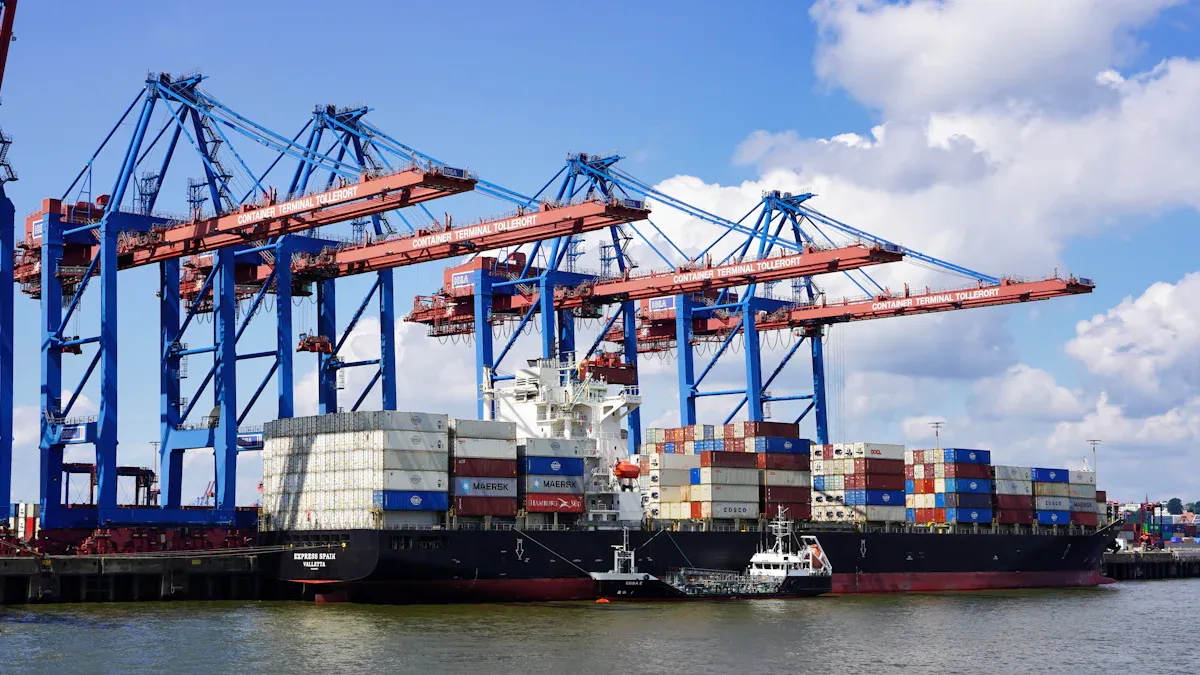
Predictive Analytics
Predictive analytics is very important in trade operations. It uses past data and AI to predict future trends. This helps businesses make smart sourcing choices. For example, companies can look at market data to see changes in demand. This helps them avoid having too much or too little stock. Too much stock can lead to lost sales or higher costs.
The table below shows some common uses of predictive analytics in trade and their results:
|
Application |
Measurable Outcome |
|---|---|
|
Credit risk assessment |
Improves credit risk checks by predicting repayment chances. |
|
Market forecasting |
Predicts market changes, allowing quick strategy updates. |
|
Compliance monitoring |
Spots possible issues before they become serious problems. |
|
Portfolio optimization |
Helps diversify portfolios with future-focused analysis. |
|
Liquidity planning |
Estimates cash flow needs for different market situations. |
|
Operational efficiency |
Finds inefficiencies by showing workflow problems. |
Predictive modeling helps with sourcing choices and inventory planning. It uses data and AI to make better decisions and improve efficiency. Businesses can look at large data sets to predict market trends. This is important for keeping up with fast changes in global trade. Good demand predictions help manage inventory levels. This ensures products are available and keeps customers happy.
Automated Decision-Making
Automated decision-making greatly improves efficiency in trade. By using AI, businesses can simplify complex tasks. Automation saves time on routine work, letting employees focus on important projects.
Research shows that automation makes decision-making faster, especially for tough tasks. Reliable automation works better than less reliable systems, especially when under pressure. Relying more on automation during hard tasks helps reduce mental strain, leading to better accuracy. However, unreliable automation can hurt performance and may not improve efficiency much.
The table below shows different ways to cut costs using AI-driven automation compared to traditional methods:
|
Cost Reduction Method |
Description |
|---|---|
|
AI-Enhanced Demand Forecasting |
Improves inventory management by giving accurate demand predictions, cutting overstock and stock-out costs. |
|
Dynamic Slotting and Warehouse Space Optimization |
Continuously improves product placement to lower labor costs and increase storage efficiency. |
|
Intelligent Routing and Fleet Scheduling |
Lowers transportation costs by optimizing delivery routes and schedules in real-time. |
|
Hyperautomation and Intelligent Process Orchestration |
Reduces administrative labor costs by automating back-office tasks. |
|
Optimizing Packaging and Cubing |
Cuts shipping costs by improving packaging sizes and arrangements. |
|
Predictive Quality Control and Error Reduction |
Lowers costs from errors in fulfillment by allowing real-time quality checks. |
|
Dynamic Pricing and Service Level Optimization |
Changes pricing strategies based on fulfillment costs and customer demand. |
AI-driven trade solutions are making advanced technologies available to more businesses. Small and medium-sized enterprises (SMEs) gain a lot from these changes. Reports show that 71% of Canadian SMEs use AI tools to boost efficiency and growth. As a result, 70% of these businesses see better efficiency and productivity because of AI use.
AI in Trade Finance
Risk Management
AI is very important for managing risks in trade finance. It helps to check risks by looking at a lot of data quickly. For example, banks like DBS have cut their risk assessment time by 85%. They went from taking 2-3 days to just a few hours. They also have a low error rate of only 0.8% when processing documents. The Bruckner Group also automated their letter of credit price checks. This saved them 30-40% in costs. Automation makes processes that used to take days much faster.
The table below shows some clear benefits of AI in risk management:
|
Example |
Benefit |
Description |
|---|---|---|
|
DBS Bank |
Reduced turnaround from 2-3 days to hours, with an error rate of 0.8%. |
|
|
Bruckner Group |
30-40% cost savings |
Automated L/C price confirmation workflow, shortening a 5-day process. |
|
General Banking Data |
60% reduction in handling time |
Smart automation frees up 50% of full-time equivalents for higher-order tasks. |
Fraud Prevention
AI also helps a lot with preventing fraud in trade finance. AI tools can find unusual activities and predict risks. This gives banks the information they need to stop fraud before it happens. These systems can spot strange patterns in trade documents and transactions. They alert banks about suspicious actions early, helping them follow Know Your Customer (KYC) and Anti-Money Laundering (AML) rules.
Key benefits of AI in fraud prevention include:
-
Better detection of unusual activities in trade documents.
-
Early warning of suspicious actions.
-
Improved compliance with KYC and AML rules.
AI solutions make financial transactions easier and faster. They help with quicker onboarding and compliance checks. Automating KYC and AML processes leads to faster decisions. This speed reduces processing times and improves accuracy, allowing banks to focus on important goals.
AI-Driven Logistics
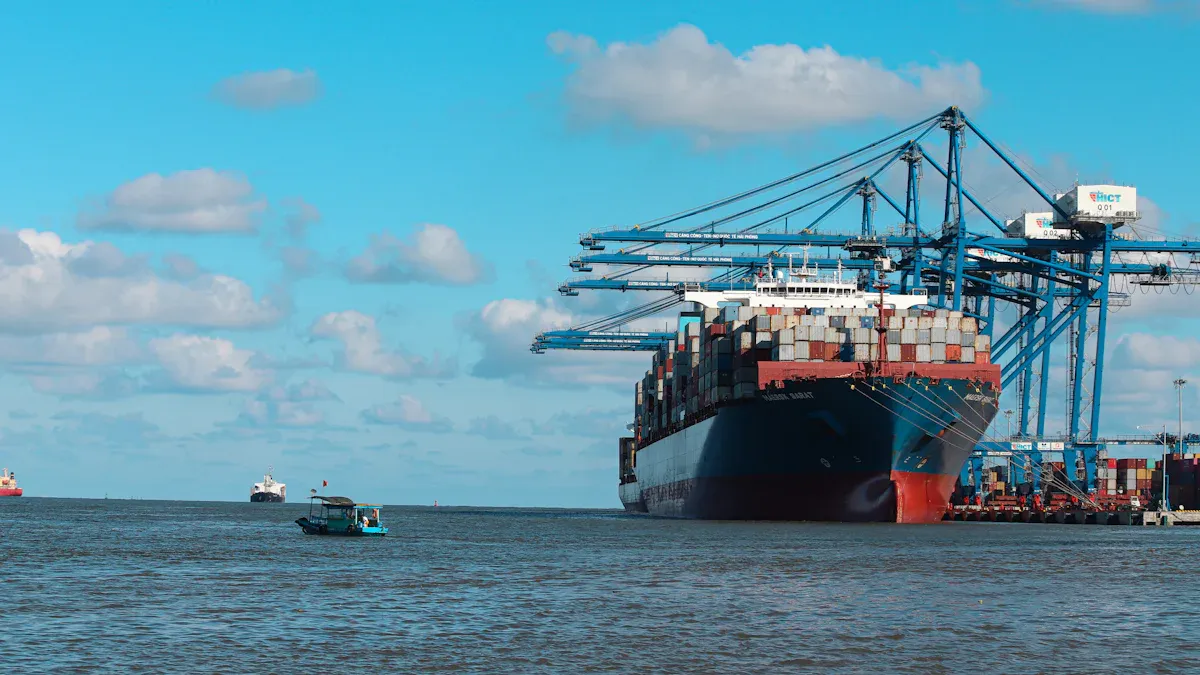
Route Optimization
AI makes route optimization much better in logistics. Companies using AI for route planning see faster delivery times and lower costs. For example, smart route planning helps save fuel, cut down work hours, and lower pollution. Research from Gartner shows that businesses using AI for transportation can reduce logistics costs by 15-25% in the first year. Also, on-time delivery can improve by up to 20%.
Many companies have successfully used AI for route optimization. The table below shows some important numbers:
|
Company |
AI System Used |
Key Metrics |
Annual Savings |
Environmental Impact |
|---|---|---|---|---|
|
UPS |
ORION |
250 million address points processed, 55,000 drivers |
$300 million to $400 million |
10 million gallons of fuel saved, 100,000 metric tons of CO₂ reduced |
|
Amazon |
DeepFleet, Wellspring |
8 billion packages handled, 390,000 drivers |
N/A |
N/A |
UPS’s ORION system saves 100 million miles each year, which means about $50 million in savings. DHL’s AI project has also cut last-mile delivery costs by 15% and carbon emissions by 18%. These examples show how AI in logistics can lead to big savings and help the environment.
Inventory Control
AI is very important for inventory control. It helps businesses keep track of stock levels and predict demand correctly. This stops stockouts and having too much stock. By looking at past sales data and outside factors, AI systems keep the right amount of inventory. They change from reacting to problems to preventing them, so businesses can meet customer needs without having extra stock.
The benefits of using real-time data for inventory management are big. The table below lists these advantages:
|
Benefit |
Description |
|---|---|
|
Reduced Stockouts |
Organizations run out of stock less often because of better tracking. |
|
Optimized Reorder Cycles |
AI helps find the best times to reorder, cutting down on excess stock. |
|
Improved Operational Efficiency |
Streamlined processes make operations faster and cheaper. |
AI-driven inventory management uses algorithms to improve stock control and order processing. This technology makes inventory tracking more accurate, leading to cost savings and happier customers due to better product availability.
Challenges of AI Adoption
Data Privacy
Data privacy is a big problem for companies using AI in trade. As businesses gather and study a lot of data, they need to protect sensitive information. Old rules often can’t keep up with the special risks that AI brings, especially when making quick decisions. Companies need new rules that can adapt to the risks in AI systems. Here are some important points about data privacy challenges:
-
Complex Risks: AI risks are linked and complicated. This means we need a big-picture view in policy rules.
-
Need for Coordination: Good regulation needs better teamwork across different areas and regions.
-
Investment in Technologies: Companies must spend money on Privacy-Enhancing Technologies (PETs) like federated learning and differential privacy to keep data safe.
Also, privacy laws, like the OECD Privacy Guidelines, stress the need for fair and legal data collection. Companies must create clear rules for data quality, privacy, security, and access control. This helps ensure accountability and openness in AI work.
System Integration
System integration is another big challenge for companies using AI in trade. Many businesses find it hard to connect AI solutions with their current systems. This can make it harder for AI technologies to work well and grow. The table below shows some common integration challenges:
|
Challenge Type |
Description |
|---|---|
|
Data Quality Issues |
Problems with data quality and availability can hurt how well AI works. |
|
Legacy System Integration Complexities |
Old systems aren’t made to handle the uncertain nature of AI, causing integration problems. |
|
Model Accuracy Concerns |
Wrong models can lower business trust and affect decision-making. |
Integration problems can greatly affect operations. For example, AI solutions might work well in small areas but fail when used across the whole company. This can happen because of integration issues, data problems, and operational challenges. Here are some specific effects of integration issues:
-
Incompatibility with Growing Systems: AI solutions may have a hard time connecting well, causing compatibility problems.
-
Difficulty in Managing Integrations: Companies may struggle to make operations smooth and access combined business data.
Recent surveys show barriers to using AI in trade. For instance, 39% of people said strategy, adoption, and scaling issues are major obstacles. Also, 67% worried about data privacy and compliance. These barriers can slow down AI technology use, so it’s important for companies to tackle them early.
To get past these challenges, companies can start with small pilot projects to test AI benefits without spending too much. They can also use cloud services and subscription plans to manage costs better. By following ethical and clear policies, businesses can handle data privacy issues while keeping their AI systems safe and compliant.
AI can change global trade for the better. Businesses that use AI technologies can save time and money. Here are some key points about this impact:
-
AI trade platforms help track shipments accurately and quickly, which cuts down delays.
-
Automated customs systems check documents, making trade faster.
-
AI improves transparency, which builds trust between trade partners.
The expected economic effects are huge. AI could add about $15 trillion to the global economy by 2035. Better trade efficiency and new ideas will help this growth. Industry leaders say it is important to use AI wisely to stay competitive. As companies start using AI, they prepare for a more efficient and strong future in global trade.
FAQ
What does AI do for trade efficiency?
AI helps trade efficiency by automating tasks, predicting needs, and improving supply chains. It cuts down mistakes and makes decision-making faster. This lets businesses react quickly to changes in the market.
How does AI assist with inventory management?
AI helps with inventory management by looking at sales data and predicting needs. This helps businesses keep the right amount of stock, which reduces running out of items or having too much.
What are the advantages of AI in trade finance?
AI makes trade finance easier by automating risk checks and spotting fraud. It speeds up document work and helps meet rules, which saves money.
Can small businesses gain from AI in trade?
Yes, small businesses can gain a lot from AI. Many use AI tools to boost efficiency, lower costs, and make better choices. This leads to more productivity and competitiveness.
What problems do companies face when using AI?
Companies often deal with problems like data privacy issues and system connection troubles. These challenges can slow down AI use and need careful planning to fix.
See Also
Integrating AEAT-8800-Q24 to Boost Robotics Efficiency
Three Key Benefits of XCF01SVOG20C in Automation
Exploring ATIC83E2’s Impact on Industrial Automation Practices
Harnessing RV1126 for Advanced AI in Robotics
Maximizing AD74413RBCPZ for Enhanced Process Management